
Re: Armenian Nature
Environmental activists plan to spend night in Mashtots Park in Yerevan (PHOTOS)
February 18, 2012 | 19:25
YEREVAN. – Activists gathered together in the Mashtots Park on Saturday as well demanding to stop the illegal construction, environmentalist Mariam Sukhudyan wrote in her Facebook page adding poor policemen stood behind the iron barricades immovable and were freezing.
Earlier Armenian News-NEWS.am informed that an incident occurred between the activists and the policemen in the Park on Friday. Workers tried to resume the construction with the help of policemen but failed. The activists demand the Yerevan Mayor Taron Margaryan to visit them.
“We will stay here, and our actions will be only peaceful,” activist Yeghia Nersisyan said.
The photos are available here.
-
Re: Armenian Nature
RARE PLANTS, HERITAGE TREES GROWING ANEW IN ARMENIA
Jennifer Hattam
Treehugger
Oct 19 2011
Food & Health
For almost two decades, the Armenia Tree Project has been helping
people pull themselves out of poverty while greening the heavily
deforested Caucasus country. Now, it is also working to rejuvenate
populations of rare and endangered tree species, including heritage
fruit trees that have been growing in the region for 3,000 years.
Loss Of Native Plants
Of the approximately 3,600 plant species in Armenia, 123 are endemic
or found nowhere else on earth, according to the two-volume "Red
Book of Plants and Animals of the Republic of Armenia" released last
year by the country's Ministry of Nature Protection. Many, though,
are becoming endangered due to deforestation, water mismanagement,
and habitat destruction.
"In response to the concern over the loss of native plants, Armenia
Tree Project has a policy of growing only indigenous trees in its three
nurseries," according to the organization's nursery program manager,
Samvel Ghandilyan. "Naturalized" trees introduced long ago are included
in this policy if they have no negative impact on the local ecosystem
and help boost food security by providing fruits and nuts.
Reintroducing Endangered Species The group's nursery in the village of
Karin is now specializing in the propagation of endangered species,
including nine trees and shrubs that are registered as rare in the
Red Book and two -- the alpine maple and the halfsphere rose --
that are in danger of extinction.
The Karin nursery and another in Khachpar are also starting to produce
once-common varieties of apple, peach, pear, and apricot trees --
part of a economic, social, and cultural heritage that dates back
three millennia -- that will be delivered to community planting sites
around the country.Leave a comment:
-
Leave a comment:
-
Re: Armenian Nature
Hope the figures are true. We need to save Teghut forest.
----------------------------------------------------------------------------------------------------
Government Claims Major Progress In Armenia’s Reforestation
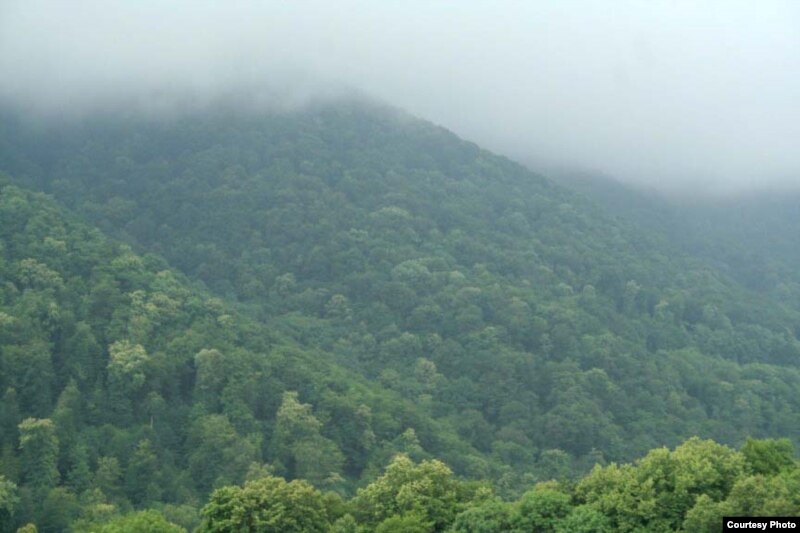
The Armenian state forestry agency claimed on Thursday to have made significant strides in combating illegal logging and reversing the country’s serious post-Soviet deforestation.
Some environmentalists disputed this claim, saying that forests across Armenia remain under grave threat.
The total area of Armenian territory covered by woods has shrunk considerably since a severe energy crisis in the early 1990s which left the country’s population without electricity and central heating. Although the power shortages ended by 1996, many people, especially in rural areas, continued to use firewood to heat their homes.
Commercial logging by local firms producing construction materials and furniture has been another contributing factor.
According to the Armenian government’s Hayantar forestry agency, the number of trees illegally cut down each year has fallen more than tenfold since 2004, to about 2,500 in 2010. The Hayantar director, Martun Matevosian, attributed that to the restoration of the national natural gas distribution network, which gained momentum in the early 2000s and is now largely complete.
“Pressure on the forests from big cities like, Yerevan, Gyumri and Vanadzor has decreased substantially since 2004,” he told journalists.
Matevosian also said Hayantar has since planted 12 million new trees and recreated 30,000 hectares of forest in previously wooded areas. “A very serious restoration work has been carried out,” he claimed.
“The overall number [of trees felled by loggers] has certainly decreased, and we can’t deny that,” said Inga Zarafian, chairwoman of the Ecolur environment protection organization.
But Zarafian contended that the real scale of illegal logging has been much higher than the one reported by the government. “We know for sure that the official figures for illegal logging absolutely do not correspond to reality,” she told RFE/RL’s Armenian service.
Zarafian also dismissed the Hayantar data on reforestation. “You don’t get a new forest by simply planting trees,” she said. “You need decades for that.”
Matevosian insisted, however, that large swathes of land across Armenia are now again covered by forests. He said environmentalists and journalists will be able to see that with their owns on a helicopter tour to be organized by his agency this summer.
Zarafian and other environmentalists are now particularly concerned about the Armenian government’s decision to allow open-pit mining operations in the Teghut forest in the northern Lori region that lies atop massive copper and molybdenum deposits. The Teghut project, if implemented, will lead to the destruction of 357 hectares of rich forest, including 128,000 trees.
Leave a comment:
-
Re: Armenian Nature
Karen Karapetyan bans construction on green territories left in Yerevan
February 4, 2011 - 19:24 AMT 15:24 GMT
PanARMENIAN.Net - On February 3, at the meeting with UK Ambassador to Armenia Charles Lonsdale, Yerevan Mayor Karen Karapetyan spoke about the ban on construction on green zones of Yerevan.
Though at present, practically no green zones are left construction –free, as Karapetyan noted, radically new culture of green spaces’ arrangement will be formed in Yerevan.
Leave a comment:
-
Re: Armenian Nature
I'd also like to take this time to tell you guys about this blog, http://antarner.net/, just in case you don't already know.
--------
Full article plus one more picture - http://blogs.nationalgeographic.com/...medium=twitter
Full article plus one more picture - http://blogs.nationalgeographic.com/...medium=twitterSeedlings yield honey and hope for devastated Armenian families
For Armenians who lost their homes in political upheaval an innovative tree-planting scheme to restore orchards and forests is a way to earn some money while helping their country create a more comfortable environment, reports a volunteer for the Armenia Tree Project. Nat Geo News Watch profiled the project last year: How trees are restoring hope to Armenia.
By Adrineh Der-Boghossian
Aygut, Armenia--Thirty-nine-year-old Vatchakan Tsakanyan remembers coming to Aygut Village in 1989 as a young man--a common experience since just about all the residents came here from Chardakhlu and other villages in Azerbaijan when the two states swapped non-nationals during the Karabagh conflict.
Vatchakan lives with his sister and her two kids, as well as his wife and their four children. The tree seeds they received from Armenia Tree Project (ATP) are cared for by Vatchakan's sister, 35-year-old Nvart, who fills buckets from the nearby Getik River a few times a day and carries them to water the plants.

Leave a comment:
-
Re: Armenian Nature
Nightingales and tits disappear from Yerevan
2010-06-05 20:10:00
ArmInfo. The building boom has resulted in disappearance of some
species of birds in Yerevan.
Head of the Center of Bird Fanciers Silva Adamyan said at today's
press conference that the reduction in green zones, as well as
deforestation have resulted in disappearance of nightingales,
long-tailed tits and pale sparrows from Yerevan. To note, the pale
sparrows are registered in the Red Book. Such predatory birds as
kestrels and merlins also have also become the victims of the building
boom. Adamyan pointed out that the elite high-rise buildings may oust
the birds feeding on insects, among them swallows, which are known to
build their nestles in the holes of buildings.
The fashionable high-rise buildings deprive them of this opportunity.
"If in the Soviet years there were a total of 158 species of birds in
Yerevan and adjacent areas, now their number is a little more than
100",- stressed Adamyan. According to her, the only birds that find
heaven in Yerevan are the ravens and magpies. As a result of the
increase in urban garbage alongside with reduction in green zones, the
number of ravens and madpies is steadily growing.Leave a comment:
-
Re: Armenian Nature
Azg Daily, Armenia
April 15 2010
RIVERS TO BRIDGE THE CAUCASUS DIVIDE
By Aghavni Harutyunyan
It's an article from the series of publications about the regional
projects funded by the European Union. In the articles we present the
state and results of the projects implemented in the region. This
article touches upon the Transboundary river management for the Kura
river project.
The project aims to improve the water quality in the Kura River basin
through trans-boundary cooperation and implementation of the
integrated water resources management approach. The project supports
the development of a common monitoring and information management
system to improve transboundary cooperation and enhances the
capacities of environmental authorities and monitoring establishments
engaged in long-term integrated water resources management in the Kura
River basin.
The Kura River and its tributaries span a vast geographical area
embracing, among others, Armenia, Azerbaijan and Georgia. The
EU-funded Kura River basin transboundary river management project aims
to improve the quality of natural water resources and help the three
South Caucasus countries preserve their common natural heritage.
Armenia's role in this task is to look after one of the Kura's largest
tributaries, the Aras River, which originates in Turkey, flows through
Armenia and meets the Kura downstream in Azerbaijan.
The community angle
Alaverdi, Armenia ` At the bottom of the Debed River gorge, nestled in
the folds of rugged mountains in the far north of Armenia near the
Georgian border, lies the small town of Alaverdi. The river that runs
through the town is the heart of the local community.
"In summer, the river becomes a recreation area for the small nearby
town of Alaverdi," says local resident Gayane Poghosyan, 48. "Local
people descend on its banks to relax, as they can't go elsewhere. We
swim and catch fish here."
But since the 18th century, Alaverdi has also been home to copper
mines, and the town today still hosts an important mining complex,
often blamed by Armenia's neighbours for polluting the waters of the
river. Residents are unwilling to point fingers, but they too say the
river is not as clean as it used to be.
"The citizens of Alaverdi don't want to speak about the river in
public," says one elderly man, identified only as comrade Barseghyan.
"There is still some fish here but frankly the number of species is
down." Others say the water is dirty because "people dump things into
the river". But they avoid blaming any particular industrial polluter
located in the vicinity. "It's none of my business," one says.
Project leader:"To avoid the mistakes of the West"
For the EU-funded Kura River project, however, such problems are the
core of its business. And for project team leader in Armenia Anatoli
Pichugin, things are not as bad as they seem: "People tend to
overdramatize, often exaggerating problems. Of course there are
problems, but the waters are mostly clean since industry never
developed fully in Armenia. The country can still boast ample water
resources."
"The objective now is to avoid the mistakes of the West," he says.
The project, funded by the EU with a total of ?¬5.2 million from
2008-2011, aims to enhance the capacities of national environmental
authorities, monitor national operators engaged in long-term
integrated water resource management and help them understand that
with the constantly increasing pressure on water resources, it is
better to prevent pollution than fight its consequences. One of its
key components is the application of the EU Water Framework Directive
on the basis of individual river basin management projects worked out
in each participating country.
Pichugin says there are two main problems in the Aras River basin,
communal sewage disposal and the rubbish that people dump in the
river, but adds it is cleaner than many European rivers.
Volodya Narimanyan is deputy head of the Water Resources Management
Agency of the Armenian Ministry for Nature Protection. He says the
Armenian partners of the project have already completed the
introduction of the legislative-institutional amendments.
"We seek convergence with EU legislation by including the clauses of
the EU Water Framework Directive into our national legislation and
regulations," says Narimanyan, adding that the water basin management
projects in Armenia are well on the way, with the Debed and Aghstev
selected as pilot rivers.
"In the framework of this project, draft management plans for the
basins of Debed and Aghstev are being worked out as the methodological
groundwork for the management of a further six selected basins," says
Narimanyan.
Monitoring the rivers together
The project in Armenia is due to receive technical support for its
monitoring activities, and will develop a database platform to provide
information on trans-boundary rivers.
In the framework of the project, joint monitoring is carried out by
the Armenian Environmental Monitoring Centre with the participation of
national teams. Water specimens are sent to international laboratories
for analysis. "These tests show that the Khrami River in Georgia is
more polluted than the Debed River [in Armenia]. Now, the Georgian
experts no longer insist that Armenia pollutes the Kura. Even
Azerbaijan has toned down its accusations," says Seyran Minasyan,
deputy head of the Centre.
Vahagn Tonoyan, the Armenian national coordinator and expert in water
resources management, agrees: "The South Caucasian countries
frequently accuse each other of pollution. In reality, they haven't
carried out joint monitoring before to see the reason of the
differences in the indices."
The national coordinator says the three countries should work towards
common methodologies in taking and examining water samples as a way to
stop making unsubstantiated accusations against each other, and hopes
the progress made can outlive the project. "We hope that some
initiatives, for example, the joint monitoring project will be
continued by the South Caucasian countries without foreign financial
support," says Tonoyan.
On the banks of the Deved in Aleverdi, however, residents remain
convinced that their waters are polluted, highlighting the need for
credible information, a gap the EU-funded river project aims to fill,
keeping the public informed of any potential threat to the
environment.
Lusine Taslakyan, expert on public participation and capacity
building, believes openness is crucial, and the first tangible result
of efforts to increase public awareness will be a brochure about the
River Aras. According to her, "It will help attract public interest to
the history and culture of the Aras River. The purpose is not only to
present the Aras basin but also to draw people closer to nature" ` an
essential first step to ensure public participation in saving a common
heritage.
Leave a comment:
-
Re: Armenian Nature
1,5 MILLION TREES TO BE PLANTED IN YEREVAN BY 100TH ANNIVERSARY OF THE ARMENIAN GENOCIDE
Panorama.am
15:16 30/03/2010
Society
World Armenian Congress and representatives of the youth organizations
have put forward an initiative under heading "In Commemoration of the
Innocent Martyr"; they have called on the youth of Armenia raising
their program of events on 95th anniversary of the Armenian Genocide,
only five years ahead the 100 years since one of the most terrible
and cruel offences in the world ever - the Armenian Genocide.
The appeal particularly says that the wall of silence has been
partially ruined during the recent decades and the number of the
states that recognize and condemn the Armenian Genocide has increased.
"The preparation and marking of 100th anniversary of the crime against
humanity will contribute to the unification of the world powers to
condemn and recognize the Genocide," the appeal says.
The members of the initiative have planned to plant 1,5 million
trees in Yerevan by the 100th anniversary (in five years) of the
Armenian Genocide, to create a Park of Rebirth. They have called on
the Armenian youth organizations to participate in the tree planting
perpetuating the memory of each victim of the Armenian Genocide.
Besides, they call on Yervan City Hall and the Armenian regions'
authorities to allocate territories and conditions for tree planting.
The Congress also urges the Armenian businessmen to provide financial
support to the local authorities to carry out this mission.Leave a comment:
-
Re: Armenias Environment
Yes Ashot it is always like that! Nobody care about the nature; they explode and explode and only care about their pockets. Let's see what will happen after some years when the problem becomes irreversible. Sadly It will efect all the world because the Amazon is the biggest tropical forest!Originally posted by ashot24 View PostLeave a comment:





Leave a comment: