
Re: Armenian Nature
I would love to fish some of those places. I can only imagine what ice fishing lake sevan would be like in the shadows of the monutains.
-
Re: Armenian Nature
There is nothing wrong with hunting as long as people practice preserving and breeding of animals as well. The problem is everyone seems to want to consume and nobody allows time or effort for provision/preservation for future generations.Originally posted by ashot24 View PostLeave a comment:
-
Re: Armenian Nature
I guess people will have to resort to other resources of fishing...
Fishing - Armenia
Lake Sevan
The serene beauty of Lake Sevan is also the home to a rich and rare collection of fish. A famous species of trout called the Salmon Trout (Ishkhan) or "Prince Fish," is the signature fish of the lake. Changes in the ecosystem of the lake combined with extensive fishing had reduced numbers of this rare fish, but recent efforts in conservationism as well as the growth of the fish-farming industry have helped revitalize the Price fish. Other fish found in Sevan include trout, siga, crucian, carp and crayfish as well as koghak and bakhtak.
Echmiadzin Lakes
Echmiadzin town has many small lakes where you can catch karas and trout.
Spandaryan, Tolors and Shamb Reservoirs
Spandaryan, Tolors and Shamb Reservoirs are the swimming grounds of similar types of fish, including beghlu, karas, carp, and rainbow trout. In the rivers' streams and tributaries one can come across brown trout and carp.
Hrazdan River
In the Hrazdan River karas and crayfish are plentiful.
Araks River
The Araks River is the home to many species of fish including sezan, loko (a kind of cat fish), tolstolobik, karas, tarap, and karmrakhait.
Alagyaz Lake
Perched near the top of Aragats Mountain, at a dizzying height of 3200 meters is the bucolic and pastoral Stone Lake (Alagyaz Lake). It is truly an extraordinary place for fishing, given the natural wonder of the idyllic surroundings.
Mantash Reservoir
The Mantash Reservoir, situated in Shirak Region is one of the most beautiful places in Armenia. Containing over 8 million cubic meters of water at an altitude of 2,600 meters above sea level, the reservoir is a favorite destination for fishermen determined to catch the famed Alabalagh Trout abounding in these chilly waters.
Jrapi Reservoir
The Jrapi Reservoir is located near the scenic Akhuryan Reservoir (also known as "Turki Lich") through which the Armenian-Turkish border runs. Though much of the reservoir is off-limits to the public, there are adjacent waterways conducive to swimming and fishing. A famous 11th Century Caravansaray and an old church were relocated to a hill overlooking Jrapi when the reservoir was built, making for an attractive locale for hikers and picnickers alike. The ancient Tignis monastery and fortress are visible across the border in Turkey, reminders of Armenia's past and beacons of hope for its future.
Hunting - Armenia
As documented on the millennia-old rock carvings at Ughtasar and Jermajur, hunting, whether for food or sport, has had an extensive history in Armenia. The remarkable rock carvings found at several sites in Syunik are based on scenes referring to social life and rituals and depict single or collective hunting scenes of goats, deer, boars and other animals.
In recorded history, the Khosrov Reserve, located just south of Yerevan, has been mentioned as a hunting ground for the aristocracy. Here, animals were brought from places near and far and bread to be hunted for the recreation of the nobles.
Today, the ancient sport of hunting is alive and prospering in many parts of Armenia. Locals and visitors alike can hunt a wide variety of game, particularly hare, ducks, quails and other birds. Among the many regions where hunting thrives, Ijevan, Meghri, Yeghegnadzor, and Lake Arpi can be singled out.Last edited by KanadaHye; 01-28-2010, 06:41 AM.Leave a comment:
-
Re: Armenian Nature
Makes me happy to read there are those in the Government that actually care and want to improve such vital matters.Leave a comment:
-
Re: Armenian Nature
Lake Sevan: Problems and perspectives
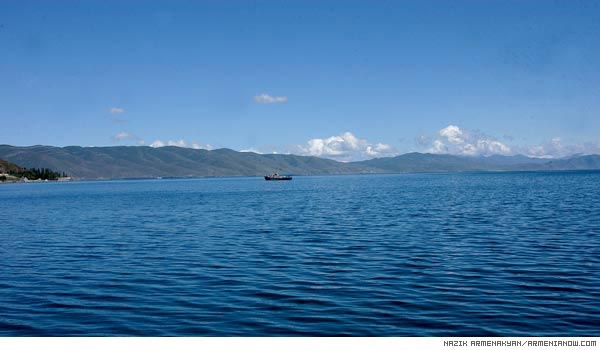
In 2009 Sevan’s water level rose by 38 centimeters.
Netting all kinds of fish in Lake Sevan will be banned in the next 3-4 years in a bid to preserve species and maintain the ecology of the lake, said Vladimir Movsisyan, head of the president-affiliated commission on Lake Sevan problems, at a press conference Tuesday.
The chief problem of Lake Sevan, the largest body of fresh water in Armenia, was the sharp reduction of the water level, which began to lower in 1950 because of the excessive water drainage for energy needs and irrigation purposes. The lowering of the water level in the lake led to the disappearance of many fish species, swamping of near-shore areas with a real prospect of an environmental disaster. In the 1980s the drainage of water was considerably reduced and a 48-kilometer tunnel Arpa-Sevan was built to redirect some water from the river Arpa into Lake Sevan. Nevertheless, the current level of water in the lake is lower than its original one by 11 meters (the original level of the lake was 2,000 meters above sea.)
At the press conference Movsisyan summed up the results of the commission’s activities in 2009 (the commission was set up in late 2008). The commission head reported that in 2009 Lake Sevan’s water level rose by 38 centimeters and reached the level of 1,899 meters. The commission is looking to achieve the rise in the lake’s water level to 1,903 by 2031, i.e. seeing the water rise by 20 centimeters a year.
According to Movsisyan, a total of 1,697 buildings and structures located along the lakeshore will be submerged by the rising water if the rise targets are met. Only 481 of these buildings are legally authorized constructions and their owners will receive compensation. The construction of the rest of the buildings was not licensed and they will be pulled down with no compensation paid.
Besides, said Movsisyan, a 15-kilometer section of a highway passing by the lake will also be submerged by the rising water. A total of 4.3 billion drams ($11.4 million) are expected to be allocated for building that section of the highway in another place.
According to the commission head, a total of 600 hectares of lakeside forests were cleaned in 2009 and 307,000 endemic trout fries were let into the lake for water purification purposes.
Leave a comment:
-
Re: Armenian Nature
We need more projects like this. Lori is a beutiful place and i hope to visit it on my next trip.Leave a comment:
-
Re: Armenian Nature
FINALLY, some good news coming out of Armenia.
----------------------------------------------------
ATP Breaks Record by Planting One Million Trees in Lori Region
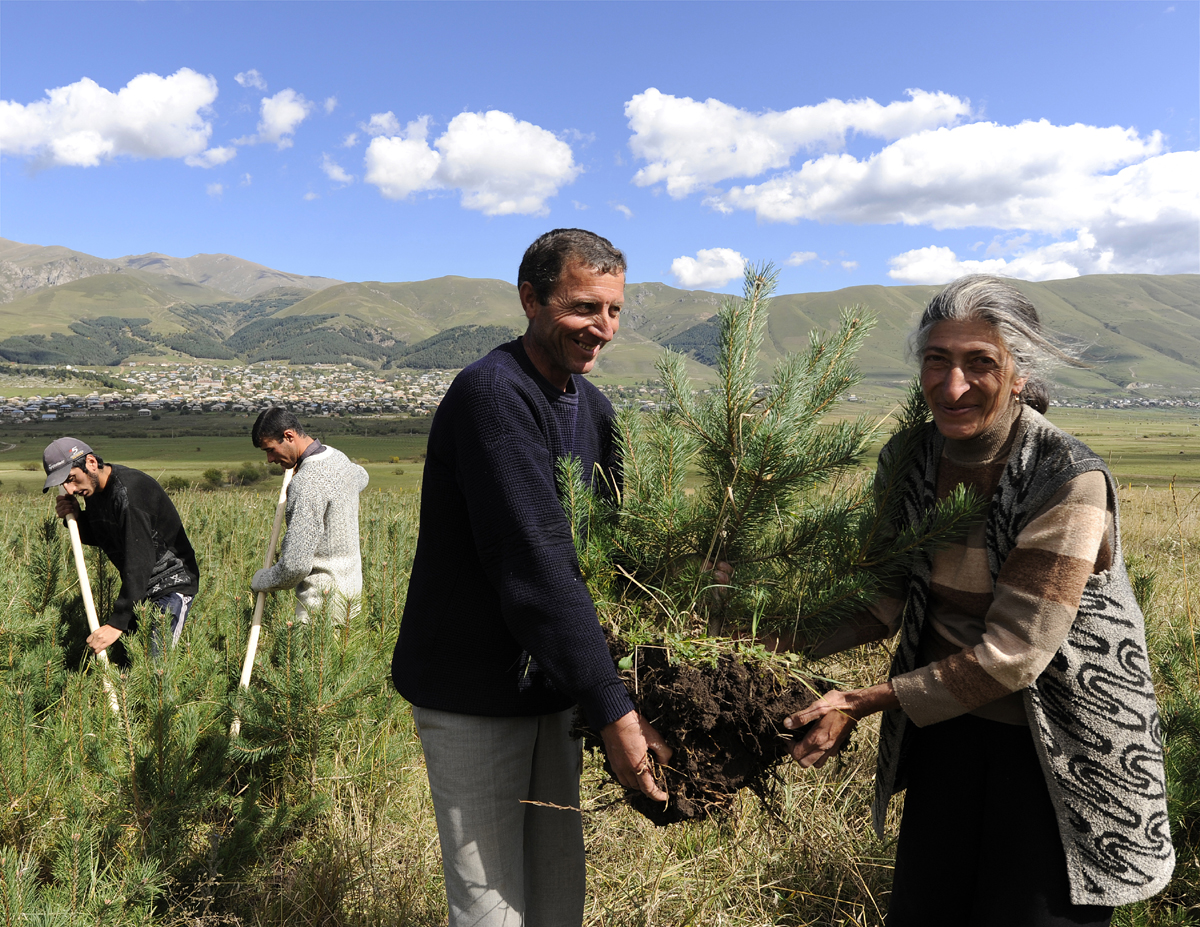
ATP provided seasonal jobs for more than 300 people from the Tsaghkaber, Jrashen, and Margahovit villages in 2009 to plant trees grown at the Mirak Family Reforestation Nursery and in the Backyard Nursery Micro-Enterprise Program.YEREVAN, Armenia—Armenia Tree Project (ATP) has been collaborating with World Wide Fund for Nature Armenian Branch (WWF Armenia) on an unprecedented large-scale reforestation program in the communities of Jrashen and Tsaghkaber in the northern region of Lori.
“Mitigating Impacts of Climate Change through Forest Protection, Management and Restoration in Southern Caucasus” is a project implemented by the consortium of WWF Germany, WWF Caucasus, and WWF Armenia in cooperation with the Ministry of Nature Protection, the Ministry of Agriculture (”Hayantar” Armenian Forest SNCO) of the Republic of Armenia, Armenia Tree Project Foundation, Jrashen and Tsakhkaber communities financed by the Federal Ministry for the Environment, Nature Conservation and Nuclear Safety (BMU) of the Federal Republic of Germany through KfW in the framework of the International Climate Protection Initiative.
The project was initiated in late 2008, and since then ATP has planted 1 million indigenous tree seedlings for the program, which is the largest number of trees planted by the organization in a single year. The planting site covered a total of 400 ha. (1,000 acres) of deforested land in Lori, near the earthquake region of Spitak.
“Climate change is happening globally and Armenia is not an exception. Weather extremes that are so common in Armenia have serious implications for forests. We are proud to collaborate with the German KfW Bank and WWF to make a difference and create a better future for the environment and people,” stated ATP Yerevan director Mher Sadoyan. “We hope we can fight the adverse impacts of the climate change in those territories of Armenia which are most affected, and reforestation is one way to achieve this goal.”
This environmental program has created hundreds of jobs for villagers who are often forced to migrate to earn a living abroad in countries such as Russia. As part of the goal to address the socio-economic status of the communities in the project area, ATP has provided seasonal tree planting jobs for more than 300 people from Tsaghkaber, Jrashen, Margahovit, and neighboring villages.
The tree seedlings for the project were grown in ATP’s Mirak Family Reforestation Nursery in Margahovit, as well as by families participating in the Backyard Nursery Micro-Enterprise Program in the Getik River Valley. This new forest was established with oak, pine, ash, maple, and apple seedlings which are indigenous to the region.
“Armenia Tree Project is honored to cooperate with the German KfW Bank and World Wide Fund for Nature. Together we are fighting climate change and creating a green future for future generations of Armenians,” emphasized Sadoyan.
Since 1994, Armenia Tree Project has planted and restored more than 3.5 million trees at over 800 sites around the country and created hundreds of jobs for impoverished Armenians in tree-regeneration programs. The organization’s three tiered initiatives are tree planting, community development to reduce poverty and promote self-sufficiency, and environmental education to protect Armenia’s precious natural resources.
For more information and to support ATP’s mission, visit www.armeniatree.org.Leave a comment:
-
Re: Armenian Nature
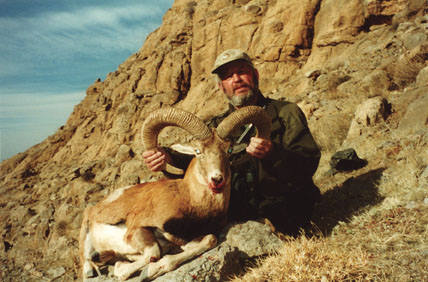
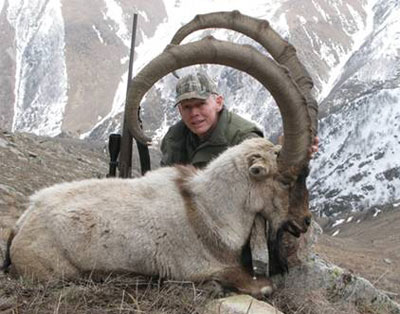
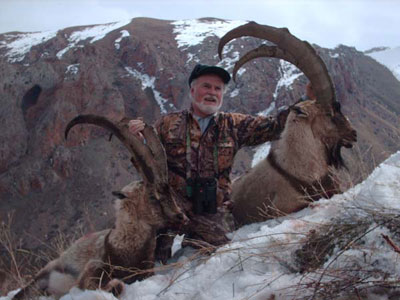
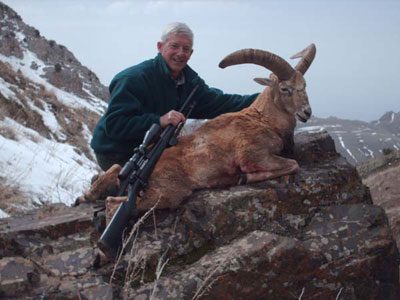
No, it's ok. What I was trying to express was what you just said, feel the roll of the hunted. I can't understand why this killing continues to happen, what do they thing animals don't fear? don't feel pain? We are the only specie who kills for pleasure, long ago we evolved from the necessity of killing to survive, it's not fair. At the end we will be our own murders if we continue to mistreat mother nature as we do.Leave a comment:
-
Re: Armenian Nature
Indeed Ashot, I would love to see these "hunters" turn into hunted and experience the "trill" of being hunted down like they do to when they exterminate these noble creatures. I am sorry but I am a humanist to the humane.Originally posted by ashot24 View PostLeave a comment:



Leave a comment: