Announcement

Collapse
No announcement yet.

Dashnaktsutyun - Armenian Revolutionary Federation

Collapse
X
 
  • Filter
  • Time
  • Show
Clear All
new posts

  • Federate
    replied
    Re: Dashnaktsutyun - Armenian Revolutionary Federation

    Sarkisian Warned Against Signing ‘Karabakh Deal’
    16.07.2009
    Sarkis Harutiunian

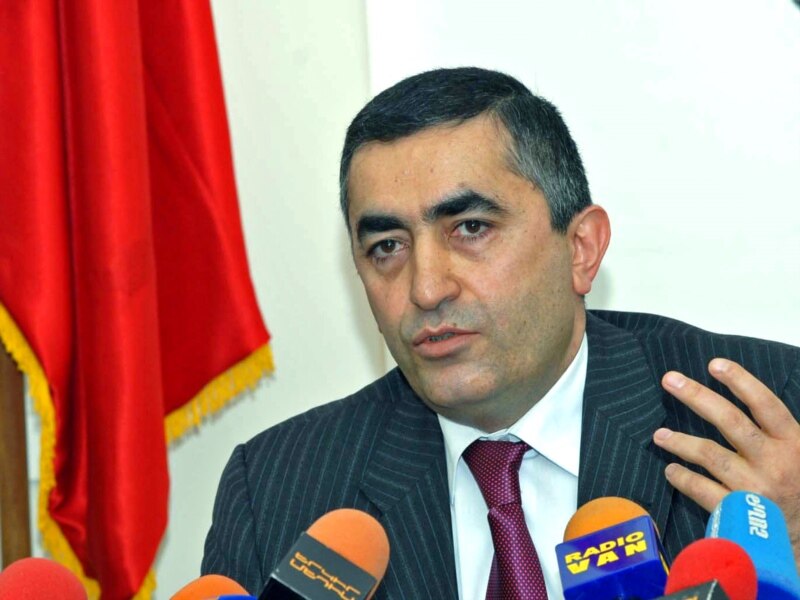
    A political party in Armenia known for its hard line on national issues has warned President Serzh Sarkisian against signing any framework agreement with Azerbaijan over the disputed Nagorno-Karabakh region that would be based on the latest principles offered by international mediators.
    At a press conference in Yerevan on Thursday, a senior representative of the Armenian Revolutionary Federation (Dashnaktsutyun) did not rule out a demand for Sarkisian’s resignation if the latter signed a document based on the so-called Madrid principles that Dashnaktsutyun deems as running against the interests of both Armenia and Karabakh.

    Sarkisian will fly to Moscow on Friday to hold talks with his Azerbaijani counterpart Ilham Aliev. The meeting in the Russian capital will come a week after the presidents of France, Russia, and the United States – the three countries that jointly co-head the Minsk Group of the Organization for Security and Cooperation in Europe (OSCE) leading international efforts on mediating a solution to the Karabakh conflict – issued a joint statement urging the presidents of Armenia and Azerbaijan “to resolve the few differences remaining between them and finalize their agreement” on the most recent draft of the Madrid principles.

    These principles proposed by the mediators as a basis for further negotiations, in particular, call for the “return of the territories surrounding Karabakh to Azerbaijani control” and “future determination of the final legal status of Nagorno-Karabakh through a legally binding expression of will.”

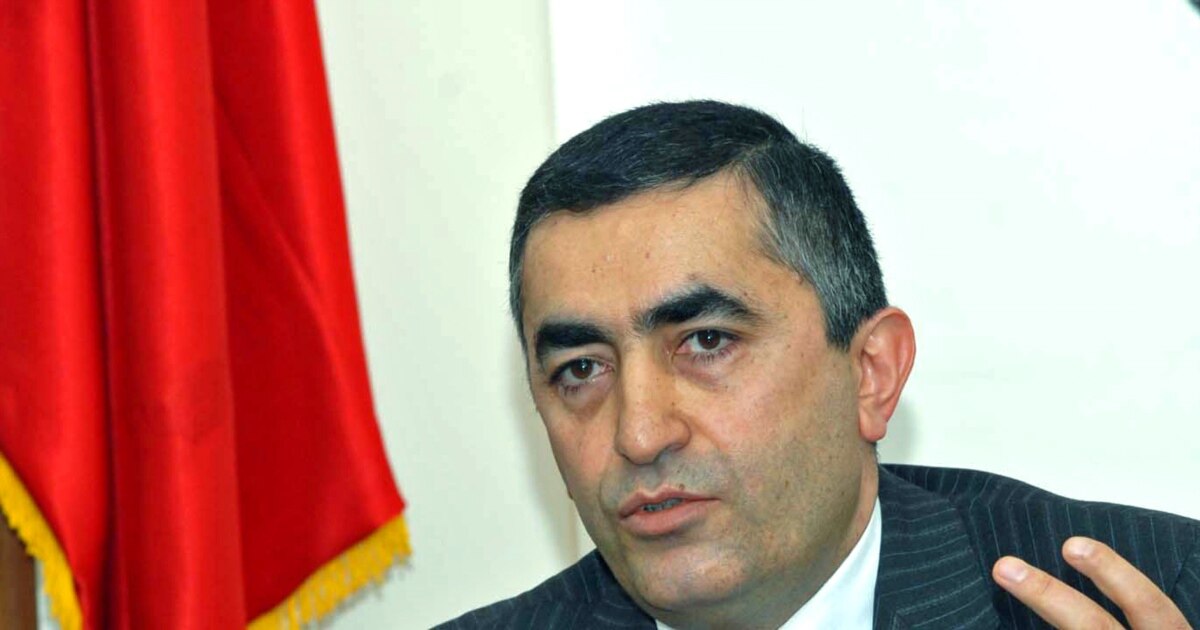
    Dashnaktsutyun Executive Council of Armenia representative Armen Rustamian said on Thursday that “if, God forbid, such a document is signed, our struggle will receive a completely different nature.”

    “We have repeatedly said that no matter who the incumbent president is, we will oppose such a policy with all available constitutional means, including by demanding [the president’s] resignation,” said Rustamian.

    Earlier this week, Dashnaktsutyun presented a demand for the resignation of the foreign minister in the Sarkisian cabinet.

    The party had scheduled a picket near the Foreign Ministry building in Yerevan for Thursday afternoon, but canceled it after President Sarkisian declared July 16 a day of national mourning in Armenia over a deadly plane crash in Iran in which 168 people, including 36 Armenians, were killed while traveling from Tehran to Yerevan.

    Among Dashnaktsutyun’s demands, which were also echoed by the participants of the party-hosted large forum in Karabakh capital Stepanakert last weekend, is that Yerevan paves the way for Karabakh to return to the negotiations with Azerbaijan as a full party.

    A statement adopted by the Dashnaktsutyun Executive Council of Armenia earlier this week called for the resignation of Foreign Minister Edward Nalbandian because “Armenia’s foreign policy has deviated from the main provisions of the national security strategy.”

    “For the purpose of eliminating the negative consequences that have emerged in the foreign policy domain and restoring the national-state course, we demand the resignation of Foreign Minister Edward Nalbandian, who is immediately responsible for the sphere,” said Rustamian, presenting the summary demand of the statement.

    Rustamian explained that by not demanding President Sarkisian’s resignation, Dashnaktsutyun shows that it does not want to “disrupt the works”, but instead seeks a “drastic change” in the situation.

    “The president still has an opportunity to make a drastic change in the situation and, most importantly, not to sign the document that is being proposed today,” he said.

    Rustamian also announced that Dashnaktsutyun had prepared a letter addressed to the ambassadors of the United States, France and Russia to Armenia informing them of “the deepest disappointment of Armenians around the world with the unjustified and groundless pressure of the Minsk Group co-chairing countries on Armenia for the purpose of imposing unilateral and dangerous concessions in the issue of the Nagorno-Karabakh conflict.”

    Another Armenian party, Zharangutyun, also known as a vocal critic of Sarkisian’s policy on Karabakh, hinted at possible cooperation with Dashnaktsutyun in opposing a deal with Azerbaijan based on the Madrid principles.

    Larisa Alaverdian, a member of the party’s parliamentary faction, emphasized at a separate press conference on Thursday that Zharangutyun was the first to declare they would demand Sarkisian’s resignation if he signed any document based on the Madrid principles.

    “I am glad we have some ground for cooperation with such an old and established political force as Dashnaktsutyun,” said Alaverdian. “I have criticized Dashnaktsutyun on many occasions over domestic matters before. But it is good that [in this issue] our viewpoints match.”
    A political party in Armenia known for its hard line on national issues has warned President Serzh Sarkisian against signing any framework agreement with Azerbaijan over the disputed Nagorno-Karabakh region that would be based on the latest principles offered by international mediators.

    Leave a comment:


  • Federate
    replied
    Re: Dashnaktsutyun - Armenian Revolutionary Federation

    Dashnak Party Seeks FM’s Resignation

    Armenia -- Giro Manoyan, a senior member of the Armenian Revolutionary Federation, holds a news conference on 26Jun2009.
    14.07.2009
    Ruben Meloyan

    A hardline Armenian party has unveiled its intention to seek the resignation of Armenia’s foreign minister over what it views as President Serzh Sarkisian’s failed policy in the Nagorno-Karabakh settlement process. The Armenian Revolutionary Federation (Dashnaktsutyun), however, said it would not present the resignation demand for Sarkisian.
    Dashnaktsutyun has been in intensive discussions since the end of a pan-Armenian gathering held in Karabakh capital Stepanakert last weekend to address concerns in the Armenian society over the current state of the Karabakh negotiations.

    In its final resolution, the Dashnaktsutyun-hosted conference urged Armenia not to sign the framework agreement proposed by international mediators based on principles that imply an indefinitely delayed status for Karabakh. It also called on official Yerevan to pave the way for Stepanakert’s return to the negotiations as a full party.

    After a plenary meeting in Yerevan, Dashnaktsutyun said it will stage a protest in front of the Foreign Ministry building on Thursday demanding the resignation of Edward Nalbandian.

    The action will be held on the eve of President Serzh Sarkisian’s trip to Russian capital Moscow where he is due to hold another round of talks over the longstanding dispute with his Azerbaijani counterpart Ilham Aliev.

    “Our problem is that if a leadership change implies the coming of several figures of the [Armenian National] Congress to power, then we have no guarantee that these forces will not conduct an even more conciliatory policy than the current ones,” Dashnaktsutyun’s senior member and chief foreign policy spokesman Giro Manoyan said to RFE/RL explaining reasons why his party is not presenting the demand for President Sarkisian’s resignation.

    At the same time, Manoyan warned that if applied, a document on the Karabakh settlement based on the updated Madrid principles would only lead to a new war.

    Yet, he said, Armenia still can redress the situation by changing its stance and can achieve “a fairer and more acceptable ultimate deal by engaging Karabakh in the negotiating format.”

    “If anyone is to change the foreign minister, it must be the president. If he does so, it will mean he is changing his policy,” said Manoyan, without elaborating on Dashnaktsutyun’s further action if Sarkisian ignores its demand.

    A hardline Armenian party has unveiled its intention to seek the resignation of Armenia’s foreign minister over what it views as President Serzh Sarkisian’s failed policy in the Nagorno-Karabakh settlement process. The Armenian Revolutionary Federation (Dashnaktsutyun), however, said it would not present the resignation demand for Sarkisian.

    Leave a comment:


  • Federate
    replied
    Re: Dashnaktsutyun - Armenian Revolutionary Federation

    Dashnak Leader Against Alliance With Ter-Petrosian


    A leader of the Armenian Revolutionary Federation (Dashnaktsutyun) has responded coolly to offers of cooperation extended to his party by Armenia’s largest opposition force led by former President Levon Ter-Petrosian.
    Ter-Petrosian’s Armenian National Congress (HAK) urged Dashnaktsutyun and other “democratic forces” to join it in fighting against the country’s current leadership following the disputed mayoral elections held in Yerevan on May 31. The offer was remarkable given a long history of bitter rivalry between the nationalist party and the ex-president.

    In an interview with the Arminfo news agency published on Wednesday, Vahan Hovannisian, Dashnaktsutyun’s parliamentary leader, sounded highly skeptical about chances for such cooperation. “We are a national party, and we have expressed our disagreements with the authorities over national issues,” he said in an apparent reference to the Nagorno-Karabakh conflict and Turkish-Armenian relations.

    “We need to ascertain the [opposition] Zharangutyun party’s and the HAK’s positions on national issues before we can think about political cooperation,” added Hovannisian. “The HAK’s position is not to our liking, and it is a bit unclear to us on what issues we are being offered to hold consultations.”

    Dashnaktsutyun and the HAK have both strongly criticized President Serzh Sarkisian’s diplomatic overtures to Turkey. Ter-Petrosian, who himself favored a conciliatory line on Turkey while in power, has been particularly scathing about that policy.

    “I think the Congress has the most national approach to the existing national issues,” Levon Zurabian, a close Ter-Petrosian associate, told RFE/RL, commenting on Hovannisian’s remarks. “I don’t see any force, including Dashnaktsutyun, that subjects these authorities to weightier and more emphatic criticism than the Armenian National Congress.”

    Zurabian said the HAK is still hopeful that other opposition groups will agree to coordinate their activities with the Ter-Petrosian-led alliance. He said their leaders are welcome to attend and deliver speeches at the HAK’s next rally due on Friday.

    Ter-Petrosian is expected to present to supporters a plan of further opposition actions stemming from what the HAK sees as a falsification of municipal vote results. According to Zurabian, the HAK leadership will discuss and approve it at a “very important meeting” on Thursday.

    According to the Central Election Commission, the HAK won 17.6 percent of the vote in the May 31 polls that earned it 13 of the 65 seats in Yerevan’s Council of Elders. Dashnaktsutyun fared much worse, winning no council seats at all. Both political forces have refused to recognize the official vote results.

    A leader of the Armenian Revolutionary Federation (Dashnaktsutyun) has responded coolly to offers of cooperation extended to his party by Armenia’s largest opposition force led by former President Levon Ter-Petrosian.

    Leave a comment:


  • Federate
    replied
    Re: Dashnaktsutyun - Armenian Revolutionary Federation

    Ter-Petrosian Bloc Reaffirms Opposition Unity Call


    The Armenian National Congress (HAK) of former President Levon Ter-Petrosian reaffirmed on Tuesday its readiness to join forces with other opposition forces and in particular, his old rival, the Armenian Revolutionary Federation (Dashnaktsutyun).
    In a June 3 statement, the HAK urged all “democratic political forces” to join it in fighting for leadership change and the “establishment of democracy” in Armenia. The statement followed municipal elections in Yerevan that were controversially won by the country’s two largest pro-government parties.

    The top leader of another major opposition party, Zharangutyun, likewise made a case for the “consolidation of the opposition camp” on Monday. Raffi Hovannisian expressed hope that Zharangutyun, the HAK and Dashnaktsutyun will put aside their difference and jointly “prepare for a normal electoral regime change.”

    “We are happy to hear the first constructive response [to the HAK’s statement] and to know that Raffi Hovannisian is of the same opinion,” Levon Zurabian, the HAK’s central office coordinator, told RFE/RL.

    When asked whether the Ter-Petrosian-led alliance is ready to work with Dashnaktsutyun, Zurabian said, “If Dashnaktsutyun regards itself as a political ideological force, then our call is addressed to Dashnaktsutyun as well.”

    Zurabian stressed that both Dashnaktsutyun and Zharangutyun need to prove their opposition credentials by making real efforts to “rid the country of dictatorship.” “It is very easy to verify their sincerity,” he said. “If they fight against this dictatorship just as resolutely, then they are sincere. If not, then [it will mean that] they either pursue mercantile goals or goals related to their future political careers.”

    Dashnaktsutyun leaders have so far declined to comment on the extraordinary cooperation offers from the HAK. The nationalist party was bitterly opposed to Ter-Petrosian during his 1991-1998 presidency.

    The Armenian National Congress (HAK) of former President Levon Ter-Petrosian reaffirmed on Tuesday its readiness to join forces with other opposition forces and in particular, his old rival, the Armenian Revolutionary Federation (Dashnaktsutyun).

    Leave a comment:


  • Eddo211
    replied
    Re: Dashnaktsutyun - Armenian Revolutionary Federation

    Originally posted by Federate View Post
    In Lebanon’s Patchwork, a Focus on Armenians’ Political Might

    Last month, the main Armenian political bloc decided to support Hezbollah’s alliance in the coming parliamentary elections in Lebanon against the pro-American parliamentary majority.
    http://www.nytimes.com/2009/05/26/wo...ref=middleeast
    Unless there is no choice and the well being of Armenians are at stake I don’t think it is a wise decision to support the Hezbollah just to gain more political points.....................also this works against Armenians as a whole who are pushing for the AG recognition from the Western governments who now will be raising their eyebrows. Then again chances are they know the Armenian situation there and they would understand but our enemies will run this into the ground for all its worth.

    Leave a comment:


  • KanadaHye
    replied
    Re: Dashnaktsutyun - Armenian Revolutionary Federation

    So much for unity. I say we over throw everyone and build our kingdom. These clowns could run paradise into the ground.

    Leave a comment:


  • Federate
    replied
    Re: Dashnaktsutyun - Armenian Revolutionary Federation

    In 1994, LTP bans the ARF from Armenia and in scenes people will not soon forget, has government forces throw computers, printers etc from the windows of buildings and top ARF leaders jailed and purged.

    In 2009, LTP's ANC offers the ARF cooperation and calls it a "healthy party... built on an ideological foundation."
    -------------------------------------------------------------------------
    Opposition Bloc Offers Cooperation To Dashnaktsutyun


    Armenia’s largest opposition alliance led by former President Levon Ter-Petrosian urged the Armenian Revolutionary Federation (Dashnaktsutyun) and other “healthy” political forces on Wednesday to join it in fighting against the country’s current leadership.
    The Armenian National Congress (HAK) also stood by its claims that the May 31 municipal elections in Yerevan were rigged by President Serzh Sarkisian and his political allies.

    “The techniques of vote rigging applied during the municipal elections in Yerevan prove that a criminal and totalitarian state system with a democratic façade has been created in Armenia,” the HAK said in a statement.

    “The Armenian National Congress has taken the lead in the fight against this destructive system,” it added. “We are calling on all of the country’s democratic political forces to close the ranks in this fight for the establishment of democracy.”

    Levon Zurabian, a leading member of the alliance, presented the statement and elaborated on its key message at a news conference in Yerevan. “We are also appealing to all those political forces, that consider themselves healthy and are built on an ideological foundation, to unite and fight against these phenomena,” Zurabian said. He made clear that the HAK considers Dashnaktsutyun a healthy party.

    The statement was remarkable given the long history of antagonism between the Ter-Petrosian camp and Dashnaktsutyun. The nationalist party strongly opposed Armenia’s first post-Soviet government head by Ter-Petrosian from 1990-1998 and was controversially banned by the latter in 1994. Dashnaktsutyun was a major ally of Ter-Petrosian’s successor Robert Kocharian and, until recently, President Sarkisian.

    It also unequivocally backed the Armenian government’s harsh crackdown on the Ter-Petrosian-led opposition following the disputed presidential election of February 2008. Dashnaktsutyun leaders remained cool towards the idea of cooperating with the HAK even as they pulled out of the country’s governing coalition in late April.

    Like the HAK, Dashnaktsutyun has alleged serious fraud and refused to accept the official results of the weekend polls which gave victory to Sarkisian’s Republican Party of Armenia (HHK). Two of the party’s top leaders on Tuesday backed the HAK’s decision not to take up its 13 seats in Yerevan’s newly elected Council of Elders. Dashnaktsutyun failed to win any seats in the 65-member municipal assembly.

    Sarkisian on Monday hailed the vote as a “serious step forward” in the elimination of Armenia’s culture of electoral fraud. A dozen observers from the Council of Europe gave a similarly positive assessment of the election conduct.

    According to Zurabian, with its handling of the polls the Sarkisian administration has essentially told Armenians that their government can be changed only by force. “We are thinking over that message,” he said, adding that the HAK could launch a campaign of nationwide “civil disobedience.”

    Another senior HAK figure, Vahagn Khachatrian, ruled out any “forcible methods” of political struggle. “We will never allow a civil war in the country,” he said. “That would mean a loss of our statehood.”

    Speaking during the last HAK rally on Monday, Ter-Petrosian promised supporters to come up with a plan of further opposition actions at their next protest scheduled for June 12.

    Armenia’s largest opposition alliance led by former President Levon Ter-Petrosian urged the Armenian Revolutionary Federation (Dashnaktsutyun) and other “healthy” political forces on Wednesday to join it in fighting against the country’s current leadership.

    Leave a comment:


  • jgk3
    replied
    Re: Dashnaktsutyun - Armenian Revolutionary Federation

    Originally posted by Gavur View Post
    Good article By ROBERT F. WORTH thanks Federate.
    I second that.

    Leave a comment:


  • Gavur
    replied
    Re: Dashnaktsutyun - Armenian Revolutionary Federation

    Good article By ROBERT F. WORTH thanks Federate.

    Leave a comment:


  • Federate
    replied
    Re: Dashnaktsutyun - Armenian Revolutionary Federation

    In Lebanon’s Patchwork, a Focus on Armenians’ Political Might


    Last month, the main Armenian political bloc decided to support Hezbollah’s alliance in the coming parliamentary elections in Lebanon against the pro-American parliamentary majority. Because of their role as a crucial swing vote, the Armenians could end up deciding who wins and who loses in what is often described as a proxy battle between Iran, Hezbollah’s patron, and the West.

    That fact has brought new attention to the Armenians, a distinct and borderless ethnic group that is spread throughout the region much as the xxxs once were. In Lebanon, they have their own schools, hospitals and newspapers. They speak their own language, with its own alphabet. Their main political party, Tashnaq, operates in 35 countries and has a secretive world committee that meets four times a year. Their collective memory of the genocide carried out against them in Turkey from 1915 to 1918 helps maintain their identity in a far-flung diaspora.

    “There is a sense of invisible nationhood across borders,” said Paul Haidostian, the president of Haigazian University, the Armenian university in Beirut.

    In fact, their political enemies here accuse the Armenians of siding with Hezbollah in order to protect the substantial Armenian populations in Syria and Iran. But the Armenian political leadership says it is fully independent and has no ideological sympathy for either of Lebanon’s two main political camps.

    Instead, the Armenians say, they are voting with the opposition for reasons that are entirely local and pragmatic: it offered them full control over the parliamentary seats in Armenian-dominated districts. The other side did not, said Hovig Mekhitarian, the chairman of the Lebanese branch of Tashnaq.

    “We want candidates who represent our community,” Mr. Mekhitarian said. “We are not with the opposition, and not with the majority.”

    That dynamic is common enough in Lebanon, a checkerboard of mutually suspicious sectarian groups that are usually more concerned with protecting their own interests than with advancing any broader national or regional agenda.

    But even in Lebanon, the Armenians stand out for their independence. During the 1975-1990 civil war, the Armenians refused to take sides. Tashnaq discouraged its members from leaving the country (though many Armenians did leave), in deference to Lebanese patriotism. Officially, the party is socialist, but its only real credo is survival.

    Mr. Haidostian said: “I remember when I used to get stopped at a checkpoint, they would ask, ‘Are you Christian or Muslim?’ I would say ‘Armenian,’ and it was like a third category. They didn’t know what to do.”

    Despite the risks, many Armenians say they find Lebanon a uniquely accommodating place, largely because its weak state allows them to live almost as a separate nation. “There is something tentative about Lebanese identity, and in that questioning Armenians have found a comfortable space,” Mr. Haidostian said.

    Although there have been Armenians here for centuries, they first came in large numbers after the genocide. Later wars and crises led to more migration, increasing the size of the Lebanese Armenian community to 240,000 by the 1970s. The creation of the independent state of Armenia in 1918 had provided refuge to some, but its small size and role as a Soviet client state after 1920 set limits on its role as an Armenian homeland.

    In Lebanon, the Armenians had an unusual mix of freedom and insecurity, allowing them to practice their religion and culture, but also limiting their assimilation into the general culture. In the United States, Armenians often marry outside their group and are less likely to speak their own language; here, they remain far more distinct.

    The Beirut neighborhood of Bourj Hamoud is a kind of miniature Armenia, with shop signs written in Armenian script and a dense, familial culture of working-class shops, homes and restaurants. The Lebanese branch of Tashnaq is based there, flying the party’s distinctive banner bearing a pen, a shovel and a dagger — representing ideology, work and struggle. There is also a rich network of schools, orphanages, retirement homes and hospitals. Schoolchildren learn three languages (and three different alphabets), and start on a fourth language in the fourth grade.

    Maintaining this independence requires political skill. During the civil war, Bourj Hamoud was trapped geographically between Christian and Palestinian areas, and its leaders had to work hard to avoid becoming a target for either side.

    Recently, that neutrality has been difficult to preserve. Tashnaq has long been a de facto Syrian ally, partly because of Syria’s former military domination of Lebanon. After the Syrian withdrawal in 2005, it remained in the Syrian political camp, mainly because it blamed the other side for an electoral law that divided Armenian districts and reduced its power.

    This spring, Saad Hariri, the leader of the pro-American parliamentary majority, tried to mend fences with Tashnaq, which controls the vast majority of Armenian votes. He had good reason: last year the electoral law was revised in a way that restored the Armenians’ power.

    Lebanese Christians represent the swing vote in this election, and the 160,000-strong Armenian community is by far the most unified subgroup of those votes. If Mr. Hariri could have persuaded Tashnaq to vote with him, the balance might have tipped in his favor to defeat Hezbollah and its allies.

    He did not succeed. Mr. Mekhitarian said Mr. Hariri had not offered enough. “He was really only offering one seat, and he wanted our support in 15 other seats,” Mr. Mekhitarian said.

    Members of Mr. Hariri’s party who took part in the negotiations offered a slightly different account. They said Mr. Hariri offered to satisfy Tashnaq’s demands on parliamentary seats, but only if the party would commit firmly to supporting him before and after the elections. It would not do so, they said.

    That is not surprising. In a sense, the Armenians cannot afford to make such political commitments. Like the Druse and other minorities in Lebanon, they believe they must subordinate all ideological principles to a nimble defense of their community.

    “In politics, you can’t always be neutral,” said Hagop Pakradounian, a Tashnaq member of Parliament. “But we try to maintain links to all sides.”

    Leave a comment:

Working...
X