If this is your first visit, be sure to
check out the FAQ by clicking the
link above. You may have to register
before you can post: click the register link above to proceed. To start viewing messages,
select the forum that you want to visit from the selection below.
Besides the documentary on Joseph Stalin, what others have you done? Nevertheless, excellent work! Where can I purchase it and does it come in an Armenian translation?
Josef Stalin in a thread about Armenian Culture??? Spilling the thrash???
Thanks a lot Siamanto for bringing together these recent reports.
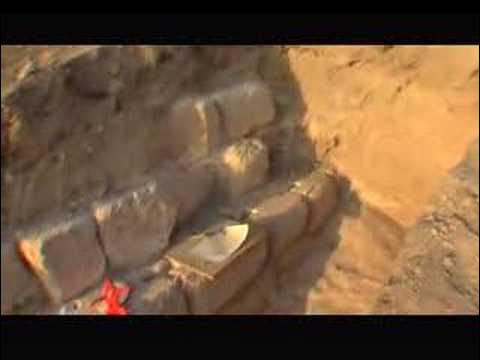
For more on the story of the excavations of Tigranakert and its history and significance, as well as a detailed account of some of the extraordinary findings unearthed so far, I welcome you to check out my documentary "Tigranakert: An Armenian Odyssey", viewable in two parts on YouTube:
Chronicles the discovery of an ancient Armenian city on territory reclaimed by Armenian forces during the Karabagh war.According to historians there were as ...
Zariadris,
You're welcome!
I'm not into flattery, however, it seems obvious that your contribution is more substantial; in fact, I have simply presented existing documents without adding much, if anything???
I enjoyed your, alas short, documentary, Thank You! Let's hope that, someday, enough will be excavated to justify a full length documentary.
Chronicles the discovery of an ancient Armenian city on territory reclaimed by Armenian forces during the Karabagh war.According to historians there were as ...
Zariadris, the documentary you posted is your production? You are Zareh Jknavorian? Besides the documentary on Joseph Stalin, what others have you done? Nevertheless, excellent work! Where can I purchase it and does it come in an Armenian translation?
Thanks a lot Siamanto for bringing together these recent reports.
For more on the story of the excavations of Tigranakert and its history and significance, as well as a detailed account of some of the extraordinary findings unearthed so far, I welcome you to check out my documentary "Tigranakert: An Armenian Odyssey", viewable in two parts on YouTube:
Chronicles the discovery of an ancient Armenian city on territory reclaimed by Armenian forces during the Karabagh war.According to historians there were as ...
Chronicles the discovery of an ancient Armenian city on territory reclaimed by Armenian forces during the Karabagh war.According to historians there were as ...
KRZYSZTOF PENDERECKI: I AM GLAD TO BE IN THE LAND OF MY ANCESTORS
Noyan Tapan
April 8, 2008
YEREVAN, APRIL 8, NOYAN TAPAN. The famous Polish composer Krzysztof
Penderecki arrived in Yerevan on April 7. He told reporters that
he considers his first visit to Armenia as "return home", as his
grandmother was an Armenian emigrant from Isfahan.
"I am very grateful for the invitation to visit Armenia. I have been
waiting for this visit quite long - for 75 years since my birthday. I
tried to come to Armenia in the 1960s but I failed. Now I am very glad
to be in the land of my ancestors. This visit is a return home to me".
Penderecki has come to Armenia to participate in Week of Penderecki
organized within the framework of the international music festival
"Prospects of the 21st Century" held on April 7-12. During these
days the Armenian music lovers will have an exceptional opportunity
to listen to works of the Polish composer at the concerts conducted
by him. The living legend of classic art has brought famous musicians
from ten countries with him.
K. Penderecki said that he has had no occasion to mix with Armenian
composers, except for Aram Khachatrian, whom he received at his
home. "At that time I was a follower of the avant-garde movement, and
Khachatrian's music seemed a kind of old and too classic to me. Later,
during my second meeting with him, I performed his Violin Concert in
Warsaw," Penderecki recalled (at first he was a violinist).
In response to the question of whether his Stabat Mater resembles
Armenian Liturgy, the composer replied: "Perhaps. When was a child,
grandmother used to take me to Armenian church, maybe there is a
resemblance, I cannot say".
Work is the real source of inspiration for the composer. "I wake up
very early in the morning and start my work. When I begin creating,
inspiration comes at that time. When it is groundless, everything is
fine. But sometimes the development is slow, it also happens".
"There are artists, for example, Shagal, who always create in the
same way.
Others, for example, Picasso, constantly change their directions. I
work like Picasso: by changing my forms and directions. Each artist has
his own labyrinth. The point is how to get out of one's labyrinth. I
also get into such labyrinths but I alsways see ways to get out of
them," Penderecki said.
The world-famous composer and conductor of Armenian origin promised
to reporters that he will tell about his impressions and thoughts
about Armenia in a few years.
Լուրեր Հայաստանից եւ Սփյուռքից, սպասվող իրադարձություններ, շուտով, տարեթվեր, նորություններ հայկական աշխարհից, Արցախից, The Noyan Tapan Highlights անգլերեն եւ ֆրանսերան շաբաթաթերթ, հրատարակչություն, գրքեր, հայ մամուլ, News from Armenia, Diaspora, Новости Армении и Диаспоры
KRZYSZTOF PENDERECKI TO BE HONORARY CHAIRMAN OF PROSPECTS OF 21st YEREVAN FESTIVAL
Noyan Tapan
April 11, 2008
YEREVAN, APRIL 11, NOYAN TAPAN. Henceforth the days of world-famous
composer and conductor Krzysztof Penderecki in Armenia will become
traditional and Penderecki himself will become the Honorary Chairman of
the Prospects of 21st International Music Festival. Stepan Rostomian,
the festival Director, said on April 11. According to him, Krzysztof
Penderecki's visit to Armenia is a historic event, as one of "the last
of the Mohicans" of great music of the 20th century visited Armenia
thanks to this festival of classical music having international
authority.
During his second meeting with Armenian journalists Penderecki said
that he is too impressed by the festival. "The festival is organized
in line with all international standards. And orchestras and choirs,
which performed my works, showed high professionalism," Mr Penderecki
said. The maestro is especially impressed by the performances of
the Armenian State Academic and Hover chamber choirs conducted by
Hovhannes Chekijian and Sona Hovhannisian.
Krzysztof Penderecki is especially delighted with performances of
Komitas' works (for instance, Chekijian's choir, on April 7, before
Penderecki's Stabat Mater performed Sand Song by Komitas). "Komitas
is unique and cannot be compared with anyone. He is very close to
his national traditions," he emphasized. The maestro said that his
next work will have Armenian lyrics.
According to the world-famous composer, when creating for him the
most important is not form, but the cosmic material that is the
basis of the creation. The musician having Armenian roots feels a
complete Polish and in the respect of creation he is international,
with traditions of German classical music as a basis.
Krzysztof Penderecki expressed gratitude to festival's organizers
for giving him a possibility to visit Armenia. The maestro also said
that he gained "good friends in Armenia, with which I am connected
through not only music, but also through human relationship." And
as Mr Rostomian said, world-famous cellist, Mstislav Rostropovich's
last Moscow student Ivan Monighetti has made much contribution in
the issue of maestro's coming to Armenia. I.
Monighetti for already several times has participated in the Armenian
festival.
Krzysztof Penderecki's wife, Elzbieta Penderecka, who was present at
the meeting and is the Chairwoman of Beethoven International Music
Festival being held In Warsaw, said that Armenia will take part in
that authoritative festival from next year.
Famous musician-performers Ivan Monighetti, Andrzej Bauer, Chrisian
Altenburger, Arto Noras, and Michele Letik taking part in Penderecki
festival said that they have good impressions from Armenia. In
particular, they highly evaluated the fact that there are many
young people among concert's spectators, who take interest in modern
music. They also noted that elderly people and pensioners are mainly
among the spectators in European countries.
Լուրեր Հայաստանից եւ Սփյուռքից, սպասվող իրադարձություններ, շուտով, տարեթվեր, նորություններ հայկական աշխարհից, Արցախից, The Noyan Tapan Highlights անգլերեն եւ ֆրանսերան շաբաթաթերթ, հրատարակչություն, գրքեր, հայ մամուլ, News from Armenia, Diaspora, Новости Армении и Диаспоры
KRZYSZTOF PENDERECKI PLANS TO COMPOSE ARMENIAN SPIRITUAL MUSIC
ETCHMIADZIN, APRIL 12, NOYAN TAPAN. Catholicos of All Armenians Karekin
II on April 10 received Krzysztof Pendrecki in the Mother See of Holy
Etchmiadzin. Welcoming the world-famous composer, His Holiness said in
his speech: "We are familiar with your works and today we are glad to
meet you and express our appreciation for your services to mankind".
K. Penderecki told His Holiness about the history of his family,
speaking about his Armenian roots and childhood memories.
NT was informed by the press services of the Mother See of Holy
Etchmiadzin that the interlocutors also spoke about resemblance of K.
Pendereski's works to the Armenian spiritual music. In the words of the
composer, he has a desire to write Armenian spiritual music.
Լուրեր Հայաստանից եւ Սփյուռքից, սպասվող իրադարձություններ, շուտով, տարեթվեր, նորություններ հայկական աշխարհից, Արցախից, The Noyan Tapan Highlights անգլերեն եւ ֆրանսերան շաբաթաթերթ, հրատարակչություն, գրքեր, հայ մամուլ, News from Armenia, Diaspora, Новости Армении и Диаспоры
This year the excavations in Tigranakert will start in June and will
last till August, said Hamlet Petrosyan, the head of the excavation
group and the PHD of the Sciences National Academy.
By the financial support of the NKR and "Yerkir" unity this is the
third year the excavations continue in Tigranakert. This year the
president of the NKR Bako Sahakyan promised to provide 30 million
drams.
According to him the excavations resulted in the founding the details
of such powerful and cultural city. He added that the foundation
of Tigranakert opens quite a new page in the cultural history of
Armenians coming from ancient times.
AMERICAN NEWSPAPERS COMPARED TIGRANAKERT WITH TROY
KarabakhOpen
11-04-2008 10:54:37
Yesterday the film about the discovery of the ancient town of
Tigranakert in Artsakh entitled "Artsakh Odyssey of Tigranakert"
was demonstrated in Stepanakert.
"The American newspapers compared the discovery of Tigranakert with
the discovery of Troy," said the head of the Artsakh expedition of
the Institute of Archeology and Ethnography of the National Academy
Hamlet Petrosyan. "It is not just a research with a scientific,
academic value.
Everyone should be aware of the excavations of Tigranakert. Our
greatest achievement would be creation of Tigranakert in our souls
to bring us together," the archeologist said.
The head of the expedition thanked the government of Karabakh for
assistance and held out hope that there will be people who will also
"fall ill" with Tigranakert.
Вас ждет великое путешествие по миру секса: нежного и горячего, ласкового и лютого, классического и извращенного, в общем – на ваш личный вкус!
RA HAS SHOWED POINTED INDIFFERENCE TO EXCAVATIONS OF ARTSAKH TIGRANAKERT, EXPEDITION HEAD SAYS
Noyan Tapan
April 2, 2008
YEREVAN, APRIL 2, NOYAN TAPAN. Artsakh Tigranakert's excavations
continue for already the second year, but due to lack of funds it is
impossible to present the results of the excavations to the world. As
Hamlet Petrosian, the head of Artsakh archeological expedition of
the Archeology and Ethnography Institute of the RA National Academy
of Sciences, said at the April 1 press conference, only last year
nearly 38 thousand USD was spent on excavations. These funds were
provided by the Yerkir union. However, according to him, 160-200
thousand USD is needed for the research, but the union does not have
such a possibility.
According to H. Petrosian, they have applied to the RA Prime Minister
in connection with the problem and have been refused, they have also
applied to VivaCell and ArmRosgazprom, but have received no response
from them yet.
According to the head of the expedition, the National Academy of
Sciences shows pointed indifference. Meanwhile, according to him,
the NKR authorities have expressed readiness to provide 30m drams
(nearly 96.7 thousand USD), which will give a possibility to carry
out excavations for another three months.
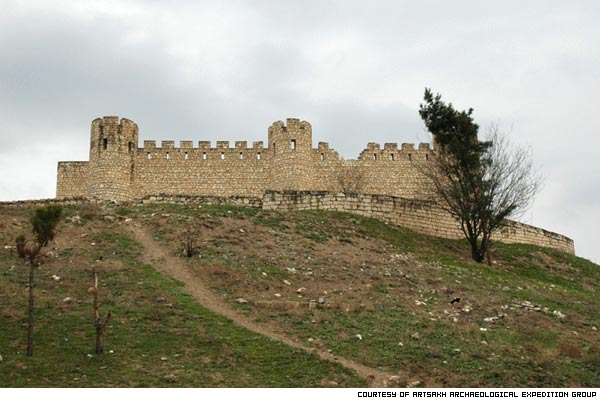
It was mentioned that the excavations revealed that Tigranakert
was on the Stepanakert-Martakert highway and occupies an area of
50 hectares. Mijnaberd is one of the most prominent monuments of
Tigranakert. Its wall with the length of 40 meters has been already
discovered, it functioned until the 11th century. By the way,
at present excavations have been done only in 0.02% part of the
total area.
Լուրեր Հայաստանից եւ Սփյուռքից, սպասվող իրադարձություններ, շուտով, տարեթվեր, նորություններ հայկական աշխարհից, Արցախից, The Noyan Tapan Highlights անգլերեն եւ ֆրանսերան շաբաթաթերթ, հրատարակչություն, գրքեր, հայ մամուլ, News from Armenia, Diaspora, Новости Армении и Диаспоры
NAGORNO-KARABAKH GOVERNMENT WILL SUPPORT EXCAVATIONS IN TIGRANAKERT
KarabakhOpen
02-04-2008 10:40:28
The government of Nagorno-Karabakh is likely to provide assistance
for excavation of the ancient town of Tigranakert in NKR. According
to Hamlet Petrosyan, head of the expedition of the Institute of
Archeology and Ethnography of the Armenian National Academy of Science,
the NKR government has allocated 30 million drams (USD 100 thousand)
to continue the digging, Regnum reports.
During the meeting with the archeologists the NKR president Bako
Sahakyan promised to, Hamlet Petrosyan said, noting that unlike
the government of NKR, the government of Armenia is not expected to
provide assistance.
"We have turned to Prime Minister Serge Sargsyan, the National
Assembly, major businessmen, Viva Cell for a number of times but
we were told that the government cannot afford to fund the project,
and others did not even respond," said the head of the expedition.
Last year only the Avetyats Yerkir NGO funded the excavations, and
an area of one hectare was dug, which is only 2 percent of the total
area of the archeological complex, Hamlet Petrosyan said. According to
him, in 2007 the archeologists excavated the citadel and the church,
a single-nave basilica built in the 6th century. All the findings
are now kept at the Museum of History of Artsakh and the Museum of
Shushi after study and restoration.
The church belongs to the Armenian architecture since, the
archeologists say, it is identical to the churches of Yeghvard,
Jrvezh and other Armenian basilicas. The archeologists state that the
early Christian burial places near Tigranakert are evidence that this
territory of Artsakh (the historical name of Nagorno-Karabakh) was
a hotbed of the early Christian civilization, and over 1.5 thousand
years, up to the 14th century, people lived there.
The archeologists say the lack of funding does not allow telling
the international community about the results of excavations and
the Armenian origin of the town, while the government of Azerbaijan
funds media which describe those monuments as the cultural legacy of
the Albanian population which allegedly lived in this territory and
whose predecessors the Azerbaijanis consider themselves.
The excavations in the town of Tigranakert founded by the Armenian
King Tigran the Great began in 2007. The town is near the highway
Stepanakert-Martakert, on the bank of the River Kakhtsraget, 28 km
from the town of Martakert and 4 km from the town of Aghdam.
RESEARCH IN RUINS: TIGRANAKERT PROJECT THREATENED BY LACK OF FINANCES
Arpi Harutyunyan
ArmeniaNow reporter
The expedition group excavating the city of Tigranakert built by
Armenian King Tigran the Great (1st century) in Karabakh faces
financial problems that threaten continuing the project started in
2005. The Government of Armenia has refused its request for state
support.
"We even addressed Prime Minister Sargsyan to get financing, but the
letter was sent to the Ministry of Finance, which replied there are no
means [for that purpose]. We have even appealed to the Union of
Businesspeople, Hayrusgazard (Armenian-Russian Gas Industry) and
VivaCell but have not received a response. Today our authorities and
even the Academy [of Sciences] have adopted an indifferent posture,"
says the head of the Artsakh archaeological expedition group of the
Institute of Archaeology and Ethnography of the National Academy of
Sciences Hamlet Petrosyan, who believes Tigranakert is not only a
monument and a history with culture, but also a serious bone of
political contention.
Petrosyan says the excavations of Tigranakaert, 4 kilometers north of
Aghdam are an echo on the road to the solution of problems between
Armenia and Azerbaijan. "The struggle for the self-determination of
Artsakh evolved and will evolve around the discussion of various
historic and cultural values and arguments. Let's remember, the
Artsakh liberation war began first of all because of the question of
ownership of Gandzasar Monastery and Dadivank."
The idea for the search of Artsakh Tigranakert belongs to the chairman
of the Yerkir Union Sevak Artsruni, who, led by travelers' stories
about an old city in the neighborhood of Martakert, appealed to the
Institute of Archaeology to start a research.
"When they offered me the work, I had concerns the evidences would be
very mythical," recalls Petrosyan, adding despite his concerns he
formed an expedition group of 5 or 6.
Studying the Armenian sources, they found data that say there have
been 6 cities named after Tigran the Great, one of them in Artsakh. It
was Tigran the Great's empire that included also the neighborhood of
Khachenaget River in Artsakh (Artsakh is the ancient name for
Karabakh).
"As the first step we made a map of the locale. We discovered an early
medieval castle on the bank of Khachenaget. We found also a temple on
the top of Vankasar that was built in the 7th century. But we found
after gathering the materials the settlement existed in the 5th-9th
centuries, therefore Tigran the Great could not have built it," tells
Petrosyan claiming that Azerbaijanis had re-built temple, removing
traces of its Christian origins. However, the expedition found
Armenian inscriptions - facts refuting the Azerbaijani arguments.
The expedition has also made research in Shushi, where it found more
than a dozen of khachkars of 12th-13th centuries and a castle.
Excavations were done also in the Monastery of Havlaberd in Karvachar
with Armenian inscriptions on its tiling.
Moving to the other bank of Khachenaget, the archaeologists discovered
the true Tigranakert that occupied a territory in 50 hectares and is
comprised of a fortified area, trade center and numerous agricultural
suburbs. Petrosyan says the city was built on terraces like
Semiramis's hanging gardens.
The scientists discovered a citadel on the highest point of the
territory and a large fortified district with powerful walls on the
slope. The group has so far excavated about 40 meters of the walls
that reach 4 meters in height in some places.
Lyuba Kirakosyan, the architect in the group says stones of the
buildings have been connected to each other with v-shaped joints,
which speaks of high craftsmanship in construction.
"The construction methods proved what we found was really a city of
Tigran's times and the buildings are erected in the best tradition of
Hellenist time technique. It's an important matter for dating," says
Kirakosyan mentioning the found ceramic artifacts and the rest of the
things strengthened the arguments in favor of the supposition the city
is Tigranakert.
Making sure the city is Tigranakert and having sufficient amount of
proof, Petrosyan passed to the main part of the work.
"After all our major aim was to spread this information, especially as
the government of Azerbaijan tries to distort the information and has
even forced the local academy of sciences to come up with special
decisions regarding Tigranakert," says Petrosyan, who has initiated
publication of a calendar and a brochure telling about Tigranakert, a
city that has survived 14 centuries.
The expedition group has organized an exhibition in Geneva and a film
show in Los Angeles.
"The problem, though is not over. In total we have been directly
engaged in excavations for only 42 days and have excavated only 0.02
percent of it getting salaries of 15-20,000 drams ($50-65) a month,"
says Petrosyan. "But even that is not important. The important thing
is that we get financing to continue the work and make it public. We
don't even have $50 a month to operate a website telling about the
city."
Bako Sahakyan, the president of NKR has promised 30 million drams
($97,400) will be allotted to continue the excavations. However, the
exact dates are unknown yet.
"If, of course, this sum is given, it will suffice for several months
of work. But for the moment we have moved the materials of excavations
to Yerevan, but there is neither place to locate them nor opportunity
to process them," says Petrosyan.
Download Instagram videos in high-definition for free with our Instagram video downloader. Easily save videos from posts, reels, and stories. Better experience than Snapinsta.
The page you requested was not found. Enjoy the latest shows, movies and shorts on the IFC homepage.
Feb 11 2008
[Photo: "The Color of Pomegranates," part of "The Films of Sergei
Paradjanov," Kino Video, 2008]
A summoning of pagan energies if ever there were any in the era of
television, the major features of Sergei Paradjanov have maintained
a flabbergasting constancy in the Western filmhead cosmos - these
prehistoric, narratively congealed Central Asian mutants have never
been out of circulation in this country, as retro-able prints or video
editions, and are now all available on DVD from Kino in newly restored
versions, including, for the first time, his epochal international
debut, "Shadows of Forgotten Ancestors" (1964). It's intensely odd,
because Paradjanov is one of the most hermetic, arcane and completely
original artists in cinema history, and his films do not resemble those
made anywhere else, by anyone. Perhaps their sui generis freakiness
is their saving grace - and thus a sign of hope for the survival of
adventurous film culture in this country. It's not too much to say
that no effort at understanding the outer reaches of filmic sorcery
can be complete without a confrontation with Paradjanov's world -
a timeless meta-past of living icons, bristling fairy tale tableaux,
stylistic extremities and culture shock.
Paradjanov was Georgian-Armenian by birth, cursed by fate to make
films within a Soviet system that condemned him as a decadent
and a "surrealist." He spent time in the gulag (released thanks
to international outcry in 1978), but the Politburo wasn't wrong;
Paradjanov was nothing if not a catapulting folklorist, recreating
the primitive pre-Soviet era as it might've been dreamt of in the
opium-befogged skull of Omar Khayyam. There could hardly have been a
more oppositive reply to Socialist Realism. The films - "Shadows,"
"The Color of Pomegranates" (1969), "The Legend of Suram Fortress"
(1984) and "Ashik Kerib" (1988) - are all based on folk tales and
ancient history (Ukranian, Armenian and Georgian), but only "Shadows"
is centered on narrative. It's also the most visually dynamic;
unfolding a tribal tale of star-crossed love and familial vengeance
in the Carpathian mountains, the movie is one of the most restless
and explosive pieces of camerawork from the so-called Art Film era,
shot in authentic outlands with distorting lenses and superhuman
capacity, and imbued with a grainy, primal grit.
Utterly convincing as a manifestation of pre-civilized will and
superstition, "Shadows" was still only a suggestion of the netherworlds
Paradjanov would then call home. The next three films, separated by
years of censorship battling and imprisonment, are barely narratives
at all, but rather medieval art and life conjured up as a lurid,
iconic, wax museum image parade, bursting with native art, doves,
peaxxxxs, Byzantine design, brass work, hookahs, ancient ritual,
cathedral filigree, symbolic surrealities, ad infinitum. This is
not a universe where quantities like acting and pace are issues;
Paradjanov's vision can be read as the dynamiting of an entire
cultural store closet of things. "Pomegranates" traipses through
the life of 18th-century Armenian poet Sayat Nova, "Fortress"
revives an age-old Georgian war legend and "Ashik Kerib" adapts an
"Arabian Nights"-style tale retold by Mikhail Lermontov. Together,
they represent one of the most unique usages cinema has ever been put
to, employing the full range of native textures (scrambling Russian
traditionalism with Turkish, Arabic, Indian, Chinese and Rom) and
ending up, for all of their stasis and ornate compositions, with a
party-hearty-Marty celebration of traditional culture and life in the
unruly wilderness of Asian societies rarely if ever visible to American
filmgoers. The four DVDs come with an array of background/profile docs,
an impressionistic portrait comparing/contrasting Paradjanov with buddy
Andrei Tarkovsky, and, best of all, several rare Paradjanov shorts.
.......
"The Films of Sergei Paradjanov" (Kino Video) and "El Cid" (Miriam
Collection) are both now available on DVD.
HAS PARAJANOV'S NAME BEEN USED FOR SELLING ANOTHER MASTER'S COLLAGE?
MOSCOW, FEBRUARY 29, NOYAN TAPAN - ARMENIANS TODAY. A sensation
has happened in the world of art lately: Sergei Parajanov's work
"Mysterious Supper" was sold for 178101 USD at London art MacDougall
Auctions. So far the price of the collages of the world-famous Soviet
film director had not exceeded 9000 dollars. The bargainings started
from 40000 pound sterlings. However, as the Yerkramas newspaper of
Armenians of Russia reports, it is not excluded that the "Mysterious
Supper" will present one more surprise to the public. Painter Valery
Boyakhchian asserts that he and not Parajanov is the author of the
"Mysterious Supper."
Valery Boyakhchian for many years has worked with Parajanov
and has participated in the work of the master's last film,
"Ashough Gharib." Like Parajanov Boyakhchian was also famous for
his collages. However, in difference to the film director, who
used the technique of application, the painter as a rule creates
his materpieces with the help of a thread and a needle, by sewing
together small pieces of fabric as a whole canvas. According to him,
the "Mysterious Supper" was created in New York when Boyakhchian
worked at Metropolitan opera-theater. After the tragic events of
September 11, 2001, which he witnessed, Boyakhchian fell seriously
ill. A certain art critic took advantage of the situation. He, as
Boyakhchian asserts, took the canvas from him for a ticket to Moscow,
where the members of Boyakhchian's family live. The painter is going to
achieve recognition of his copyright towards the "Mysterious Supper."
Լուրեր Հայաստանից եւ Սփյուռքից, սպասվող իրադարձություններ, շուտով, տարեթվեր, նորություններ հայկական աշխարհից, Արցախից, The Noyan Tapan Highlights անգլերեն եւ ֆրանսերան շաբաթաթերթ, հրատարակչություն, գրքեր, հայ մամուլ, News from Armenia, Diaspora, Новости Армении и Диаспоры
Parajanov news
Mozart Entertainment
POBOX 17257
Beverly Hills, CA 90209 USA
Sofiko Chiaureli was buried at the Pantheon in Tbilisi, Georgia and a
decision has been made to name a street after the great actress who was
Paradjanov's muse. Perhaps it would be near Maestro's statue
(http://www.parajanov.com/monument.html) in Tbilisi?!
We are still investigating the issue of the fake collages
(http://www.parajanov.com/fakes.html) sold by London's MacDougall Arts Ltd
Auctions and hope to update our readers in the near future.
Paradjanov retrospective and exhibition at goEast festival of Central and
European film will be held in Wiesbaden, Germany, 9 - 15 April, 2008.
Visit the Museum of Shadows of Forgotten Ancestors in the Verkhovina village
of Ukraine's Ivano-Frankovsk region at the house of Vasiliy Khimchak where
Paradjanov filmed his Ukrainian masterpiece in 1964.
(http://www.parajanov.com/museumofshadows.html)
An asteroid called 3963 Paradzhanov was discovered on October 8, 1969 by
Lyudmila Chernykh. The asteroid is also known as 1969 TP2 and has an
Absolute Magnitute of 13.6 (whatever that means!) and Eccentricity of
0.1962314 (now that's surprising; zero eccentricity for Paradjanov?!) Here's
more from Jet Propulsion Laboratory in California
(http://www.parajanov.com/asteroid.html).
In February, the Telegraph in England published a list of The 100 Best films
- Documentary and World Cinema. At number 9 is Andrei Tarkovsky's Andrei
Rublev and at number 10 -- Sergei Paradjanov's The Color of Pomegranates.
"It delivers a torrent of breathtaking images", the paper wrote.
Erik Morse of SFGB Arts and Culture wrote this about the recent screening of
Jodorowsky's El Topo at SFMoma "...Like other cinematic prophets before him
- Armenian director Sergei Paradjanov and Pier Paolo Pasolini come to mind -
Jodorowsky had a tendency toward "vulgar" messianism that would often
subject him to the political disenfranchisement of Homo sacer. El Topo, has,
in many ways, become a symbol of his artistic crucifixion..."
Composer Tigran Mansurian made an appearance at the premiere of his Litte
Suite on March 30, 2008 at the Zipper Hall in Los Angeles, which was
performed
as part of Dilijan Chamber Music series. Tigran Mansurian scored Sergei
Parajanov's The Color of Pomegranates
(http://www.parajanov.com/sayatnova.html) and several of Mikhail Vartanov's
documentaries (http://www.parajanov.com/autumnpastoral.html).
In May, the filmmaker Atom Egoyan will be in Israel to receive the Dan David
Prize. Egoyan will share the 1 million dollar prize with playwright Tom
Stoppard and novelist Amos Oz.
[07 April 2008]
IN `DARKNESS,' DANCE GROUPS COLLABORATE TO EXPLORE THEME OF ARMENIAN GENOCIDE
by Janine Parker
The Boston Globe
March 21, 2008 Friday
MEDFORD - In a bright rehearsal studio, a group of young dancers ends a
rather dark scene: The characters are trying to escape unseen forces,
and those that have "died" are gestured over, touched, and cradled in
the others' arms. The room grows quiet; several older women looking
on are moved by what they see. Soon the girls will be giggling and
doing their homework on the sidelines - but for one moment, real time
has stopped while this beautiful dream of a nightmare unfolds.
The dancers are members of the local Armenian folk group Sayat Nova
Dance Company preparing for "Out of Darkness," an evening-length
performance exploring the themes of genocide in general and the
Armenian genocide in particular. Sayat Nova is pairing up with
the Liz Lerman Dance Exchange in this joint concert showcasing
the two companies separately and together, including work created
collaboratively in the companies' respective studios in Washington,
D.C., and Watertown.
If art imitates life, yet it is often expected to bring beauty to the
world, what is the artist to do when life is particularly ugly? How
can art portray the horrors of, say, genocide and still be bearable
to an audience? How can it strike the right balance: power without
preaching, clarity without condescension?
Such questions have fueled Lerman's work as a dancer and choreographer
in her 30-plus years as founding artistic director of her company. And
they seem particularly appropriate for this project, which grew out
of a political drama that became intensely local last August. That's
when the New England regional director of the Anti-Defamation League
was fired for disagreeing with the national ADL's continued refusal to
term the Ottoman Turks' 1915-1923 massacre of 1.5 million Armenians a
genocide. Since then, the national ADL has acknowledged the Armenian
genocide (and the regional director was rehired, then resigned). The
turmoil was yet another reminder of the controversy that continues to
surround this issue; the US government has yet to formally acknowledge
the genocide as such, and some maintain that US military ties with
Turkey may be a factor.
"Out of Darkness" was born when the local xxxish-sponsored New Center
for Arts and Culture, in cooperation with the educational nonprofit
Facing History and Ourselves, engaged Lerman's company to collaborate
with Sayat Nova.
Of course, for many Armenian-Americans, the genocide has never strayed
far from their minds. Like many ethnic groups no longer living in
their homeland, Armenian communities in the United States seek to
proudly carry on their heritage.
"These were the rules of our household: We ate, drank, spoke, and
sang all in Armenian," says Sayat Nova director Apo Ashjian, who
immigrated with his family in 1970, by phone before the rehearsal.
Ashjian and his wife have raised their children in a home steeped in
Armenian traditions and objects, "to the point where even our puppy
dog only understands Armenian commands," he says.
As a teenager, Ashjian began studying Armenian folk dance, and it
quickly grew into a passion not only to perform, but to preserve a
tradition. "Right away I knew that my love was studying the dances
of our ancestors," Ashjian says. "The older I got, the more I felt
responsible to educate our young through music and dance." Founded in
1986, Sayat Nova has blossomed into a nonprofit company of 72 dancers
that has performed in the United States, Canada, and, triumphantly,
in Armenia, as well as a school that serves students age 4-17.
Last weekend, Ashjian's dancers joined members of Lerman's company to
begin the last set of group rehearsals before the performance, which
will include Lerman's company reprising its stunning "Small Dances
About Big Ideas," a piece commemorating the Nuremberg trials, and Sayat
Nova depicting Armenian culture and history through storytelling and
the vividly joyous language of Armenian folk dance.
Dozens of dancers spread out between two studios, and the wide age
range (late teens through 60-plus), varying body types, and bilingual
instructions seemed like one big visual metaphor for the community
that binds us all as humans. The two companies have in common an
intergenerational performer pool - striking not because of the mix
of ages in what used to be a youth-ruled form, but because of the
apparent comfort the dancers enjoy with one another. During breaks
in the rehearsal, conversations between teenagers and their elders
flowed, with no shuffling feet or downcast eyes.
If anything, it was the dance dialects that seemed to need the
most translation as Lerman's modern-dance-based company took on the
intricacies of Armenian folk dance and vice versa. Helping one of
the Sayat Nova dancers achieve more of the weightedness appropriate
to a particular step, Liz Lerman Dance Exchange artistic director
Peter DiMuro told him, "The moment you start to feel buoyant, you
know you're in the wrong world."
DiMuro was talking about physical weightedness, but of course there is
much about "Out of Darkness" that is emotionally laden. The scene in
which Sayat Nova dancers cradle the dead like so many pietas references
a particularly searing moment that occurs in Lerman's "Small Dances,"
in which bodies are laid out, measured, "autopsied."
"This question of beauty is a very interesting one," says Lerman
by phone from Washington. "At times, I've wondered if it's even
appropriate to think of beauty in relationship to any of this
subject matter." Reactions may vary widely, when the subject is this
difficult. "It's always been curious to me as an artist, why some
subjects were OK and some weren't," Lerman says.
At one point in "Small Dances," audience members are invited to stop
and mull over what they're seeing; in a rather overt dissolving of
the so-called fourth wall that exists between audience and performers,
dancers break out of character and go into the house to discuss with
audience members their answers to the question "when did you first
hear the word `genocide'?" DiMuro, acting as the narrator in "Small
Dances," gently and elegantly guides the dancers and audience through
this somewhat unusual exercise. "The subject matter is so delicate
that, while you don't want to be ineffectual, you don't want to be
so bombastic and didactic, either," DiMuro says. "I think this moment
allows people to reevaluate their own relationship to reality."
DiMuro concedes that "Out of Darkness" won't be a light evening at
the theater: "The subject matter is deep, it's difficult, it's hard,
it's all that." But he says that Lerman knows how to portray such
issues poetically. "It's not so much that the choreography goes to
lighter places, but it goes to a variety of interesting places."
Dance may seem an unlikely art form to tackle something like
genocide. Alternatively, perhaps its very muteness is a particularly
effective way to address the unspeakable.
Artist's vibrant use of color and design in painting lands him Juror
Award in membership show.
For his vibrant use of color and design, Vladimir Atanian earned a
Juror Award for his oil painting "Dance of Metamorphosis," in the
Fine Arts Federation of Burbank's Membership Show of mixed media works.
The show is taking place at the Creative Arts Center in Burbank
through March 20. Members of the arts federation, a support group of
the center, each enter one piece of artwork.
The Glendale resident's winning abstract painting shows figures
dancing. And while each figure resembles a person, it is made of body
parts of four characters from the animal kingdom - an eagle, fish,
crocodile or shark.
It's his impression of what people's real characters are like inside,
Atanian said.
"I create this in my mind," he said. "The figures look like men or
women, but inside they look like a shark or crocodile. I show their
change of character, which is more menacing."
This mix of figures and animals reminded juror Christina Ramos of
one of the art world's greatest masters, she said.
"What originally captured my attention was the Picasso-like quality
of the painting," she said. "Upon closer observation, I was drawn to
the figures, which utilized abstract shapes to create recognizable
images. The vibrant use of color and energetic design kept my eye
moving throughout the composition. This painting definitely made an
emotional statement."
The colors and design Atanian used was what caught the eye of Burbank
Creative Arts Center gallery director Frances Santistevan.
"The painting, with its bright and bold colors, reminds one of
Picasso's cubism," she said. "It is a great design and beautifully
executed."
In the art movement known as cubism, subjects are broken up and
re-assembled, she said.
Atanian's works include oils, acrylics and watercolors, and will be
presented in an exhibition in October at the Creative Arts Center,
Santistevan said.
Santistevan met the artist after she saw his artwork at the Burbank
Senior Artist Colony, a senior living facility that offers residents
artistic programs and workshops, Atanian said.
"I made a couple of projects for the building, three mosaic works on
the facade of the building on San Fernando Road and two murals inside
the building," he said.
Atanian has been painting for 50 years. He started when he was 18
and is now 68, he said. The first 45 years of his life he painted in
Russia and Armenia.
He came to the United States in 1993 and founded his art school,
Atanian Art Center - which is celebrating an anniversary in June.
Last year, Atanian received the city of Glendale's Diamond Lifetime
Achievement Award in art.
It's taken him 15 years, Atanian said, but he is getting to be
well known.
"When I started in 1992, it was very hard," he said. "But now I'm
very well known. I'm showing in galleries in Las Vegas, Irvine and
Newport Beach."
First Person Artist: Defiant Iranian Painter Abelina Galustian
First Person Artist: Defiant Iranian Painter Abelina Galustian
Dec. 1, 2007
First Person Artist is a weekly column by artist Kimberly Brooks in
which she provides commentary on art and the creative process and
showcases artists' work from around the world. This week's artist is
Tehran-born Abelina Galustian.
It has been six years since the U.S. congratulated itself for
"liberating the women of the Taliban", and one week since a
nineteen-year-old girl and gang-rape victim was ordered the penalty of
200 lashes in Saudi Arabia for the act she allegedly caused because she
was caught sitting in a car with a man who was not her relative.
As an artist and woman growing up in the West, one of the towers that
fell on 9-11 was my view of what it meant to view and create art. After
the cascade of news stories that brought front and center how my
sisters throughout the world live in what I consider to be oppressive
misogynistic cultures, I thought deeply about what it must be like
where there is no visual representational art, where women are covered
from head to toe and not allowed to be seen let alone depicted in any
form, where billboards also have the female entirely blackened in
silhouette and western art history text books are considered
"pornographic". The closest I've come to the Middle East is relatively
progressive Dubai--the UAE has just made a deal with the Louvre Museum
in Paris to build a branch in the tourist-driven area. And even though
you can find a forty foot high image of Paris Hilton in the Guess Jeans
store at the United Arab Emirate's Mall (this is progress!), outside
the mall there's not a painting or photograph of any woman in sight
except for the framed photographs of the men who rule the country and
some abstract designs in all the hotel lobbies. It's really really
strange.
Suddenly late 20th century notions that say, figurative painting was
dead, or that women were finally breaking though the glass canvas of
the art world, seemed quaint. So for me as an artist, the act of
painting figures, nudes - especially women - takes on another meaning
and also an act of defiance.
One step forward. Two steps back.
In 2003, an underground feminist art exhibition entitled "Women Talking
Back" featured work for and by women showed in Tehran. One of the
artists in that exhibition was Abelina Galustian. In her series of
paintings entitled The Veil Series, she depicts women wearing lingerie
and high heels along with the burka. The curator of the show was
briefly imprisoned and all of the paintings were confiscated
permanently. Shown here are photographs of the paintings which are all
that remain.
In her recent series entitled Womansword, Galustian looks to classic
19th Century Orientalist painters. She recreates detailed photorealist
paintings reversing the gender. In doing so, she undermines the
traditional dynamic of the male gaze and the viewing process while
pointing to contemporary issues of representation, and the
neo-Orientalism rampant in the cultures the western world seeks to
"liberate".
Kimberly Brooks: Where did you come of age, and when did you start to
question what women were and were not allowed to do?
Abelina Galustian: I was born in Tehran, Iran. I am of Armenian
ethnicity and moved to the U.S. after the Iran/Iraq war. In the
beginning of third grade in Tehran, my best friend, Rama, and I would
eavesdrop on women's private conversations [about their Hymen]. I was
too young to understand why young, single women gave the intactness of
their hymen such great importance. They shared naughty stories about
their rendezvous and extracurricular activities as if they were talking
about a sport - how they finally made the "touch down" without being
"touched down." These types of "coffee conversations" continued in
almost every circle and age of women I sat with in my cultural context.
I now live in the United States. During my last visit to Iran a few
years ago, I was sitting with a group of very wealthy, educated, single
women who said the same things I heard during my eavesdropping days. I
still couldn't understand why they were all [still focusing on acting
like virgins.] My reaction to this hypocrisy was communicated with the
Veiled Series. It was a way of telling women to stop interrogating a
woman's worth by the intactness of her hymen, as it only leads to
daughters performing virginity and sons who only accept virgins (or at
least they think they're getting virgins) for wives.
KB: What was the spark that led specifically to the Womansword series?
AG: In February 2000, I was in a New Haven bookstore in Connecticut. I
noticed a center display of books about the Middle East. One book in
particular caught my eye with its painting by Jean-Leon Gerome entitled
"The Slave Market." Although I had seen Gerome's painting on many
different occasions since studying art in America, it was at that point
when I noticed for the first time, the message Gerome intended in his
composition. Gerome who is a hyper-Realist and a stickler for correct
proportions, painted the hand of the nobleman who is purchasing the
slave girl, about three times bigger proportionally. I was so appalled
by Gerome's symbolism that I decided to give a critical response to
this painting.
I purposely chose the Orientalist style and Gerome's painting by
reason of its immediate encroachment to the senses. It was necessary
for this particular body of work to retain a direction of communication
that would be recognizable, distinguishable, and straightforward. The
Womansword series of paintings counterclaim some of the socially
ascribed roles through the switching of gender roles, a switch that may
at first be read as subtle but actually acknowledges a female's
ownership of her body and debunks its male control.
In nineteenth-century orientalist works, one theme that was given an
encore was the captive woman. The harem and slave-market themes were
exploited by various artists. The most distinguished and famous of the
Orientalist paintings is Jean Leon Gerome's "The Slave Market" which
shows how easily Orientalism of the day could be combined with the
taste for violated innocence and female subjection. Since these chosen
depictions are almost iconic, quoting from them with alterations that
are explicitly construed as political, generates a double-take and
immediate scrutiny from the viewer.
KB: What do you seek, ultimately, from your viewers?
AG: As a feminist artist, I seek to expose seemingly archaic beliefs
that are only loosely hidden behind the mask of political correctness.
Works that are tacitly looked upon as classic works of beauty and truth
in the artistic canon, interestingly enough, become works of
irreverence and perversity once the genders are switched.
KB: As an artist who also deals with female/male issues, I find myself
not wanting to be known solely as a feminist painter, yet you claim it
prominently in your description of yourself. Do you ever worry about
being ghettoized as such?
AG: No. Being "ghettoized" for being a feminist artist is not an issue
for me. Everything that revolves in and around my work stem from
women's issues. But Middle-Eastern feminist awareness is not always
parallel to the West's understanding of feminism. In my work, female is
not just gender but location, therefore, when talking/painting about
the female-feminine and male/masculine I'm also talking about the East
and West. At the end of the day, it is my work that speaks, not my
label.
Born in Tehran with family roots in Tabriz, Abelina Galustian
immigrated to the U.S. after the Iran/Iraq War. Here, she earned her
MFA in studio arts at Cal State LA, her MA in art history at UCSB, and
she is also currently pursuing her PhD in art history at UCSB.
Galustian's work has shown in solo and group exhibits internationally
and domestically. Likewise, she has been a featured artist and lecturer
featuring her own work and topics such as transnational identities,
Neo-Orientalism, and performing culture in Toronto, Dubai, and
California. http://www.womansword.com
ARMEN ELOYAN - BOOKSTORE CURE AT TIMOTHY TAYLOR GALLERY
The First Art Newspaper on the Net., art daily,art news,artdaily, daily art, art, art newspaper, Museums, Exhibits, Artists, Milestones, Digital Art, Architecture, Photography, Photographers, Special Photos, Special Reports, Featured Stories, Auctions, Art Fairs, Anecdotes, Art Quiz, Education, Mythology, 360 Images, 3D Images, Last Week,, , , , ,
March 12 2008
LONDON.-Timothy Taylor Gallery presents a new series of paintings by
the Armenian born painter Armen Eloyan, in his first solo exhibition
at the gallery. In 2007 Eloyan was the subject of an acclaimed solo
show at Parasol unit foundation for contemporary art in London,
and will soon be the subject of a solo exhibition at the Kunst Halle
Sankt Gallen, Switzerland in April 2008.
Eloyan is noted for his large-scale, heavily impastoed, brutally
energetic paintings that combine caustic humour with the portrayal of
a dark interior world peopled by an unruly set of animals and cartoon
characters. Violence and danger seem to lurk just beneath the surface:
Artforum described them as 'a battlefield straight out of Goya'.
In some of the largest paintings in the exhibition, Eloyan depicts his
characters holed up in the claustrophobic interior of a wooden cabin,
in which tiny windows provide no escape. The sense of oppression
and impending doom is increased by the ostensibly comedic subject
matter. In Back and Forth (2007), two Minnie and Mickey figures are
busy with a domestic washing and ironing scene, but the viscerality and
energy of the painting suggests darker undercurrents and themes. In
(Bunch of a Story) Tea Table (2007/8) - two Krazy Kat characters
are manically having tea, while in Bear and Dog (2007), the largest
painting in the exhibition, the two figures seem to literally act
as embodiments of Eloyan's curious mixture of pathos and aggression
expressed in paint. Eloyan is also a master of multi-layered imagery
as he piles brushstroke onto brushstroke in a whirling chaos of
description. Enigmatic details come in and out of focus, often only
revealing themselves after several viewings.
Eloyan uses a very different technique for his smaller paintings, which
often isolate single objects, and give them a profound resonance. In
Clown Shoes (2008), a pair of Max Wall shoes resembling blackened
bananas create a fine balance between humour and pathos - set against
a swirling abstract background they have a terrifying existential
dimension. Eloyan's blend of humour, storytelling and suppressed
violence provides a beguiling and terrifying vision worthy of Franz
Kafka and Philip Guston, and is ultimately a powerful reminder of
the power of paint to suggest the energy and turmoil of life.
Armen Eloyan was born in Armenia in 1966. He lives and works in Zurich
and studied at the Rijksakademie in Amsterdam. His work is held in
public and private collections in Europe and North America.
In addition to his forthcoming shows at Timothy Taylor Gallery and
the Kunst Halle Sankt Gallen, Eloyan is currently exhibiting in a
group show at Glasgow's Transmission Gallery.
Tigran Hamasyan: Tigran Hamasyan: New Era album review by Jay Deshpande, published on March 10, 2008. Find thousands jazz reviews at All About Jazz!
March 10 2008
PA
At twenty-one, pianist Tigran Hamasyan has already done much to
launch his name into the world of emergent young lions. He has toured
throughout Europe, moving beyond his native Armenia to take prizes
in jazz competitions from Moscow to Monaco. And, after winning
the prestigious Thelonious Monk Jazz Piano Competition in 2006,
he studied in the United States before returning to Paris, where he
recorded his first album, New Era.
Hamasyan's predicament is a common one. Like many young jazz musicians
releasing their first records, he tries to prove his place in jazz
with a few standards, while also working overly hard to showcase his
range as a performer through originals and atypical tunes. The result
is an album that tries to do too many things, and leaves the listener
without a singular sense of the musician's voice.
The suite that opens the album illustrates this problem. The first
part, "Homesick," is an energetic romp, carefully structured to
let the trio work through a series of hits on the melody, before
Hamasyan takes off with an up-tempo solo that hovers over harmonies
in the manner of Keith Jarrett's trio work. "Part 2: New Era" borrows
a single tumbling fragment of the earlier melody and expands it into
a vamp, with Hamasyan doubling on piano and keyboards.
Both sections of the suite would make for nice compositions on their
own. But in the end, the relationship between these two parts is so
tenuous that one wonders why Hamasyan wanted to draw them together as
a suite. And the fact is that the young winner of the Thelonious Monk
Jazz Piano Competition can actually perform any of the aesthetics
that he samples on New Era. He simply needs to choose which one he
will devote himself to for the time being.
Naturally, the most arresting sounds that come off this record are
the ones that make the most use of Hamasyan's unique background. In
addition to the spate of jazz originals, New Era features two
Armenian folk songs. "Aparani Par" and "Zada Es" not only fill out
the album-they give it depth, nuance, and a unique character. This
development is largely due to Vardan Grigoryan, who plays a series of
Armenian woodwinds on these tracks. The narrow, often oriental sounds
of the duduk and the shvi, wailing above the melody on "Aparani Par,"
are not easily forgotten.
The world of young jazz pianists is disturbingly broad, and it's easy
to get lost within it, even if one so clearly exhibits the talents
and potential of a Tigran Hamasyan. Where this player will be able to
come to the fore is in the characteristics that make him an original.
Too many others will release first records with "Well, You Needn't" and
"Solar" on them as proof of validity, but a song like "Gypsyology"
could be found nowhere else. It has all the gaudy bravado of an
Eastern European folk dance, and it's frequently hilarious, with its
constantly rising chords and unstoppable backbeat. But it's also
devoid of self-consciousness, and it's the kind of song that one
can't help but listen to.
If Tigran Hamasyan can bring together his virtuosic understanding
of past piano masters with this taste for the folksy and dramatic
to create a singular voice out of them, he has a long and exciting
career before him.
Tracks: Part 1: Homesick; Part 2: New Era; Leaving Paris; Aparani Par
(The Dance Of Aparan); Well, You Needn't; Memories From Hankavan And
now; Gypsyology; Zada Es; Solar; Forgotten World.
Seductive French singer Helene Segara has appeared in Moscow for
the first time. The vocalist, of Armenian and Italian origin, rose
to fame after playing the role of a gypsy femme fatale in the hit
French musical Notre Dame de Paris.
Feminine and graceful, Segara performs songs, with lyrics she has
written, and describes love and loneliness.
This time she will address a totally new audience.
"[Russia] is another world for me, and I expect to meet Russian
people. I don't know them, I have no idea what they are. I expect to
discover. I've tried to learn a little Russian. This week I've seen a
Russian teacher, it's very difficult language, but I'll do my best,"
Segara promised.
She often performs in a duet, among her partners was Italian opera
star Andrea Bocelli. In Moscow she sang with Veronique Ambrose.
In her childhood Segara often used to dance barefoot, so her mother
called her Esmeralda, after the gypsy character in Notre Dame de Paris.
It was an omen. Years later, she took on the role of Esmeralda on
stage, one she wants to keep forever.
Some years ago, Segara nearly lost her voice and had to undergo
surgery. But the mother of three recovered and is now back on stage.
And she says - with even more energy and more feeling in her voice.
Isabel Bayrakdarian's latest major appearance in New York was to
have been singing Susanna in the Metropolitan Opera's production of
"Le Nozze di Figaro" in October. But Ms. Bayrakdarian, very pregnant
at the time, bowed out. On Saturday evening, five months later and
one child lighter, this Armenian-Canadian soprano, supported by her
husband and pianist, Serouj Kradjian, was in fighting trim, or at
least fine voice, in a recital at Zankel Hall.
Ms. Bayrakdarian seems fond of balancing standard repertory with
rarities. In a 2006 recital at the Morgan Library & Museum, she offered
selections by Pauline Viardot, Rossini art songs and flamenco-tinged
pieces by Fernando Obradors. This time, she retained elements of that
formula. The Italian-opera-composer-as-miniaturist slot was given
to Bellini. In place of Viardot, the underexposed curiosity was the
Armenian composer Komitas. And Obradors was back, represented by a
different group of works.
Ms. Bayrakdarian began with an alluringly dark-hued rendering of
Bellini's "Vaga luna, che inargenti," and more extroverted readings
of "Per pieta, bell'idol mio" and "La Ricordanza." In the last,
her dynamics were fluid, particularly in her upper range. She took
risks, but they paid off: her performance, subtle on the surface,
had an electrifying undercurrent.
She also took an unusual approach to Poulenc's "Banalites," opting
for bright timbres and crisp enunciation instead of the smoky, muted
tone singers typically bring to 20th-century French music. Usually,
the smoky approach works just fine; both the texts and the music seem
to suggest it. But Ms. Bayrakdarian's altered perspective put these
songs in a fresh light.
She closed the first half of her program with two visions of
Shakespeare's Ophelia. Jake Heggie's accessible "Songs and Sonnets
to Ophelia" (1999) wraps a dramatic, shapely cloak around four poems
by Edna St. Vincent Millay, and Ms. Bayrakdarian made them sound
graceful and likable. But she did Mr. Heggie no favor by putting his
work beside her thoughtfully shaped, trenchant account of Berlioz's
"Mort d'Ophelie."
Ms. Bayrakdarian made a strong case for five invitingly modal songs by
Komitas, among them the pained "Call to the Sea" and a sweetly turned
lullaby. She also did a lovely job of highlighting the folkloric
accents within Ravel's "Five Popular Greek Melodies," and closed her
program with five endearingly melismatic, sun-drenched Obradors songs.
 Spilling the thrash???







Leave a comment: