
Re: Non-Judaic Nature of Christ
A lot of the material above appears quite unorthodox to me.
-
 Guest replied
 -
Guest repliedRe: Non-Judaic Nature of Christ
One of the books of Yeznik Koghbatsi's refutation of the sects is devoted to the Marcionite heresy.
___________________________________
BOOK IV
Refutation of the Heretic Marcion
The relationship between Man and God was profoundly changed by the revelation of God among mankind in the person of Jesus Christ. God as revealed in the Old Testament was a stern, jealous creator, a vengeful God of Justice, a God of Laws and Commandments, whereas God as revealed in the New Testament was a loving, forgiving, self-sacrificing God. In the second century, Marcion, the son of the bishop of Pontus in Asia Minor, seized upon this dichotomy to propound a new doctrine of faith. Relying on the teachings of St. Paul, he set out to draw a clean line between Christian doctrine and its Judaic heritage. His writings have not survived, but we know of his doctrine through the writings of his opponents: Tertullian, Epiphanius and, as we shall see, Yeznik Koghbatsi.
Marcion was deeply impressed by how differently God is depicted in the two Testaments. He carried this difference to the extreme conclusion that in fact there is not one God, but two: the one, known before the coming of Christ, created the universe and was revealed in the Laws and through the prophets of the Old Testament; the other, the unknown true God, who sent His Son to redeem man, was revealed only in the New Testament. In addition, Marcion absorbed some of the ideas current in Greek philosophical thought and Gnosticism concerning the evil nature of matter. On the basis of these beliefs he framed a doctrine which reconciled, to his mind, the differences between God as revealed in the two Testaments and accounted for human life as experienced and understood by philosophers and mystics in his time. [p.58]
For ease of reference, the God of the Old Testament shall be called Lord of the Laws and Creation or simply, Lord of Creation or Lord of the Laws. The God of the New Testament shall be called the Other God, the Unknown God, or the God of Love.
MARCION'S VIEWS AS RELATED BY YEZNIK (4.1)
As is well known, Marcion strayed by introducing another God into his doctrine. He opposed this God both to Matter and to the Lord of Creation, who was revealed in the Old Testament and who created the universe and set out the laws. He believed, therefore, that there were three primary forces: 1) Matter, 2) the Other, Unknown God, who was revealed in the New Testament, and 3) the Lord of Creation. Each of these three primary forces dwelt in separate realms: the Other God in the First heaven, the Lord of Creation in the Second heaven, and Matter on earth. Through the sexual union of Matter and Lord of Creation, the world and the creatures came into being. Each of the. parents, Mother-Matter and Father-Lord of Creation, established a realm: Matter with her children on Earth and the Lord with his creations in heaven.
When the Lord of the Laws and Creation saw how beautiful the world was, he decided to create man. He descended to Earth and asked matter to give him clay out of which to shape man in their image. Then he breathed the spirit of life into the first man, Adam, whose name means clay. When he finished creating Adam and his spouse, he placed them in paradise where they would dwell for eternity in obedience to their creator, living in bliss as the children of Matter and the Lord of Creation.
When the Lord of Creation, who was master of the world, saw how noble Adam was, he plotted to steal him from Matter. He took Adam aside and told him that he was the one and only God and that Adam would die if he recognized any god but Him. Thus threatened, Adam began to withdraw from Matter.
Matter, noticing that Adam no longer obeyed her commands and had withdrawn from her, surmised that the Lord of [p.59] Creation had a hand in Adam's change of behavior. In retaliation, Matter created a multitude of gods and idols to confuse Adam so that he would not know which was the true God. Henceforth, neither Adam nor his descendants could find God. Confused, they worshipped the false gods and Matter. The Lord of Creation grew angry with man. One by one, beginning with Adam, because he ate of the forbidden fruit of the tree, the Lord of Creation cast the souls of the dead into Hell for a period of twenty-nine centuries.
They say that the Unknown God, the God of Love, who was in the first heaven, was hurt by seeing so many souls suffering at the hands of the two imposters: Matter and the Lord of Creation. Therefore, the Unknown God sent His Son to work miracles and cure the blind and foresaw that men would be jealous and crucify him. He also knew that once crucified and buried as mortal, His Son would descend into Hell and empty it by freeing the souls which had been cast there by the Lord of the Laws and Creation.
And indeed, after the Son was crucified, he descended into Hell and freed the captive souls and took them to heaven with His Father, the God of Love. Thereupon, the Lord of Creation grew angry and darkened the skies and dressed the world in black.
The second time Jesus descended in the form of God, he opened a case against the Lord of Creation for having put him to death. When the Lord of Creation saw the Godliness of Jesus, he knew that there was a God higher than himself. Jesus leveled his charges against the Lord of Creation and demanded that the Laws which the Lord of Creation had written be the judge in their case.
When he placed the Laws between them, Jesus asked, "Did you not write, 'And who ever kills, shall die and who ever spills the blood of the righteous, his blood shall be spilled.'?" After the Lord of Creation acknowledged that he had written them, Jesus demanded that he surrender himself to be punished by death. Then Jesus added, "I have been more just than you to your [p.60] creations," and he began to list the kindnesses he had done them. Seeing that he had been condemned by his own laws for killing Jesus, the Lord of Creation pleaded that he had killed Jesus unknowingly and offered in retribution to give Jesus all those who believe in him to take where he pleased. After Jesus left the Lord of Creation, he appeared to Paul. He revealed to his apostle the compensation, and thereafter, Paul preached that Jesus "redeemed us for a price." This, then, is the basis of Marcion's doctrine as we have come to know it.
...

________________________
PS for Lucin: the immaculate conception is a nineteethn century catholic dogma which asserts the virgin Mary was born without the stain of the original sin. It is not held as truth by orthodox christians.Leave a comment:
-
Re: Non-Judaic Nature of Christ
Rejection of the Old Testament by Christians is nothing new, it actually existed from the very beginning of Christianity. As I have outlined above, the particular brand of Christinaity that we have today comes to us as a result of geopolitical factors prevalent within Byzantium during the fourth century AD. During the early years of Christianity there many many schools of thought regarding Christ and his teachings. However, after the Council of Nicaea approved the particular line of Christianity familiar to us all the other groups were branded heretical and were slowly persecuted out of existence. Nevertheless, as one can only destroy the body and not the soul, the beliefs and concepts of the destroyed heretical churches survive to this day.
Armenian
************************************************** ************************
The Marcionites 2nd Century Christians

Bart Ehrman in "Lost Christianities" provides a detailed description of the history of many early Christian groups.
Marcionites were the followers of Marcion. If these types of Christians had become the dominant type, they would have canonized a different set of New Testament texts to those that the Pauline Christians did. As the Pauline Christians proved themselves the more aggressive, violent and powerful, the Marcionites were eradicated by them. Mainstream Pauline Christianity has a problem with The Bible. The Old Testament is completely different to the New Testament. The God of the Old Testament is murderous, demanding, jealous, vocal, interfering and debates with it's people. The God of the New Testament, however, appears largely removed, is highly spiritual, peaceful and reasoned. Hundreds of Christian books have debated what the causes are of this difference.
Christian Marcionites resolved the difference thusly: They believed in 2 Gods. The God of the Old Testament was actually a different God to the (better) God of the New Testament. "As we have seen, Paul claimed that a person is made right with God by faith in Christ, not by doing the works of the Law. This distinction became fundamental to Marcion, and he made it absolute. The gospel is the good news of deliverance; it involves love, mercy, grace, forgiveness, reconciliation, redemption and life. The Law, however, is the bad news that makes the gospel necessary in the first place; it involves harsh commandments, guilt, judgement, enmity, punishment, and death. [...]
How could the same God be responsible for both? Or put in other terms: How could the wrathful, vengeful God of the xxxs be the loving, merciful God of Jesus? Marcion maintained that these attributes could not belong to one God. [...] The God of the Old Testament [...] was not evil, but he was rigorously just. He had laws and inflicted penalties on those who did not keep them. But this necessarily made him a wrathful God, since no one kept all of his laws perfectly. Everyone had to pay the price for their transgressions, and the penalty for transgression was death. [...]" This situation, with the God of the Old Testament being involved with the world and laying down laws, would change when the other God, who had so far not been involved, took pity on mankind and decided to try to save us.
The Salvation Given by Jesus
"The God of Jesus came into this world in order to save people from the vengeful God of the xxxs. [...] He paid the penalty for other people's sins, to save them from the just wrath of the Old Testament God."
Early Christians had many opinions on the nature of Christ. Marcion's was that Christ was an appearance of a Human, in order to trick the Old Testament God. Only another God could obey the OT laws perfectly, and only a person who followed them perfectly and then sacrificed himself could end the rule of the Old God. So the God of Jesus, the NT God, appeared on Earth pretending to be a Human. The Good News was spread that Jesus had indeed come and made himself the perfect sacrifice. The power of the OT God was reduced, and now began the age of pisces, the NT God. Paul wrote that Jesus did indeed only come 'in the likeness of flesh' (Rom.8:3), and by having faith in Jesus you escaped the wrath of the OT God. Jesus said that a tree is known by its fruit (see Luke 6:43-44):
"Good trees do not produce rotten fruit, and rotten trees do not produce good fruit". Marcion realized that this applies to the OT: The Old Testament God, who says that he "creates evil" (OT Amos. 3:6), cannot have produced the New Testament. To say otherwise is to ignore the words of Jesus and Paul. In Pauline Christianity, the reasons for the crucifixion of Jesus are a little vague and confusing. If the Old Testament God was the same as the New, and it wanted to save more people, then it could merely have chosen to do so. There was no need for an 'ultimate sacrifice'. Being the supreme God, it could save whoever it wants, whether or not Jesus came to Earth and died on the cross. Marcionite Christianity did not have this problem; there was a clear reason why Jesus died: To trick the OT God out of it's power.
Marcionite Influence
Marcionism was wide and successful, for hundreds of years some places knew only of Marcionite Christianity. Pauline Christianity, although aggressive and with its resources and power, could not seem to oppress it. It did not have the logical problems of saying that the harsh God of the Old Testament had somehow 'changed', and it didn't have the problems of what to do with all the Old Testament laws and regulations: Other Christians such as the Ebionites still obeyed all these laws. Marcionism portrayed Jesus as a good God come to save humanity, and as such, was a powerful and influential Christian movement.
"Marcion put together a canon of Scripture, that is, a collection of books that he considered to be sacred authorities. Marcion, in fact, is widely thought to have been the first Christian to have done so [...], long before the New Testament that we know was established."
Ehrman notes that some scholars think that Marcion's example was copied by the continually growing Pauline Christians. Aside from copying Marcionism, Pauline Christians continually attacked it, devoting resources and money to do so.
The Near Demise of Marcionism
At one point, the early Christian writings that were collected by Marcion, along with his own writings, were all destroyed. A domineering early Catholic Church, the Pauline Christians, committed themselves to a long-term campaign against these early Christians. Tertullian produced five volumes attacking Marcionism and distributed them throughout the Roman Empire. The honest intellectual and rational approach of Marcion to the Old Testament and the saving grace of Jesus were lost, burnt and oppressed by the more violent and aggressive Pauline Christians. It is ironic that in the name of 'good works', Pauline Christians murdered and toruted those who believed differently to themselves... if it is true, as Jesus says and as Marcion pointed out, that good trees do not produce rotten fruit, then have we ended up with a rotten tree grown from a rotten fruit, instead of the real Christianity as espoused by Jesus?
If it is Christian duty to 'turn the other cheek', 'resist not evil', 'love your enemies' and 'love your neighbours as yourself', then it is clear that the Pauline Christians, who eliminated Marcionism and got to choose the books of the Bible, were not the true Christians.
Source: http://www.vexen.co.uk/religion/marcionites.htmlLeave a comment:
-
Re: Non-Judaic Nature of Christ
Unfortunately, there are many atheist scholars and historians today that attempt to undermine Christianity and disprove God's existence through their work. Such is the case with the following authors. Their primely intention is to reveal that Christ did not exists as an actual being but was merely an ideology, an abstract belief. I want to introduce you to their work because regardless of their unholy intentions, namely to disprove the existence of Christ, their research is valuable nonetheless and its elements should be assessed.
Armenian
************************************************** *******************
The Jesus Mysteries Was the 'Original Jesus' a Pagan God?

ByTimothy Freke and Peter Gandy
The traditional history of Christianity is hopelessly inadequate to the facts. From our research into ancient spirituality it has become obvious that we must fundamentally revise our understanding of Christian origins in the most shocking of ways. Our conclusion, supported by a considerable body of evidence in our book, The Jesus Mysteries, is that Christianity was not a new revelation. It was a continuation of Paganism by another name. The gospel story of Jesus is not the biography of an historical Messiah. It is a xxxish reworking of ancient Pagan myths of the dying and resurrecting Godman Osiris-Dionysus, which had been popular for centuries throughout the ancient Mediterranean.
The stories told about Osiris-Dionysus will no doubt sound familiar. He is the Son of God who is born to a virgin on the 25th of December before three shepherds. He is a prophet who offers his followers the chance to be born again through the rites of baptism. He is a wonderworker who raises the dead and miraculously turns water into wine at a marriage ceremony. He is God incarnate who dies at Easter, sometimes through crucifixion, but who resurrects on the third day. He is a savior who offers his followers redemption through partaking in a meal of bread and wine, symbolic of his body and blood. The Jesus story is a synthesis of the xxxish myth of the Messiah Joshua (in Greek Jesus) with these Pagan myths of the dying and resurrecting Godman.
It is hard for us today to imagine the Jesus story being consciously created, but this is because we have misunderstood ancient spirituality. Myths were not seen as untruths as they are now. They were understood as allegories of spiritual initiation, which encoded profound mystical teachings. Reworking old myths to create new ones was a standard practice in the ancient world.
The conquests of Alexander the Great had turned the Mediterranean world into one culture with a common language. This created an age of eclecticism, much like our own, in which different spiritual traditions met and synthesized. xxxish mystics of this period, such as Philo Judeas, were obsessed with synthesizing xxxish and Pagan mythology. In light of all this, it is actually no surprise that some group of xxxish mystics should synthesize the great mythic hero of the xxxs, Joshua the Messiah, with the great mythic hero of the Pagans, Osiris-Dionysus. At the time, both Pagans and Christians were well aware that the Jesus story was a myth. The early Christians, known as Gnostics, understood the Jesus story as allegory, not history, and even called Jesus by the names of the Pagan Godman. The Gnostics were brutally eradicated by the Roman Church in the 4th and 5th centuries, and since then we have believed the official propaganda that these Christians were dangerous heretics who had gone Pagan.
Actually the evidence suggests the opposite is closer to the truth. The Gnostics were the original Christians, just as they themselves claimed. They had synthesized xxxish and Pagan mythology to produce the Jesus story and many other extraordinary Christian myths largely unknown today. The Roman Church was a later deviation, which misunderstood the Jesus story as history. It was, as the Gnostics said at the time, an imitation Church teaching a superficial Christianity designed for the masses. Roman Christianity, and all its subsequent offshoots, is based on the idea that if you believe in the existence of an historical Jesus you will go to heaven when you die. For the Gnostics, however, Jesus is an everyman figure in an initiation allegory. They taught that if you yourself go through the process of initiation symbolized by the Jesus myth, you would die to your old self and resurrect in a new way. The Greek word we translate as resurrect also means awaken.
For the Gnostics, Christianity was about dying -- the idea of giving up your mortal body and awakening to your immortal essence as the Christ within x- the One Consciousness of the Universe. This mystical enlightenment was not something that happened after death, but could happen here and now. The historical figure of Jesus has been so central to Western culture that it is hard to question his existence. As soon as we hear his name we can see him in our mind's eye, in his flowing white robes, with long hair and a beard. Yet this picture of Jesus was not created until the 8th century. Early portrayals of Jesus show him clean-shaven with short hair and wearing a Roman tunic. St Paul says that long hair disgraces a man, so presumably his image of Jesus was not the same as ours.
The fact is that everything we think we know about Jesus, like this romantic picture of the bearded savior, is a creation of the human imagination. Actually there is barely a shred of evidence for the existence of an historical Jesus and this dissolves on closer inspection. Paul, the earliest Christian source, shows no knowledge of an historical man, only a mystical Christ. The gospels have been thoroughly discredited as eyewitness reports. Other bits of traditional evidence, such as references to Jesus by the xxxish historian Josephus, have been shown to be later forgeries. If solid evidence had existed, there would have been no need to have created such fabrications.
A little over a century ago most people believed the story of Adam and Eve to be history. To most thinking people today its is obviously a myth. We predict that within a generation a similar revolution will have taken place in our understanding of the gospels. People will look back at the beginning of the 21st century and be amazed that a culture with the technology to travel to the moon could see the fabulous story of Jesus as anything other than a myth. However, we do not want to dismiss the Jesus story as nonsense. For us it is truly the greatest story ever told, because it has been thousands of years in the making. It is a perennial tale that has fascinated the human soul since the dawn of time.
Whilst our ideas clearly rewrite history, we do not see ourselves as undermining Christianity. On the contrary we are suggesting that Christianity is in fact richer than we previously imagined. According to the original Gnostic Christians, the Jesus story is a perennial myth with the power to impart the mystical experience of Gnosis, which can transform each one of us into a Christ, not merely a history of events that happened to someone else two thousand years ago.
Source: http://www.bibleinterp.com/commentary/gandy_011701.htmLeave a comment:
-
Re: Non-Judaic Nature of Christ
Originally posted by Armenian
You are correct and it is not a "perhaps". Christianity is a universal love of God and oneself. For the Christian Armenians we are the "chosen people" so are the Serbs the "chosen people" in the eyes of the Serbian people .... the only way to isolated the fake racist glorification of desert rats. It is time to take back Christian history from the ones that shifted it South and place it back where it belongs.Leave a comment:
-
Re: Non-Judaic Nature of Christ
Lucin jan, as I explained above, it's essentially because of the Church Council of Nicaea held in 325 AD. At the time the Emperor Constantine attempted to unify his pagan, Christian and J-e-wish populations under one religion. Let's not forget, at the time in question religion was a serious/powerful institution, much like what democracy, socialism or communism is today. Thus, controlling a given population's religion meant controlling the population. As a result of the geopolitical climate within the eastern Roman Empire at the time we got the brand of belief systems we today know as Catholicism and Orthodoxy, and all their off-shoots. Many do not even know that during the early years of the Christian Church there was a major movement called the Marcionites that rejected J-ewish sacred books completely, considering them to be the work of a demon. Nonetheless, as I said due to geopolitical factors, a particular formula was passed down to us.Originally posted by Lucin View Post
New and Old Testaments have been a part of our heritage for close to two thousand years now. Although I personally reject the Old Testament and embrace other sacred texts as sacred such as the Avesta, I can't blame the average Armenian, the average Christian today, for not understanding. The masses will not understand complex theosophies, they only need to be told children's stories. That is part of the reason why I believe the Gospel of Thomas was rejected, for it did not tell simple easy to understand stories about ethics. For the masses, religion must be black and white, gray areas will lose the faithful. Nevertheless, the current from of Christianity that we have today has been a part our national identity for nearly two thousand years. As a result, you simply can't tamper with it or change it without running the risk of destroying or altering our current Armenian identity and heritage.Yes, when you read a bit Avesta, one can clearly see some similarities between Christ and Zoroaster and also their parallel teachings. So, we Armenians can relish in the fact that even before Christianity, we were somewhat close to 'Christian' principles and had some sort of faith.
Having said that, objective and open-minded people who study Christian and Zoroastrian theology and ethics soon realize that Christ had fundamentally more in common with Zoroaster and Buddha than with a mythical being called Moses. And our Christian Triune God has more in common with our ancestral God "Aramazd" than with the tribal god named Yahweh. Moreover, we Armenians are the aboriginal natives of the Garden of Eden, where God first created mankind and civilization. Our homeland is also where God repopulated the world after the great flood. Thus, taking the above into consideration, our nation had been ready for the coming of our God/Christ for thousands of years before his birth. Perhaps we, the natives of the Armenian Highlands, are the true chosen people. Our sacred land was first chosen by our almighty creator God as the epicenter of mankind and human civilization. The theologies and ethics associated with Christianity was not a foreign theological and/or philosophical concept for us Armenian at the time. Christianity was the natural evolution of our ancient faith system filtered through Palestine.
On the other hand, the very being of Christ, everything about him, was such a foreign concept for traditionalist J-ews to digest that he was immediately rejected and murdered. Despite of all the attempts by the apostles to connect Christ to the J-ewish tradition, the J-ewish nation did not recognize Christ as their promised Messiah. Christ's teachings and the theological nature associated with him were foreign to the J-ews. Yet, even before Christ's resurrection, his divine message was accepted by us Armenians, as attested by the King Abgar legend. Thus, it is no wonder that when God visited mankind within Palestine two thousand years ago, the first people to pay their respects were the Zoroastrian Magi from the east - as Herod "the King of the J-ews" was busy trying to murder all the newly born male infants at the time. It is no wonder that we Armenian were the first nation on earth to embrace Christianity as a state religion.
All the elements I have outlines are clearly there for all to see. However, two thousand years of indoctrination has blinded people. As far as I'm concerned, Mariam (Mari) the Mother of God is none other than our ancient Mother of God, Anahid. Our Savior Christ is none other than our ancient Savior, Mithra. And our Triune God is none other than our ancient all powerful creator deity, Aramazd. The facade of our faith has changed dramatically, the core however, remains the same.Leave a comment:
-
Re: Non-Judaic Nature of Christ
That is where we should be headed. Armenian Christianity has to be gradually revised to be customized to our survival. Just like our Alphabet prolonged our identity, religion will have the same effect.Originally posted by Lucin View PostLeave a comment:
-
Re: Non-Judaic Nature of Christ
We christians, traditionally believe in / accept the Bible which includes; the Old Testament and the New Testament. However, reading the Old Testament, one can realize that it does not have to do much with Christianity, Christian faith and the teachings of Christ.
The book in question sounds more like a history book full of some weird stories... Actually, there's no spirituality, no depth in there it's anything but spiritual...
So, I don't understand why do Christians have to embrace it as part of the Holy book? Why so much insistance on this book in our Church? How has it become part of Christian faith? I see no relevance between the two.
Originally posted by Armenian View Post
Yes, when you read a bit Avesta, one can clearly see some similarities between Christ and Zoroaster and also their parallel teachings.
So, we Armenians can relish in the fact that even before Christianity, we were somewhat close to 'Christian' principles and had some sort of faith.Last edited by Lucin; 11-03-2007, 10:32 AM.Leave a comment:
-
Re: Non-Judaic Nature of Christ
MITHRAS = CHRISTIANITY?
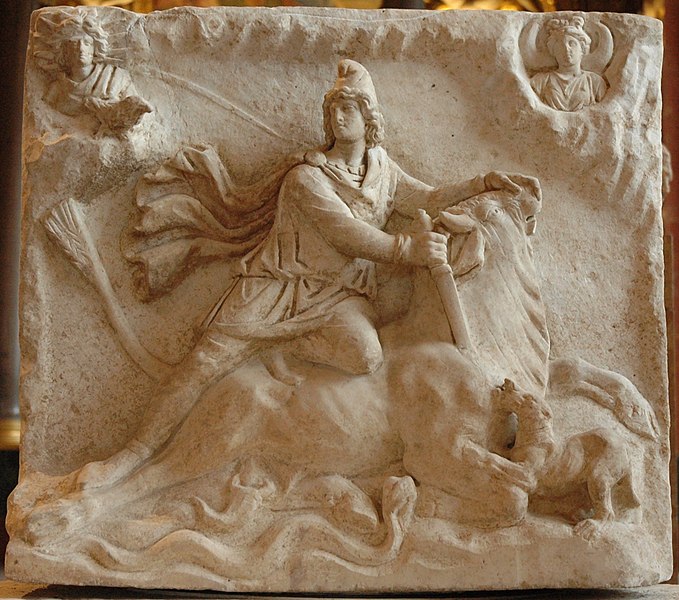
This religion, cloaked in mystery and secrecy, has captivated the imaginations of scholars for generations. Many facts discovered sheds vital light on the cultural dynamics that led to the rise of Christianity. The National Geographic Society’s book “Great Religions of the World,” page 309 writes; “By Jesus’ time, East and West had mingled here for three centuries. Down columns of boulevards walked Roman soldiers loyal to the Persian god Mithras.” Mithras was a Persian deity. He was also the most widely venerated god in the Roman Empire at the time of Jesus. The Catholic Encyclopedia as well as the early Church Fathers found this religion of Mithras very disturbing, as there are so many similarities between the two religions, as follows:
1) Hundreds of years before Jesus, according to the Mithraic religion, three Wise Men of Persia came to visit the baby savior-god Mithra, bring him gifts of gold, myrrh and frankincense.
2) Mithra was born on December 25 as told in the “Great Religions of the World”, page 330; “…it was the winter solstice celebrated by ancients as the birthday of Mithraism’s sun god”.c
3) According to Mithraism, before Mithra died on a cross, he celebrated a “Last Supper with his twelve disciples, who represented the twelve signs of the zodiac.
4) After the death of Mithra, his body was laid to rest in a rock tomb.
5) Mithra had a celibate priesthood.
6) Mithra ascended into heaven during the spring (Passover) equinox (the time when the sun crosses the equator making night and day of equal length).
As you can now see, Christianity derived many of its essential elements from the ancient religion of Mithraism. Mithraism became intertwined with the cult of Jesus to form what is known today as “Christianity.” Although literary sources on this religion are sparse, an abundance of material evidence exists in the many Mithraic temples and artifacts that archaeologists have found scattered throughout the Roman Empire, from England in the north and west to Palestine in the south and east. The temples were usually built underground in caves, which are filled with an extremely elaborate iconography (illustrating by pictures, figures and images). There were many hundreds of Mithraic temples in the Roman Empire, the greatest concentrations have been found in the city of Rome itself.
We often hear about how many of the traditions, rites and symbols of modern day "Christian" holidays have their roots in paganism. Have you ever wondered why December 25th was chosen to celebrate the birth of Jesus? Could it only be a consequence that ancient paganism and the story of Mithras' birth coincides with the Yule/Christmas season? If the accounts in the Bible are correct, the time of Jesus birth would have been closer to mid-summer, for this is when shepherds would have been "tending their flocks in the field " and the new lambs were born. Strange enough, the ancient pagan religion, Mithraism, which dates back over 4,000 years, also celebrated the birth of their "saviour" on December 25th. Franz Cumont, who is consider by many to be the leading research authority on Roman Paganism, explained the ancient religion called Mithraism.
Then Mithras returned to the earth to teach humanity His commandments and begin Mysteries and Rites which would help humans remember His acts on our behalf. Because of His actions, we can choose good without the overwhelming power of evil, even though evil's influence can still seem powerful because our minds believe it is. Because of His teachings, we know that the purpose of our lives is to serve others in the name of Mithras. The followers refer to Him as the "Light of the World" a phrase often used also in Christian faith when referring to Jesus. This son of a god born of a virgin, was so commonly spread in those days that Philo of Alexandria (30 BCE - 45 CE), warned against this widespread superstitious belief in unions between male gods and human females. The offspring’s are known as demigods.
Tammuz, who was incorporated also into Attis and Mithras, and they stood model for the story in the NT, because they were deities who all are supposed to have died and resurrected. Tammuz was always called Adon, meaning Lord. (the Greek Adonis, was based on him). Actually all these deities were based on the first deity to have died and resurrected, the Egyptian deity Osiris. So there is absolutely nothing unique about Jesus. In fact he is copyright due to Osiris.
Of the following (semi) deities legends went around that they were born of a virgin:
Augustus (his father was the god Apollo) Agdistis Attis
Adonis Buddha Dionysus
Korybas Krishna Mithras
Osirus Perseus Romulus and Remus
Tammuz Zoroaster Jesus
So basically, all the pagan religions were alike, including Christianity. It just happens that one of them got the ascendancy, and became the most powerful, and did its best to wipe out all the others. In addition to a lack of historical support, many characteristics of Jesus, which Christians today believe in, are undeniably similar or identical to religious trends and beliefs that preceded Christianity. There are tens of accounts of pagan gods of many different cultures who were said to have the same attributes as those that Christians claim Jesus had. A brief review of some of these may lead to some interesting questions concerning the originality of the Christian claim:
ATTIS - Phrygia: Born of the virgin Nana on December 25. He was both the Father and the Divine Son. He was a savior crucified on a tree for the salvation of mankind. He was buried but on the third day the priests found the tomb empty -- He had arisen from the dead (on March 25th). He followers were baptized in blood, thereby washing away their sins -- after which they declared themselves "born again." His followers ate a sacred meal of bread, which they believed became the body of the savoir.
BUDDIAH – INDIA: Born of the Virgin Maya on December 25th. He was announced by a star and attended by wise men presenting costly gifts. At birth angles sing heavenly songs. He taught in temple at age 12. Tempted by Mara, the Evil One (Satan), while fasting. He was baptized in water with the Spirit of God present. Buddiah healed the sick and fed 500 from a small basket of cakes and even walked on water. He came to fulfill the law and preached the establishment of a kingdom of righteousness and obliged followers to poverty and to renounce the world. He transfigured on a mount. Died (on a cross, in some traditions), buried but arose again after tomb opened by supernatural powers. Ascended into heaven (Nirvana). Will return in later days to judge the dead. Buddiah was called: "Good Shepherd," "Carpenter," "Alpha and Omega," "Sin Bearer," "Master," "Light of the World," "Redeemer," etc.
DIONYSUS - GREECE: Born of a Virgin on December 25th, placed in a manger. He was a traveling teacher who performed many miracles. Turned water into wine. Followers ate sacred meal that became the body of the god. He rose from the dead March 25th. Identified with the ram and lamb's and was called "King of Kings," "Only Begotten Son," "Savior," "Redeemer," "Sin bearer," "Anointed One," the "Alpha and Omega."
HERACLES – GREECE: Born at the winter equinox of a virgin who refrained from sex with her until her god-begotten child was born and was sacrificed at the spring equinox. He too, was called "Savior," "Only begotten," "Prince of Peace," "Son of Righteousness."
KRISHNA - INDIA: Krishna was born while his foster-father Nanda was in the city to pay his tax to the king. His nativity heralded by a star, Krishna was born of the virgin Devaki in a cave, which at the time of his birth was miraculously illuminated. The cow-herds adored his birth. King Kansa sought the life of the Indian Christ by ordering the massacre of all male children born during the same night at He. Krishna traveled widely, performing miracles -- raising the dead, healing lepers, the deaf and the blind. The crucified Krishna is pictured on the cross with arms extended. Pierced by an arrow while hanging on the cross, Krishna died, but descended into Hell from which He rose again on the third day and ascended into Heaven. (The Gospel of Nicodemus tell of Jesus' descent into Hell.) He will return on the last day to judge the quick and the dead. Krishna is the second person of the Hindu trinity.
OSIRIS – EGYPT: He came to fulfill the law. Called "KRST," the "Anointed One." Born of the virgin Isis-Meri on December 25th in a cave / manger, with his birth announced by a star and attended by three wise men. Earthly father named "Seb" (translates to "Joseph.") At age 12 he was a child teacher in the Temple and at 30 he was baptized, having disappeared for 18 years. Osiris was baptized in the river Iarutana -- the river Jordan -- by "Anup the Baptizer," who was beheaded. (Anup translates to John.) He performed miracles, exorcised demons, raised El-Osiris from the dead. Walked on water and was betrayed by Typhon, crucified between two thieves on the 17th day of the month of Athyr. Buried in a tomb from which he arose on the third day (19th Athyr) and was resurrected. His suffering, death, and resurrection celebrated each year by His disciples on the Vernal Equinox -- Easter. Called "The Way, the Truth, the Light," "Messiah," "god's Anointed Son,' the "Son of Man," the "Word made Flesh," the "word of truth." Expected to reign a thousand years.
NOTE 1: Persian legends of Mithras says that He was born of the Sun God and a virgin mother, called "the Mother of God", on December 25th. They saw him as a symbol of justice, truth, and loyalty. He was considered the saviour of humankind, and stories abound of His healing the sick, raising the dead, and performing miracles (making the blind see and the lame walk). Throughout His lifetime, He was seen as a protector of human souls, a mediator between "heaven" and "earth" and was even associated with a "holy trinity". He remained celibate, until the ripe old age of 64, throughout his life and preached the virtues of ethics, moral behavior, and good will. Does this sound familiar? Sure sounds like Jesus.
NOTE 2: Ancient Persians believed in a "celestial heaven" and hell. They believed that they would be judged by their god and granted justice of" eternal salvation. On judgement day, the faithful dead would be resurrected and light would triumph over darkness.
NOTE 3: They took part in ritual purification or baptism, held Sundays sacred, drank wine and ate bread as a symbol of the body and blood and even took part in ritualistic purging (purification rites such as flagellation).
NOTE 4: In their legends, Mithras had an "earthly mission' to accomplish. He then was put to death on a cross and buried in a cave (some legends have Him held in a cave to be reborn once a year).
NOTE 5: He then "rose from the dead" and took part in a last supper with his 12 disciples (often associated with the 12 signs of the zodiac) and then ascended to the heavens to watch over His "flock" from above.
As a footnote to all this: The World Book Encyclopedia tells that Mithras was an angel of light who fought on the side against the forces of evil. In the Zoroastrian religion of ancient Persia Mithras was called “the Heavenly Light.” This belief carried to Assyria and Asia Minor where many people identified him with the sun. Mithraism came into the ancient Roman world about 75 BCE., and ranked as a principal competitor of Christianity for 200 years. In addition to a lack of historical support, many characteristics of Jesus, which Christians today believe in, are undeniably similar or identical to religious trends and beliefs that preceded Christianity. There are tens of accounts of pagan gods of many different cultures who were said to have the same attributes as those that Christians claim Jesus had.
Trinity― Trinities were popular in pagan sects before Christianity was introduced to the world. Some of the more well known trinity gods included Mithra-Vohu Mana-Rashnu, Amen-Mut-Khonsu, and Osiris-Isis-Horus. Virgin Birth―Among the pagan cultures that preceded Christianity, virgin birth stories abounded. The long list of pagan gods born of virgins includes: Romulus and Remus, Zoroaster, Buddha, Mithras, Chrishna, Osiris-Aion, Agdistis, Attis, Tammuz, Adonis, Korybas, Perseus, and Dionysus.
Disciples― In the following 'saviors' cases, a grouping of disciples was present, just as they were present in Jesus' story: Horus, Buddha, Chrishna, Dionysus, Mithra. Interestingly enough, in the case of Dionysus, his disciple Acoetes was a boatman, just as Jesus' disciple Peter. And just as Peter was freed from jail when the doors miraculously flew open, so was Dionysus' disciple Acoetes. In Budda's case, he, like Jesus, demanded that his disciples renounce all worldly possessions. Yet another instance of similarity is that the disciples of both Jesus and Buddha were said to have been arrested for preaching, as well as witnessed to have "walked on water."
Miracles― Among those 'saviors' who, like Jesus, performed countless miracles include: Horus, Chrishna, Buddha, Dionysus, Mithra, Osirus, and Adonis. Horus was said to have walked on water, just as Jesus did. In addition, Horus raised one man, El-Azarus, from the dead in front of countless witnesses. In the case of Buddha, it was told that he fed five hundred men with one loaf of bread, that he cured lepers, and that he caused the blind to see. Dionysus rescued a person from dying when the person was utterly desolate and placed them among the stars. And he gave food and drink, herbs and berries, to the starving people -- not to mention turning water into wine.
The Sun― Here is another common theory, quoted from S. Acharya's "The Origins of Christianity and the Quest for the Historical Jesus:" "The reason why all these pagan narratives are so similar to a "god-man" is that these stories were based on the movements of the sun through the heavens, an astrotheological development that can be found throughout the planet because the sun and the 12 zodiac signs can be observed around the globe.Leave a comment:
-
Re: Non-Judaic Nature of Christ
Acclaimed to be the favorite student of Christ, the apostle Thomas is said to be the very author of the Gospel associated with his name. However, the work produced by Thomas has proven to be somewhat of a taboo within the Christian tradition. Biblical scholar claim that the Thomas' Gospel can be unequivocally considered the very handy work of Thomas himself, unlike some other Gospels associated with other apostles. Despite the aforementioned facts about Thomas, the church forefathers abandoned Thomas' wittings since the early years of the founding of the Christian church. I suspect this was done because the Christ as described by Thomas did not fit the nature of the Christ as formulated by early church fathers. Thomas' Gospel is unique in that the author, who is said to be the favorite student of Christ, has recorded various sayings of Christ and does not attempt to get into the biography of Christ. Thomas' Gospel is unique also for the fact that the work is clearly on a higher spiritual level. The work differs fundamentally from than the rest of the Gospels, perhaps with the exception of John's Gospel. The nature of the contexts of Thomas' work feel quite odd when viewed from an traditional/orthodox perspective. Modern readers would immediately see that the wordage used and the pictures painted by Thomas are very New Age and many see unmistakable heavy eastern influences within it as well. A relevant question pertaining Thomas: Why have the church fathers for centuries neglected his Gospel, especially considering the fact that the work in question is considered to be the authentic work of Christ's favorite student? Why was the Gospel of Thomas not included within the New Testament? Does Thomas' Gospel undermine the theologies associated with Christ? Does it belittle Christ's essence? The answer is, no. The only problem I sense is the Christ, as described in the Thomas Gospel, did not fit the image of the Christ that was being formulated by early church fathers. One immediately notices within Thomas' writings that Christ is painted in almost abstract extraterrestrial terms. In order to better understand the real essence of Christ and Christianity I believe Thomas' Gospel has to be reexamined by Christ's faithful.
Armenian
************************************************** ********************
GOSPEL OF THOMAS: THE BUDDHIST JESUS?

Lost for 1,600 years
In 1945, in an Egyptian cave near desert town of Nag Hammadi, 52 papyrus texts were discovered, some dating from the beginning of the Christian era, revealing a Jesus who teaching akin to a Shin myokonin, a Zen Master, or even Shakyamuni Buddha himself. Lost for 1,600 years, these are known as the Gnostic Gospels, from the Greek word "gnosis"...meaning "to know"...’to know oneself,” that is to have an insight into and awakened to oneself in an intuitive and non-dualistic sense.
Buddhist Influences
According to the New Testament (The Gospel of Matthew), Jesus spent his early childhood in Egypt which was at the end of the Silk Road. As a result, Egypt was prosperous and enriched with religious diversity. There was even a large Buddhist community known as the Therapeutae (Sons of the Elders) that existed in Alexandria. Today, some scholars believe that Jesus may have been inspired by the Buddhist religion and that the Gospel of Thomas and many Nag Hammadi texts reflect this possible influence. Books such as The Gnostic Gospels and Beyond Belief: the Secret Gospel of Thomas by Elaine Pagels and The Original Jesus by Gruber and Kersten examine the facts and fiction, and theories.
This is not to say that Jesus was a Buddhist disciple but just possibly he had been influenced by the Buddhist teachings. This is mere speculation. Obviously, he was a xxx and was influenced by the Hebrew religious tradition. However, for us, Jesus is our spiritual brother and our teacher as a mystic. We are one with all mystics whether they be called Shinran, Dogen, Rumi, Khan, Gandhi, Jesus, Nanak and Ramana, etc. Each mystical tradition speaks of the same experience but with different words; one may use the word "Pure Land" and the other as the "Kingdom of Heaven" but the experience is the same.
A Different Christian Tradition
Some scholars have observed that among these Nag Hammadi texts, The Gospel of Thomas includes teachings older than Gospels of the New Testament, such as Mark, Matthew, Luke or John, and also closer to the actual life of the historical Jesus. These scholars believe that the Gospel of Thomas was written around 62 C.E. because it commends James, the brother of Jesus, to be the legitimate heir to the early Christian movement and in addition makes no reference to the Roman sack of Jerusalem in 72 C.E. Moreover, of all of the Nag Hammadi texts, it is Thomas that has the most similarities with Pure Land Buddhism within it.
Enlightenment for All
Exploring the Gospel of Thomas, we discover that Jesus believed the self and the divine to be identical and one. Furthermore, the Kingdom of Heaven is not in the future but is “right here.” and one only needs to be awakened to this perfection. Jesus, in this gospel, speaks of enlightenment, the same type that is taught by Shakyamuni Buddha, Shin teachers and Zen Masters. In addition, Thomas does not have a narrative story line but just 114 sayings attributed to Jesus, many of which are akin to Zen koans. Here, Jesus is never presented as Lord or Savior, but rather as a spiritual guide who is equal to his students. In addition, the Gospel of Thomas does not contain a supernatural virgin birth or the doctrine of the Virgin Mary. It does not teach of original sin. It does not mention Jesus’ crucifixion or resurrection. It does not teach Jesus’ death as a payment of debt to “atone” for humanity's sins. It does not include any supernatural healings or miracles. It does not mention the so-called end-times or the wrath of God. It does not mention salvation through faith in Christ. It does not exclude women.
The Exclusion of Thomas
Why was the Gospel of Thomas disqualified from the Christian Bible and eventually outlawed? During the reign of Emperor Constantine around the 4th century C.E., the Roman Empire was looking to reconstitute and solidify its power. The Emperor and the existing power structure chose the Pauline sect of Christianity as the “official” religion, which include the epistles of Paul and the Gospels and books from his disciples that form the present-day New Testament. Teachings from the Gospel of Thomas and other Nag Hammadi texts were seen as a danger to the developing ecclesiastical and political structure because they rejected the authority of the bishops, priests and deacons. Roman Church father Ignatius warned the Christians to "honor and obey the bishop as you would God." It is quite easy to see why the church councils did not choose the Gospel of Thomas and other similar texts for their Bible. As a result, for political reasons these texts were banned and later destroyed for the good of Empire and Church. After all, bishops and priests would lose their power and influence with the common people, if the common people learned that Jesus taught they did not need such religious authority/intermediaries of the Church, bishops and priests, and that the Kingdom is within all and is directly accessible to everyone without them; we all are sons/daughters of God.
Why Study the Gospel of Thomas?
You might be wondering why Shin Buddhists should even bother to study the early teachings of Jesus? Our interest in learning about the early teachings of Jesus is not to discredit Christianity but because this Gospel shares similar mystical content with the Shin and Zen Buddhist traditions, we 21st century Buddhists can learn a lot from this ancient mystic, called Jesus of Nazareth. So, by studying the teachings of the Gospel of Thomas through the lenses of Buddhist thought and religious experience, we can further deepen our spiritual path and awaken to our True Nature, our universal Buddha-nature, which ultimately has no name but is experienced as faith, compassion and wisdom.
In addition, as Western Buddhists, we must deal with Christianity as a political, social and religious power. How shall we perceive the teachings of Jesus? Must we cave into the dogma of the traditional and evangelical Christian parlance? Or can we reinterpret the teachings (dharma) of Jesus? Must Jesus be an advesary or can he be a teacher for us? Just with a shift in interpretation, Jesus becomes not a judgemental and cosmic Christ but a Bodhisattva guiding beings like ourselves to the Kingdom that is there before us and within us. Perhaps in the future, due to its Buddhist inclinations, the Gospel of Thomas will be considered a genuine Buddhist sutra (scripture) thereby bridging the gap between Eastern and Western spirituality while helping seekers to awaken to the endowed Pure Land (Kingdom of God) within themselves. Maybe, even Jesus himself will someday be considered the Bodhisattva of the West.
Parallel Sayings and Teachings
The following web pages offer an open-minded presentation of some of the parallel mystical sayings and teachings from the Gospel of Thomas that may be related to but are certainly illuminated by the Buddhist teachings. This is a work in progress and in the near future more correlations will be added, including the parallel sayings from the Gospel of Philip, the Gospel of Mary, the Q Gospel and other Nag Hammadi texts. Regarding the Gospel of Thomas with Shin and Zen Buddhist teachings, some of the similiarities are disturbing. But did not Jesus say, "the seeker should not stop until he finds. When he does find, he will be disturbed. After being disturbed, he will be astonished" (Thomas 2). Please read on and judge for yourself.
Source: http://buddhistfaith.tripod.com/gospel/
Gospel of Thomas
1) And he said, "Whoever finds the inner meaning of these words will not taste death."
2) Jesus said, "Let him who seeks not cease seeking until he finds, and when he finds, he will be troubled. When he has been troubled, he will marvel, and he will reign over the All."
3) Jesus said, "If those who lead you say, 'See, the Kingdom is in heaven,' then the birds of the heaven will precede you. If they say to you, 'It is in the sea,' then the fish will precede you. Rather, the Kingdom is within you and it is without you. When you come to know yourselves, then you will become known, and you will realize that it is you who are the sons of the living Father. But if you will not know yourselves, you dwell in poverty and it is you who are that poverty."
4) Jesus said, "The man old in days will not hesitate to ask a small child of seven days about the place of Life, and he will live. For many who are first shall become last, and they shall become a single one."
5) Jesus said, "Know what is in the presence of your face, and what is hidden from you will be revealed to you. For there is nothing hidden which will not become manifest."
6) His disciples questioned him and said to him, "Do you want us to fast? How shall we pray? Shall we give alms? What diet shall we observe?" Jesus said, "Do not lie, and do not do what you hate, for all things are exposed in the presence of the sky. There is nothing hidden that will not be revealed, and nothing covered that will remain undiscovered."
7) Jesus said, "Blessed is the lion which the man consumes and the lion becomes man; and cursed is the man whom the lion consumes, and the lion becomes man."
8) And he said, "The man is like a wise fisherman who cast his net into the sea and drew it up from the sea full of small fish. Among them the wise fisherman found a fine large and good fish. He threw all the small fish back into the sea and chose the large fish without trouble. Whoever has ears to hear, let him hear."
9) Jesus said, "Now the sower went out, filled his hand with seeds, and cast. Some fell on the road; the birds came and gathered them up. Others fell on the rock, did not send roots down to the earth, and did not send ears rising to the sky. And others fell on thorns; they choked the seed and the worm ate them. And others fell on good earth and produced good fruit: it bore sixty per measure and a hundred and twenty per measure."
10) Jesus said, "I have cast fire upon the world, and behold, I watch over it until it is ablaze."
11) Jesus said, "This sky shall pass away, and the one above it shall pass away. The dead are not alive, and the living will not die. In the days when you consumed what is dead, you made it alive. When you come into the light, what will you do? On the day you were one you made two, but having become two, what will you do?"
12) The disciples said to Jesus, "We know that you will depart from us. Who is to be our rabbi?" Jesus said to them, "Wherever you are, you are to go to James the righteous, for whose sake heaven and earth came into being."
13) Jesus said to his disciples, "Make a comparison to me and tell me whom I resemble."
Simon Peter said to Him, "You are like a righteous angel." Matthew said to Him, "You are like a wise philosopher." Thomas said to Him, "Master, my mouth is wholly incapable of saying whom you are like."
Jesus said, "I am not your master. Because you have drunk, you have become intoxicated by the bubbling spring which I have measured out." And he took him and withdrew and spoke to him three words. When Thomas returned to his companions, they asked him, "What did Jesus say to you?"
Thomas said to them, "If I tell you one of the words he has spoken to me, you will take stones and throw them at me; a fire will come out of the stones and burn you."
14) Jesus said to them, "If you fast, you will give rise to sin for yourselves; and if you pray, they will condemn you; and if you give alms, you will do harm to your spirits. When you go into any land and walk about in the districts, if they receive you, eat what they set before you, and heal the sick among them. For what goes into your mouth will not defile you, but that which issues from your mouth - it is that which will defile you."
15) Jesus said, "When you see one who was not born of woman, prostrate yourselves on your faces and worship him. That one is your Father."
[...]
Source: http://www.sophian.org/Gospel%20of%20Thomas.htmLeave a comment:
Leave a comment: