![]() |
|
|
#1606 | |
|
The Resurrection
![]() Join Date: Aug 2004
Location: Armenian Diaspora, looking - Դեպի Հայրենիք
Posts: 4,896
![]() |
Re: The Rise of the Russian Empire: Russo-Armenian Relations
Quote:
Racism in Russia ![]() Since the "Neonazis" of Russia have made news again I would like to briefly make a few comments about Armenian and Russian relations in the context of racist attacks against Armenians living in Russia. I initially did not want to discuss this topic at all because I saw it as unconnected to the true intent of this blog. What's more, this is a sociological problem in Russia that many non-Russian immigrants face and has no bearing on the geopolitical/geostrategic aspects of Russo-Armenian relations. The fact of the matter is, Russian Neonazis or "skinheads" as they are at times called, represent the Russian Federation just as much as the "KKK" or "White Power" degenerates represent the United States of America. However, since many individuals keep brining up this matter every time Russian-Armenian issues are discussed, I felt obligated to make a few comments and move on. During the last several years several dozen Armenians have been murdered in what have appeared to be racially motivated killings. While it is common knowledge that Russians generally speaking tend to be a chauvinistic people, an aggressive people, what's not clear is who is committing the murders of Armenians in Russia and why. It is now becoming more and more obvious that Armenians in Russia are being targeted by special interests either due to business related calculations or political, they want to drive a wedge between Russia and Armenia. After all, there are large numbers of Turkic peoples and Jews living within boundaries of the Russian Federation, there are also large numbers of Georgian and Chechen organized crime rings in Russia. The aforementioned will always be a danger towards Armenians for they see us as their competitors and historic enemies. On an interesting note - seems like on of the leaders of one of Russia's largest right-wing extremist organization, of all people, is a Jew. It should also be pointed out that a vast majority of killings involving Armenians in Russia have been mob related. None of this, however, means that the average Russian on the street will have warm sentiments towards foreigners in Russia, especially Caucasians, whom they see as taking advantage of the nation. It is also well known that many Armenian immigrants in Russia bring shame upon our people, similar to many Armenians in southern California. However, unlike in the United States, where the standard of living remains high and the socio-political climate stable, the Russian Federation has been suffering severe social malaise and economic depression for well over a decade. As a result of this socio-political and financial upheavals, Russians have naturally began to grow increasingly intolerant and aggressive towards non-ethnic Russians living amongst them. I would like to point out a US funded government study conducted in the mid-90s that revealed one out of six Russian adolescents at the time were mentally/emotionally disturbed. That is a staggering number - one out of six children in Russia had metal problems. Those children incidentally are now young adults with mental problems. It is well known that the years following the collapse of the Soviet Union saw a drastic rise in violent crime, severe corruption, unemployment, moral degradation, broken families and illiteracy. Today there are perhaps millions of troubled and disgruntled young men and women roaming the streets of major cities in Russia. And these are in essence the vulnerable citizens of the country that are being manipulated to do the dirty work of special interests, be it the FSB, organized crime, or foreign based entities. Broadly speaking, it is in all peoples psyche to be chauvinistic, it's a human trait. Aren't we Armenians chauvinistic in our own special way? Aren't we smarter than non-Armenians, the "otars"? Don't Armenians look down on Russian men as being drunkards? Don't Armenian men look at Western women, specifically Russian women, as whores? And it's not just us, don't the English, French and the Spaniards boast about their former empires? Aren't Germans and Japanese still arrogant? And how do you think the term the "ugly American" came into existence? If Russians are more high nosed than the average westerner it's because for the past several centuries they have been a major military power, economic power, political power, cultural power. And unlike many of the other major powers around them, they continue to be one today. Also, Russians seem to have had enough of foreigners meddling into their businesses. Nonetheless, the hard reality today is that certain street elements in Russia are being used towards sinister purposes by special interest groups and government agencies. This situation will not change for some time. Thus, we Armenians have to work with what we have. Armenians in Russia, our largest diasporan community numbering around 2 million, need to be more proactive in fostering better relations with their Russian neighbors. Armenian migrants in Russia need to have more respect towards their host nation and its laws. To remedy these problems, Armenian community groups need to be assembled. Cultural awareness programs like the ones recently commissioned by the authorities in Moscow need to increase in number and scope. Individual Armenians need to work on this, Armenian businessmen need to work on this, Armenian officials need to work on this, our Church leadership needs to work on this. We have had a natural alliance with Russia for severals centuries. Our relations with the Russian nation actually goes back a thousand years. We have also had our political problems with them as well. In the big geopolitical picture, however, today and for the foreseeable future, Armenia and Russia will need each other. I personally don't foresee any obstacles getting in the way of Armenia's crucial strategic alliance with the Russian Federation. Unfortunately, due to our geopolitical predicaments in the Caucasus we need the Russian Federation much more than they need us. And therein lies the danger for us. For us, our relationship with Moscow is a simple matter of survival. For Russia, their relationship with Armenia is simply a matter of geopolitical calculations. Nevertheless, the strategic relationship between these two friendly nations seems to be heading towards a very good direction and no "skinhead" will be able to put a stop to it. Armenian
__________________
Մեր ժողովուրդն արանց հայրենասիրութեան այն է, ինչ որ մի մարմին' առանց հոգու: Նժդեհ Please visit my blog: http://arevordi.blogspot.com |
|
|
|
|
|
|
#1607 |
|
The Resurrection
![]() Join Date: Aug 2004
Location: Armenian Diaspora, looking - Դեպի Հայրենիք
Posts: 4,896
![]() |
Re: The Rise of the Russian Empire: Russo-Armenian Relations
THEY KILL EVERYONE, INCLUDING THE RUSSIANS ![]() Russian racists in demonstrations in Moscow “The manifestations of fascism appeared in Russia after the defeat of the Soviet Union”, said NA Deputy Speaker Vahan Hovhannisyan referring to manifestations of race discrimination in Russia. «Russia suffered a defeat in the cold war. The ideological defeat was that communism proved to be ideologically empty; the Soviet Union collapsed and Russia lost territories which later became its enemy. The economic defeat was that the whole economy of the Soviet Union collapsed, and the fact that Russia continues to survive is conditioned by the natural resources and not by the development of the economy», Vahan Hovhannisyan said. According to him, the skinheads who speak about the Aryan spirit and the purity of the blood know nothing about fascism. “If for example Mussolini or Franco who were the founders of fascism appeared in the Russian Underground, the skinheads could beat them too as they do not differ from the Armenians in the color of their skin. So the basis of such violations is not ideological; it is simply the frustration of the society expressed through such horrible acts”. Vahan Hovhannisyan thinks that Russia does not combat against these phenomena properly. As for the attitude of the Armenian authorities, he is not aware of it. In an interview to “A1+” deputy of the Russian State Duma Alexander Dzasokhov noted that he treats the Armenians living both in Armenia and out of it with deep respect. “I have many Armenian friends. Every death is a tragedy, but it does not refer to Armenians more than to other nations. The Armenians living Russia are part of our history. We also have many Armenian professionals in the Law enforcement agency. We must join our efforts in order to prevent suchlike cases in future. ” Source: http://www.a1plus.am/en/?page=issue&iid=39791 Putin Names Fighting Ethnic Hatred Top Priority for Russia ![]() Russian neonazis demonstrate Russia`s President Vladimir Putin said at a meeting with political party leaders that an appropriate response would be soon given to racial, interethnic and inter-religious hatred, the RIA Novosti news agency reported Wednesday. “Those who preach racial, national or religious hatred must know that their views will provoke an appropriate response,” he said and added that it is evident that countering extremism is not only a state responsibility, although the state should address it first and foremost. According to the president, civil society and political parties should have a clear position in regard to the problem. Putin also noticed that ordinary citizens in particular should change their attitude toward crimes concerned with racial, interethnic and inter-religious hatred. The president thinks that the wording of laws countering extremist activity should be absolutely clear, and that punishment should be inevitable and appropriate to the gravity of the crime. Putin thanked lawmakers for adopting laws making it possible to ban extremist parties from participating in elections. Increasing violence aimed at people with non-Slavic appearance has prompted Russian and foreign human rights groups in recent months to raise concerns over the alarming spread of racist and xenophobic attitudes in the country. Source: http://www.mosnews.com/news/2006/12/...response.shtml Murder of ethnic Armenian in Moscow – “blow on Russia’s image on the threshold of G8 summit” ![]() Armenians in Yerevan protesting the murder of Armenians in Russia Non-Governmental Russia’s Armenians Union (RAU), which once succeeded in liberation of Russian seamen, held captive in Nigeria, is planning to protest against xenophobia in Russia now. As RAU Head Ara Abramyan has informed REGNUM, the organization prepares protest actions in connection with murder of 19-year-old ethnic Armenian, Russian citizen Artur Sardaryan, committed in car of Moscow suburban electric train. According to the RAU leader, first of all, the murderers wished to damage Russia’s image, “to lead it astray, out of the way of democracy and development.” Ara Abramyan is sure that “Nazis have deliberately chosen for their bloody crime time, preceding St. Petersburg G8 summit.” “It is an obvious provocation, directed not against Armenians as such, but one, which directly strikes on Russia’s image on the threshold of such important event,” the RAU head believes. It is worth reminding that Artur Sardaryan was murdered on May 25 in a Moscow suburban electric train. According to eye-witnesses, the crime was committed by group of young men, scanning “Long live Russia!” and other nationalistic slogans. Only on May 29, the murder received publicity. As REGNUM informed, Sardaryan headed to his home town of Pushkino. At least two persons stopped the train, operating emergency break, and ran away, after the murderer attacked. Office of Transport Public Prosecutor at Russian Railway’s Yaroslavl Line instituted proceedings in connection with murder, committed by a group of people and caused by national hatred. About a month earlier, analogous case took place in Moscow Pushkinskaya metro station, when 17-year-old student, born in Armenia, Vigen Abramyants was murdered in presence of numerous witnesses. Source: http://www.regnum.ru/english/russia/649092.html Annually Azeri Criminal Groupings in Russia Assign $50 Million for Murders of Armenians ![]() Armenians protesting racist attacks in Russia “Annually Azeri criminal groupings assign $50 million for the organization of murders of Armenians,” Russia FM’s Advisor for Nationalities in 1999-2001 Vsevolod Maryan stated during round-table discussions dedicated to the crimes committed in Russia through national hatred. In his words, the situation should be given a straightforward account. “The reports of press are a tiny part of what’s really going on. At least 3000 Armenians were killed in Russia during recent ten years,” Maryan said. In his opinion, the crimes through national hatred originate from the collapse of the USSR. But if at that times they were spontaneous, now “they are organized by a ruling grouping, not only Russian but the Azeri one as well.” “Anyone, rich or poor, can fall victim to nationalist policy in Russia. It will concern not the “persons of Caucasian nationality”, as Yuri Lujkov (the Mayor of Moscow) called them, but Armenians,” Vsevolod Maryan considers. He motivates it by the fact that “while Armenian honestly earn money Azeris establish contacts with powerful structures in Russia”. That is why the killed Caucasians turn out to be Armenians. “Armenians are deliberately killed in Russia in order to drive the last nail into the coffin in the South Caucasus,” Vsevolod Maryan resumed, reported IA Regnum. Source: http://www.panarmenian.net/news/eng/print/?nid=18427 Armenians of Moscow don’t participate in initiatives of Caucasian peoples The Armenian community of Moscow doesn’t take part in the initiatives of “representatives of Caucasian peoples,” Yuri Navoyan, the chairman of the Russian-Armenian Commonwealth NGO told a PanARMENIAN.Net reporter. “Various organizations always want to involve Armenians in the settlement of their problems with Russia. However, everyone should solve problems without using the representatives of other nationalities. This is our position,” Mr Navoyan said. Representatives of Caucasian peoples are planning a picket for July 13. The action will be held against leaders of ultranational groupings inciting national hatred. The coordination council of the Azeri youth is going to join the picket, Day.az reported. Source: http://www.panarmenian.net/[/QUOTE] Authorities declare war on racist gangs ![]() Following a week which has seen one gang of extremists receive long prison terms – including life sentences - and another skinhead gang arrested and charged with racist killings, it seems there might be light at the end of the tunnel as the forces of law and order get to grips with the scourge of racist violence on the streets of Moscow. Skinhead gang charged with 19 racial murders Eight young men and one woman are due to stand trial accused of 19 murders and 13 attempted murders. The Moscow Prosecutor’s Office brought the charges after an investigation into more than three dozen racial attacks around the city between August 2006 and April 2007. Currently eight of the nine so-called ‘skinheads’ are in custody. One has been released on condition he remains in the city. Last April two Moscow students, Artur Ryno and his friend Pavel Skachevsky were arrested on suspicion of killing an Armenian businessman. Later Ryno confessed to 37 racially-motivated crimes, and more arrests followed. A total of nine people aged from 16 to 22 are now charged with murder or attempted murder. Investigators say the members of the gang kept in touch via mobile phones and the Internet. Then they would get together for what they called ‘actions’. Their attacks were always sudden and had one purpose only - to kill. The gang went out on manhunts in the evenings, attacking men they considered non-Slavic. Alarming record Fifty-three people have been killed in hate crimes this year, which is three times as many as over the same period in 2007. These figures have motivated authorities to take a tougher stance. Now more crimes are being investigated as racial attacks – and, crucially, more are coming to court. Earlier this week eight extremists were found guilty of a 2006 explosion in the Cherkizovo market that left 14 dead and 47 injured, most of whom were immigrants from the North Caucasus and East Asia. Human rights activists see rays of hope ”The fact that this case found its way to court, and the example of people sentenced to life for the Cherkizovo market blast shows that we are moving in the right direction - but there's still a lot to do,” Semyon Charny from the Moscow Human Rights Bureau believes. Russia's hate crimes are attracting greater attention from society, media and the authorities. Last spring, a billboard campaign in the streets of Moscow promoted racial tolerance. However, only the next few years will show whether this will be enough to resolve the problem. Source: http://www.russiatoday.ru/news/news/24900
__________________
Մեր ժողովուրդն արանց հայրենասիրութեան այն է, ինչ որ մի մարմին' առանց հոգու: Նժդեհ Please visit my blog: http://arevordi.blogspot.com |
|
|
|
|
|
#1608 |
|
The Resurrection
![]() Join Date: Aug 2004
Location: Armenian Diaspora, looking - Դեպի Հայրենիք
Posts: 4,896
![]() |
Re: The Rise of the Russian Empire: Russo-Armenian Relations
Hikmet Haji-zade: "To be our true friend Russia should reject support of Armenian aggression in Karabakh" ![]() Day.Az interview with famous political scientist Hikmet Haji-zade. -How do you assess current state of Azerbaijani-Russian relations? Though a definite "calm and business-like tone" is observed in our relations from exterior, unfortunately, this is a deceptive impression. Russia continues to support Armenian aggressors and put pressure on Azerbaijan in different issue. For example, Russia demands from Azerbaijan to stop economic and political support to Georgia and weaken ties with the West and Turkey. On the whole, the situation is far from being ideal. Merely, unlike Georgie, Azerbaijan does not present offenses and claims towards Russia on the international arena and I think this policy is correct. -Can we count on the cardinal closing of ties between Azerbaijan and Russia under the new President Dmitri Medvedev? -The cardinal closing of ties between our countries can occur only when Russia rejects the support of Armenian aggression against Azerbaijan, which will also promote the resolution of the Karabakh conflict. Yet, it is not likely to occur soon. The Russian elite and society are at present in euphoria about the Putin policy in such issues and oil funds, the smallest part of which go to Russian budget officers and pensioners. -But will Russia benefit more from relations with Azerbaijan or Armenia? Everything depends on what Russia considers to be profitable for it. If following the USSR collapse Russia would have intended to become a democratic national state (as Turkey did following the collapse of the Osman empire) Azerbaijan would be a more favorable partner than Armenia. Unfortunately, the nostalgia about the empire have dominated other feelings and intentions and now, instead of learning to produce ars, Russia again prepares its old rockets. Russia does not want to maintain friendship, cooperate or trade, but it wants to rule! But it will not attain it, as world has changed and it is not so strong as previously. -What do you think about the arguments, used by CSTO secretary general Nikolay Bordyuzha, who spoke of prospects, our country would have following its return to this organization? -Nikolay Bordyuzha, speaking about the advantages of the CSTO, has not made a single comment about the Karabakh conflict. And it is not clear how we will cooperate in the sphere of security with such a member of the organization as Armenia, and Russia, by the way, which supports its aggression. Bordyuzha mentioned such spheres of interaction within the organization as a combat with drugs, illegal migration, cooperation in combat with calamities, but he said nothing of the main point! In his interview he had mentioned the word "NATO" several times, it seems that Russia is anxious about both Georgian membership in this organization and expanding cooperation of Azerbaijan with NATO. But who is to be blamed for the attempt of our countries and Ukraine to escape from Russia's pressing influence? I want to hope that the new president of Russia will think over this issue. -By the way, let's talk again about the new president of Russia. A number of analysts and political scientists noted following Medvedev's being elected the President, that the Korean will start rejecting its empire ambition, stop hopping for restoration of its influence on the whole territory of the former USSR and support separatists, concentrating on the resolution of social internal problems. But now we observe intensification of the Crimea tatars in Ukraine, conflicts in South Ossetia and Abkhazia, raising of the Lezgiun issue in Azerbaijan. Does it mean that Medvedev, in fact, fulfills functions of a representative, leaving the power to the Prime Minister of Russia Putin? -I also hope that Medvedev will change Russia's aggressive empire policy and I want to hope that if he decides to do it, he will not be alone, he will be supported by the world society; the currently silent liberals within the Russian government; and, by the way, a part of the militaristic elite of Russia can not disagree that Putin has caused Russia to quarrel with the remaining world and that it is time to moderate the intentions and deal with the urgent internal problems. Thus, it will be much easier for Medvedev that it may initially seem. -Do you agree that the resolution of the UN General Assembly on support of right of refugees and displaced persons to return to their homes in Abkhazia adds to the optimism of the Azerbaijani and Georgian sides, striving for the peaceful resolution of existing conflicts both in South Ossetia and Abkhazia, as well as Nagorno Karabakh? -Yes, I agree with it. Both Azerbaijan and Georgia should increase efforts in this direction. We should inform the world society about injustice to our peoples and the UN is an important tribune for execution of this task. I consider that most, reading this statement, will say that the UN is only a talking ship and everything depending on super states, which care only about their pockets. But today it is not like this. Not completely like this. Beginning from late 20th century, the community of the countries-voters for the government are becoming stronger and control their elite and public opinion usually contains more morals than the pragmatic policy of the governments. Each year the demand of voters for conduction of fair and moral internal and external policy become more effective. And we should appeal not only to super states and elite but also to world democratic society. -Then why don't the GUAM countries develop a plan on private support of separatism in Russia in a response to Russia's actions towards the GUAM member-states? -This is a difficult question. Initially GUAM countries seem not so strong to revenge Russia this way. But on the other side, if we recall the recent history, for example, the Chechen war, we have witnessed that in the mid 1990s both Azerbaijan and Georgia under Schevarnadze supported the Chechen fights for independence. Thousands of Chechens and Dudayev's representatives came in Baku. Schevarnadze helped them even more. But in the result, Russia suppressed the Chechen rebellion and putting a pressure on Azerbaijan, made it reject the active support of Chechens. It is unpleasant to recall it, considering the Azerbaijani-Russian relations. But who is to be blamed for it? Today Russian politicians, before speaking about our eternal friendship, should see the root of the problem. To become out true friend, Russia should reject its support to the Armenian aggression in Karabakh. Source: http://www.today.az/news/politics/45136.html
__________________
Մեր ժողովուրդն արանց հայրենասիրութեան այն է, ինչ որ մի մարմին' առանց հոգու: Նժդեհ Please visit my blog: http://arevordi.blogspot.com |
|
|
|
|
|
#1609 |
|
The Resurrection
![]() Join Date: Aug 2004
Location: Armenian Diaspora, looking - Դեպի Հայրենիք
Posts: 4,896
![]() |
Re: The Rise of the Russian Empire: Russo-Armenian Relations
There has been some debate regarding Russian-Armenian relations within Armenian society as of late. While most Armenians generally speaking tend to be pro-Russia, some within our society are rightfully concerned about Armenia's growing dependence on the Russian Federation. Since Armenia is landlocked and surrounded by enemies, Armenians fear that Moscow may one day betray Armenia, as it had done in the past. While Armenian nationalists support Armenia's strategic alliance with the Russian Federation, some within this group are stating that Yerevan needs to be more forceful with Moscow. They want official Yerevan to more-or-less dictate its terms of friendship with the Russian Federation. The following are my comments to these complaints:
*********************************** What political "leverage" does official Yerevan have today when it comes to dealing with Russia other than promising Moscow that Armenia will serve Russia's interests within the Caucasus? Joining the USA/NATO camp? Please think through your answers before posting it. Many have been stating that we Armenians need to "play tough" with Russia. The complaints are that Russia is taking over Armenia. Armenia is turning into an "outpost" of Russia. Russian is strangling us. They will betray us. Etc... These complaints have been some of the major slogans for those who attack the current government in Yerevan, including the treasonous criminal, Levon Petrosian. Needless to say, these slogans are also being publicized and disseminated throughout Armenian society by western interests as well. We need to be "tough" with Moscow and "dictate" our terms of friendship, you say. You expect Armenia to do this now? In the Caucasus? With the kind of neighbors we have? In the political, economic situation we are in? Have you people gone totally mad?!?!?! You want to fuck with Gazprom? The EU and the US put together have not been able to fuck with Gazprom. What if Gazprom says no gas or oil for you Yerevan until you get your act straight. What does Yerevan do in such a situation? Ask Baku, Tbilisi or Ankara for gas and oil supplies? Forget your embattled Iran, they need Russia just as much as we do, if not more. Iran will never sabotage its relations with Moscow over us, nor would they openly side with us due to the Islamic factor. You want to sabotage Armenia's nuclear fuel provisions? What if Moscow stops all nuclear fuel shipments to Armenia. Armenian's nuclear power plant provide 40% of Armenia's energy needs. What will Yerevan do then? Ask the US for nuclear fuel? You want to sabotage Armenian CIS military protection? What if Moscow decided to lift that protection, one that has essentially kept Turkey on the WEST side of the Arax. You want to sabotage Armenia's access to low cost modern armaments? Who will train and equip our military? USA? Turkey? Azerbaijan? Israel? Iran? You want to sabotage the diplomatic support Artsakh receives from Moscow? What if Russia began to side with Baku over the Artsakh issue due to Armenia's wish to "play tough" with Moscow? Who do we then ask for political help regarding Artsakh? China? You want to sabotage the desperately needed $1 billion trade we have with Russia? What if Russia placed an embargo on Armenian produced goods. What if Moscow pulled out their hundreds of millions of dollars of investments in Armenia. What if the trade we have with them was lost. You want to sabotage the disparately needed money transfers Armenia gets from Russia? What if Russian imposed visa restriction on Armenians traveling to Russia. What if Russia imposed restrictions on transferring money to Armenia. Where will the hundreds of thousands of Armenian migrant workers go work and send money home from? Iran? Turkey? EU? It's not a happy feeling, but yeah they got us by the balls. They also need us but no way near as much as we need them. For us, our relations with Russia is simply a matter of survival. For them, their relations with us is simply a matter of geopolitical calculation. Thus, Armenia is walking a very fine line in the Caucasus. We need to take this unique opportunity the Russian Federation is currently giving us to build a powerful and prosperous nation. When was the last time Armenia had geopolitical importance for a major power? We need to fully embrace the Russian Federation and actively participate in its politician, economic and social layers. We have a major superpower right next to us who is on friendly terms with us, let's take advantage of this situation. What we don't need now, however, are individuals like you causing undue tension between Yerevan and Moscow. Push comes to shove, Moscow can take all of the aforementioned measures against Armenia and 'still' keep their control over the Caucasus. Look at Georgia, they literally have billions of dollars being pumped into their republic from USA, EU, Saudi Arabia, Turkey; they have American and Turkish military and diplomatic help; they have all the sea access they need to trade with Europe and beyond; they have free flowing oil coming in from Azerbaijan; yet due to Moscow, the nation of Georgia today is under a serious threat of breaking up. Azerbaijan is another example of how helpless nations in the Caucasus are against Russia. Baku is essentially a hostage to Moscow. What has Russia done for us... 1) To begin with they give us geopolitical clout, crucial on the world stage. 2) They indirectly allow us maintain control over Artsakh. 3) They run our nuclear reactors and provide us with crucially needed nuclear fuel. 4) They provide us with a trade opportunity in the tune of approximately $1 billion. 5) They allow easy access (without visas) to their nation for Armenian migrant worker that in turn send back to Armenia approximately $1 billion. 6) They provide us with cheep (sometimes free) modern military hardware and training. 7) They provide us with, relatively speaking, cheep gas. 8) They pump into Armenia's economy hundreds of millions of dollars worth of investments. 9) They protect Armenia under the CIS's military umbrella. 10) They are a natural buffer against the spread of pan-Turkism in the region and they keep Turkey on the West side of the Arax river. The aforementioned is what keeps Armenia alive today, not the Armenian Diaspora or Western handouts. Besides, what more do we want? Spoon feeding? Perhaps a nice massage for all Armenian citizens by Putin? What happened to our pride and intellect? Why do we demand and expect good treatment simply because we are "Armenian" when we know that such things don't exist in politics without appropriate geopolitical factors. Let me remind us again that regardless of how wonderful we are as a nation, regardless of how long our wonderful history is, regardless of how wonderful our cultural heritage is, regardless of how many wonderful Armenians have served Mother Russia - geopolitically speaking, a tiny, landlocked, resource-less, impoverished Armenia, surrounded by enemies, is useless and worthless on the international scene. So, when you pray at nights, if you pray, make sure you say a little prayer for the Kremlin, because in this very complex and unforgiving world, they have decided that Armenia's existence in the Caucasus serves their interests.
__________________
Մեր ժողովուրդն արանց հայրենասիրութեան այն է, ինչ որ մի մարմին' առանց հոգու: Նժդեհ Please visit my blog: http://arevordi.blogspot.com |
|
|
|
|
|
#1610 |
|
The Resurrection
![]() Join Date: Aug 2004
Location: Armenian Diaspora, looking - Դեպի Հայրենիք
Posts: 4,896
![]() |
Re: The Rise of the Russian Empire: Russo-Armenian Relations
Analysis: Russian-Armenian Gas Talks Inconclusive ![]() The Armenian government and Russia's Gazprom energy giant have failed to reach a final agreement on the price of Russian natural gas for Armenia, which is due to rise significantly next year. The issue dominated talks in Yerevan on May 19 between President Serzh Sarkisian and Prime Minister Tigran Sarkisian (no relation to Serzh), and visiting Gazprom CEO Aleksei Miller. Both Tigran Sarkisian and Energy Minister Armen Movsisian refused to comment on the talks when approached by RFE/RL on May 20. In January 2006, Gazprom nearly doubled the price of the gas it supplied Armenia, from $54 to $110 per thousand cubic meters. However, the cost for Armenian corporate and individual consumers remained virtually unchanged until this month due to a controversial April 2006 agreement that left more Armenian energy assets under Russian ownership. In particular, Gazprom consolidated its controlling stake in Armenia's gas-distribution network and paid $249 million for an incomplete but modern thermal power plant located in the central town of Hrazdan. By contrast, Gazprom raised the gas price for Georgia and Azerbaijan from $60 to $110 in early 2006, and again in November of that year to $230 per thousand cubic meters as of January 2007. The Armenian government has since used the money from the sale of the Hrazdan facility to subsidize gas prices, but admitted last month that those funds are almost exhausted and that subsidies would end as of May 1. This resulted in a 50 percent increase in the retail price of gas supplied to Armenian households and business entities. With another Gazprom price hike planned for January 2009, they will likely go up further. Karen Karapetian, chairman of the board of the Armenian natural-gas distribution company ArmRosGazprom, was quoted by Noyan Tapan on April 16 as downplaying the impact of the price hike on consumers. He said the 89,000 households that currently use up to 300 cubic meters per month will only pay an additional 700 drams ($2.20), while those consuming between 300-500 cubic meters will pay an additional 1,000-1,100 drams. The tariff for commercial consumers will remain unchanged at $159 per thousand cubic meters (compared with $257-$283 in neighboring Georgia.) Gazprom said last week that by 2011, Armenia will have to pay for Russian gas at world prices that are currently above $200 per thousand cubic meters. According to the press offices of the Armenian president and prime minister, Miller reaffirmed this during his meetings in Yerevan. President Sarkisian's office said the two sides have agreed that the gas price will be raised to that level "step by step." In doing that, it said, they will take into account the fact that Gazprom now owns 72 percent of ArmRosGazprom. A separate statement by the Armenian government said the first increase will come into effect on January 1, 2009. It said Miller and Prime Minister Sarkisian agreed that the extent of that price rise will be determined by Gazprom and the Armenian side through further negotiations that will be held within the "shortest possible period." "The parties expressed confidence that a final decision on the issue under discussion will be taken soon," the statement added. The increased cost of natural gas has added to inflationary pressures on the Armenian economy mainly resulting from rising international prices of fuel, wheat, and other imported foodstuffs. Russian gas has become the No. 1 source of winter heating for the population. It is also widely used, in liquefied and pressurized forms, by public transport and private cars. Source: http://www.rferl.org/featuresarticle...59F724D55.html Russia to continue managing Armenia power plant Russian company INTER RAO UES will continue managing the Metsamor nuclear power station in Armenia after its initial contract expires later this year, according to company officials. Since 2003 Metsamor has been operated by Unified Energy Systems, part of INTER RAO UES, in a five-year arrangement to help Armenia pay off its USD 40 million debt to Russia for providing uranium. Head of the INTER RAO board of directors Andrey Rapoport said that the company plans to build a new power plant to replace the Soviet-built Metsamor plant, which supplies the country with around 40 percent of its electricity supply. Armenia is under pressure from the EU to shut down Metsamor due to safety concerns over its lack of a containment system to deal with potential radioactive leaks. Armenian Energy Minister Armen Movsesyan has said that if a new plant is built Metsamor can be shut down before it is due to in 2016. Source: http://www.messenger.com.ge/issues/1..._econ_one.html RA President, Gazprom CEO discuss refinery construction in Armenia Armenia’s President Serzh Sargsyan met Monday with Gazprom CEO Alexei Miller, the RA leader’s press office reported. Welcoming the guest, the President said that in the name of Gazprom, Armenia has a reliable and promising partner. He voiced confidence that the cooperation will develop successfully, acquiring new dimensions. The parties mentioned with satisfaction that in recent years ArmRusgazprom’s activities have been rather efficient, the figures impressive and the very fact that the company has increased the volume of gas consumption speaks not only about the company’s growth but also proves the sustainable growth of the Armenian economy as a whole. Among other achievements, the recent increase in gas consumption by the population of Armenia was mentioned. According to the President, as a result of a large-scale gasification of the country, today Armenia is among the countries with the highest level of gas consumption. Referring to the gas tariffs and price making, Mr Miller informed that starting from 2011 Gazprom plans to introduce equal tariffs for the internal consumption as well as for the exported gas. It was agreed to change the prices gradually until 2011, taking into account that Gazprom holds 72 per cent of the ArmRusgazprom as well as the necessity to make the entire process predictable and affordable for the Armenian consumers. M Sargsyan and Mr Miller also negotiated construction of a refinery and other investment programs implemented by Gazprom within the energy system of Armenia. Source: http://www.panarmenian.net/news/eng/?nid=26098
__________________
Մեր ժողովուրդն արանց հայրենասիրութեան այն է, ինչ որ մի մարմին' առանց հոգու: Նժդեհ Please visit my blog: http://arevordi.blogspot.com |
|
|
|
|
|
#1611 |
|
The Resurrection
![]() Join Date: Aug 2004
Location: Armenian Diaspora, looking - Դեպի Հայրենիք
Posts: 4,896
![]() |
Re: The Rise of the Russian Empire: Russo-Armenian Relations
Russo-Armenian relations according to a US based Think Tank.
******************** Armenia: Russia's Strengthening Hand ![]() Summary Armenia’s Feb. 19 presidential election pitted two pro-Russian candidates against each other. Armenia is crucial to Russian strategy in the Caucasus, and Russian political and economic influence there has been on the rise. Analysis The presidential election held Feb. 19 in Armenia is over, and Prime Minister Serzh Sarkisyan has emerged as the clear victor. His main opponent was former President Levon Ter-Petrosyan. Both candidates are pro-Russian, and each recently paid political “tribute” to Moscow: Ter-Petrosyan met with Russian President Vladimir Putin on Feb. 11, and Sarkisyan hosted Russian Prime Minister Viktor Zubkov in Yerevan on Feb. 6. Of the two candidates, Moscow prefers Sarkisyan. As a war hero and a native of the contested Nagorno-Karabakh region, he is not looking to give an inch of ground in Armenia’s dispute with Azerbaijan over the territory. Russia wants to keep its options open regarding Nagorno-Karabakh, especially now that it is deciding how to respond to Kosovo’s independence declaration — and, therefore, Ter-Petrosyan, who has a history of attempting to resolve the conflict, is not the best man for the job, in Moscow’s opinion. Armenia is a crucial piece of Moscow’s geopolitical puzzle in the region: It is a Russian “advance post” in the South Caucasus and the central cog of Iranian-Russian cooperation. Indeed, Russia’s influence is on the rise in Armenia, with both political and economic trends pointing to an ever-tighter alignment between the two. No matter who won Armenia’s election, it would not have changed Yerevan’s geopolitical imperatives. Armenia is flanked by a hostile Azerbaijan and an equally hostile Turkey, and thus has to develop close relations with its powerful neighbors Iran and Russia. Considering the recent and ongoing Azeri military buildup, neither presidential candidate had any intention of abandoning the alliance with Russia. Armenia has rejected NATO membership as a goal and has strained relations with the United States over its own close economic relationship with Iran. (However, the strong Armenian lobby in Washington has thus far prevented any substantial cuts in U.S. military and economic aid, something the Bush administration has pushing for since March 2007.) In addition to political affinities, the strong geopolitical pull between Moscow and Yerevan has produced a considerable increase in Russian economic influence in Armenia, through both infrastructural investments and business ventures: * Russia now controls ArmRosGazprom, operator of a pipeline that transports Iranian natural gas to Armenia to operate Armenian power plants — which produce electricity on which Iran depends. * Gazprom oil subsidiary Gazpromneft is planning to construct an oil refinery near the municipality of Megri, in southern Armenia, that also will supply Iran with much-needed gasoline and oil derivatives. * Russian state-owned nuclear energy company Rosatom has proposed its services for the construction of a new nuclear power station in Armenia to replace or supplement the aging Metzamor plant. * Russia and Armenia signed a deal Feb. 6 to create a joint uranium exploration venture. * Through Rusal, one of the world’s largest aluminum producers, Russia also controls Armenal, an aluminum foil mill in Yerevan that accounts for 40 percent of total Armenian annual exports. * Russian state railway monopoly Russian Railways has a 30-year contract to run Armenia’s national railway network — which, crucially, extends into Iran. * Russian mobile telephony operators Vimpelcom and Mobile TeleSystems essentially own Armenia’s entire cellular network. It should be noted that many of the larger investments (such as the proposed nuclear power plant) could run into funding problems; Armenia is practically broke, and Russia has a poor track record of financing infrastructure projects. Furthermore, Moscow has in the past rarely invested money directly in Armenia, choosing instead to use Armenia’s debt to Russia as a way to foreclose on Armenian national assets. That is still the case, but now there also is an increase in Russian businesses and state-owned enterprises investing directly in the country. Russia sinking actual money into Armenia is notable and signifies that Yerevan is being further locked into Moscow’s sphere of influence. Source: http://www.stratfor.com/analysis/arm...ngthening_hand Armenia, Azerbaijan: Russia, the West and Nagorno-Karabakh ![]() Summary Azerbaijan accused Armenia of stoking unrest in the disputed enclave of Nagorno-Karabakh after a gunbattle that killed 15 people March 5. Azerbaijan is using its petroleum wealth to arm itself for a potential conflict with Armenia over the separatist region, which on paper belongs to Azerbaijan but in reality is controlled by Armenia. The West does not want to see this conflict re-emerge, but Russia does — to a point. Analysis Following a gunbattle in the breakaway region of Nagorno-Karabakh, Azerbaijan said 15 soldiers were killed and it accused its neighbor Armenia on March 5 of deliberately stoking unrest in the breakaway region. If true, 15 dead would mark the worst clash in recent years between Muslim Azerbaijan and Orthodox Christian Armenia, which technically remain at war. Renewed conflict in the disputed enclave would displease the West, but would suit Russia just fine unless Azerbaijan scores a decisive win — something becoming increasingly likely, however, as Azerbaijan converts its petroleum wealth into armaments. Pro-Armenian forces seized the ethnic Armenian enclave of Nagorno-Karabakh in a war in the 1990s. The two sides have remained in a tense deadlock over the territory ever since, but the conflict has been relatively dormant since a 1994 cease-fire. Technically, Nagorno-Karabakh is still part of Azerbaijan, even though Armenia controls it. International pressure, lack of support from every nation but Russia and Iran, and fear of Azeri retaliation have kept Armenia from annexing the territory. Azerbaijan has been held back from retaking the land due to pressure from the West and the Azeri military’s relative weakness. But the situation slowly has been changing as Azerbaijan has grown stronger and richer following the 2006 completion of the Baku-Tbilisi-Ceyhan (BTC) oil pipeline, which Western companies developed to feed oil to Europe. The BTC led to a more pro-Western Azerbaijan, and the tremendous new wealth it generated has helped the country increase its defense spending from $175 million in 2004 to more than $1 billion at the start of 2008. This, of course, has Armenia more than nervous, but the much poorer country can barely increase its spending to follow Azerbaijan’s lead. In the past year, Armenia has increased its defense spending by 20 percent, from $125 million to $150 million — almost all of which was spent on boosting its defensive capabilities. The Azeris constantly speak about wanting to take Nagorno-Karabakh back by force, and now actually are closing in on the ability to do so. And there is another force pushing for a conflict: Russia. Following the 2004 eviction from its military bases in nearby Georgia after the Rose Revolution, Russia has been slowly withdrawing its vast military equipment from Azerbaijan’s and Armenia’s fellow country in the Caucasus. Officially, Russia said the last of its equipment was removed from Georgia in the summer of 2007 and much of the hardware was shipped back to Russia. But quite a bit of it was relocated to Russia’s large base in Gyumri, Armenia. Uncertainty remains about the relocation of 40 armored vehicles and 20 tanks; Russia says they are back home, but Azerbaijan suspects they are in Armenia. Armenia has accused Moscow of helping fuel Azerbaijan’s military buildup. It alleges that quite a bit of the military equipment from Georgia found its way to Azerbaijan. Russia has myriad reasons to fuel another conflict in Nagorno-Karabakh. First, the Kremlin is still smarting after the West recognized Kosovar independence from Serbia despite Russia’s and Serbia’s vigorous objections. In the run-up to Kosovar secession, Russia insisted that the breakaway province’s independence would cause flare-ups in other separatist regions. A renewed scuffle over Nagorno-Karabakh would represent a major told-you-so for Moscow. Second, Russia is very interested in destabilizing Azerbaijan and in having the West become displeased with Azerbaijan. The United States and Europe have warned Azerbaijan not to restart conflict with Armenia — especially the United States, which has a very large Armenian diaspora with a great deal of clout in Washington. During an election year, U.S. politicians cannot afford to offend constituencies, so they are liable not to ignore pressure from Armenian-Americans. The West worries that renewed conflict could destabilize their investments in Azeri energy infrastructure. Third and last, Russia would just relish the opportunity that renewed conflict would create for it to sweep in as the great mediator. Moscow repeatedly has said it wants to send troops, perhaps as part of a peacekeeping force, into Nagorno-Karabakh. More fighting would give it the perfect opportunity to do so. Ultimately, having the southern Caucasus in flames greatly increases Russia’s leverage with every player previously mentioned. However, Moscow does have one concern: what if Azerbaijan actually wins the fight against Armenia? A victory by Baku would be a palpable blow against Russian power, allowing Azerbaijan to continue on its Westward push without fear of Moscow. Source: http://www.stratfor.com/analysis/arm...ngthening_hand
__________________
Մեր ժողովուրդն արանց հայրենասիրութեան այն է, ինչ որ մի մարմին' առանց հոգու: Նժդեհ Please visit my blog: http://arevordi.blogspot.com |
|
|
|
|
|
#1612 |
|
The Resurrection
![]() Join Date: Aug 2004
Location: Armenian Diaspora, looking - Դեպի Հայրենիք
Posts: 4,896
![]() |
Re: The Rise of the Russian Empire: Russo-Armenian Relations
North Pole, I realize that there is a vast difference between Russian racists/Skinheads/NeoNazis on one hand and Russian nationalists or Czarists on the other. As a mater of fact, Russia sorely needs more nationalists. I posted the pictures in question for effect, I don't know who or what the individuals in the pictures were. I am glad there is an awakening of Russian nationalism. I am also glad that Russian nationalists and ultra-Orthodox Christians of Russia are taking the initiative to opposing the EU's devious attempts to sow dissent in the Russian Federation via homosexual rights, human rights, free elections, democracy, and all the other bullshit they have in their bag of tricks.
The following two pictures are my favorite from the "gay parade" that was interrupted by Russian nationalist and ultra-Orthodox Christians two years ago. The pictures have great symbolic significance for me: ![]() A proud member of the European Parliament being protected as if a puppy dog. ![]() British music star and fag getting bloodied by his Russian fans
__________________
Մեր ժողովուրդն արանց հայրենասիրութեան այն է, ինչ որ մի մարմին' առանց հոգու: Նժդեհ Please visit my blog: http://arevordi.blogspot.com |
|
|
|
|
|
#1613 |
|
The Resurrection
![]() Join Date: Aug 2004
Location: Armenian Diaspora, looking - Դեպի Հայրենիք
Posts: 4,896
![]() |
Re: The Rise of the Russian Empire: Russo-Armenian Relations
Russia: Medvedev's Looks East, Not West, On First Foreign Visit ![]() When Russian President Dmitry Medvedev's plane touches down in Kazakhstan on May 22, he will be sending a message to the European Union and the United States that Russia's interests lie East as well as West. Medvedev, who took over as president from mentor Vladimir Putin in early May, appears to want to keep Western governments waiting while he courts major players to the east. "He's going east, not west, thereby sending a signal that the East is more important than the West for Russia," Masha Lipman, a Russia expert at the Carnegie Moscow Center, says. "I would say we're in no rush to send signals to the West that we are interested. I think, in fact, the current government is quite eager to improve Russia's image [to the east], at least as far as the investment climate is concerned." Traditionally, Russia and Kazakhstan have enjoyed friendly relations. Kazakhstan's well-entrenched president, Nursultan Nazarbaev, has always cultivated good ties with its vast neighbor to the north. Nazarbaev "made the relationship with Russia, as a state, work, and he did that by engaging with presidents one after another," John MacLeod, a senior editor at the Institute for War and Peace Reporting, tells RFE/RL. "He worked with Yeltsin very successfully and then he smoothly went on to work with Putin, who was quite a different character; but he made that relationship work." MacLeod says that "there's no doubt really" that Nazarbaev will work effectively "with President Medvedev and any future Russian leader." But Kazakhstan's abundant energy reserves have turned the Central Asian republic into a battleground between East and West, says Lipman, and Russia is keen to maintain its influence in the region. "I think Kazakhstan's leadership feels very confident in its position where both Russia and the West are interested in good relations," Lipman says. "The West has demonstrated that it's ready to look the other way at human rights issues and the decline of democracy." Lipman draws a contrast between Nazarbaev's approach to Moscow and the policies of his CIS colleagues. "I think that unlike many other ex-republics of the USSR, with Kazakhstan, the relations are not bad at all," he says, "it's just that there is a competition, and a serious competition, with the West in the energy sphere." A member of the Kazakh parliament, Kamal Burkhanov, insists that Medvedev's decision to travel to Kazakhstan for his first foreign visit sends a powerful message. With this trip, "he is demonstrating the Russian Federation's geopolitical priorities," says Burkhanov. "Particularly that his first official visit will be to Kazakhstan, with which Russia has always had friendly relations, in Medvedev's words -- it's a very symbolic event." Similarly, in China Medvedev will want to cultivate relations in order to secure potential deals for the energy-hungry Chinese market. In the past, the two governments have discussed possible oil pipelines between China and Russia, but they have yet to agree on any specific route. Next week, Medvedev will continue his foreign tour with a visit to Germany, where he is due to meet with German Chancellor Angela Merkel. But the significance of traveling to Kazakhstan and China first is unlikely to have been lost on Merkel and other EU leaders. "I think, talking symbolically, it is Kazakhstan and China where Russian interests are," Lipman says, "and we're not in a rush to go West to begin Medvedev's presidency as a foreign-policy maker." Source: http://www.rferl.org/featuresarticle...568058279.html In first foreign visit, Medvedev spotlights China ![]() Russia's new President Dmitry Medvedev travels to powerful neighbour China this week in the centrepiece of his first trip abroad since taking office. The 42-year-old president, who took office in place of Vladimir Putin on May 7, will visit energy-rich ex-Soviet Kazakhstan on Thursday before travelling to Beijing on Friday, the Kremlin said. Analysts doubt China and Russia will hammer out specific deals during Medvedev's symbolic maiden voyage as president -- China has for example long wanted a Russian commitment to extend a far eastern oil pipeline to its territory. But the visit underscores that today Russia takes account of its populous and resource-hungry neighbour in numerous spheres -- a major change for a country used to measuring itself against the West. "This is a signal that Russia has other friends, not only the West," said analyst Fyodor Lukyanov, editor of the journal Russia in Global Affairs. Another analyst, Yevgeny Volk, of the US Heritage Foundation's Moscow office, said that "these destinations reflect the new priorities of Russia's foreign policy, while relations with the United States and the European Union are cooling." With its huge population and appetite for natural resources, China looms large for Russia, both as a friend and -- though they tend not to admit it -- as a rival. China is a welcome consumer of Russian resources such as metals and oil, but is also vying for influence in energy-rich Central Asian states such as Kazakhstan, which were Moscow's exclusive preserve in Soviet times. While most Russian energy exports still go to Europe, China has been pursuing its own pipeline projects in Central Asia and an oil pipeline already runs from Kazakhstan, symbolising a loss of control for Moscow. Nonetheless as it battles what it views as Western expansionism on its western borders, Russia has sought to make friends with China. At the United Nations, Russia and China have been coordinating their positions on controversial issues such as Iran's nuclear programme and Kosovan independence. Russia has also refused to join international criticism of China's human rights record in the run-up to this summer's Beijing Olympics. It was one of the first countries permitted by Beijing to send rescue workers to help the ongoing earthquake relief effort in China. And in the security sphere the two countries are increasingly cooperating through the Shanghai Cooperation Organisation. Comprised of China, Russia and four Central Asian states, this organisation focuses on defence and counter-terrorism but is expanding into economic cooperation. Some analysts detect an anti-Western agenda in its activities, particularly as it has given Iran observer status at its meetings. Since taking office, Medvedev has refrained from openly assailing US global dominance in the style of his mentor and predecessor Putin, who remains highly influential in the prime minister's post. But this week's visit subtly underscores Russia's readiness to shrug off Western criticism by giving pride of place to a country that is also criticised on issues such as democracy, human rights and media freedom. "Russia is turning more and more to the countries of the East, which unlike Western countries don't criticise Moscow for a lack of democracy and support the idea of a multi-polar world," said Volk. Source: http://afp.google.com/article/ALeqM5..._IKoy0eZmcgMtQ
__________________
Մեր ժողովուրդն արանց հայրենասիրութեան այն է, ինչ որ մի մարմին' առանց հոգու: Նժդեհ Please visit my blog: http://arevordi.blogspot.com |
|
|
|
|
|
#1614 |
|
The Resurrection
![]() Join Date: Aug 2004
Location: Armenian Diaspora, looking - Դեպի Հայրենիք
Posts: 4,896
![]() |
Re: The Rise of the Russian Empire: Russo-Armenian Relations
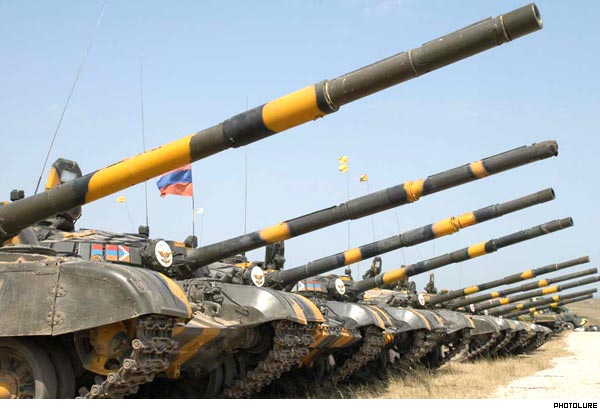
![]() Russian Military Power: http://uk.youtube.com/watch?v=1YkLQfdrzmY Russian Airborne Forces: http://uk.youtube.com/watch?v=xMbnSm...eature=related USA vs RUSSIA military: http://uk.youtube.com/watch?v=zVgYi3...eature=related Russian Airborne Troops Music Video: http://uk.youtube.com/watch?v=0rAHrH...eature=related Specnaz - voin Rossii: http://uk.youtube.com/watch?v=xf2o72eBXjs Russian military: http://uk.youtube.com/watch?v=L2hvObzZt0g Mig 29 OVT Thrust vectoring (closeup and display) at RIAT'06: http://uk.youtube.com/watch?v=eeiqMn...eature=related Su-37 Terminator: http://uk.youtube.com/watch?v=Uxy0Ad...eature=related
__________________
Մեր ժողովուրդն արանց հայրենասիրութեան այն է, ինչ որ մի մարմին' առանց հոգու: Նժդեհ Please visit my blog: http://arevordi.blogspot.com |
|
|
|
|
|
#1615 |
|
The Resurrection
![]() Join Date: Aug 2004
Location: Armenian Diaspora, looking - Դեպի Հայրենիք
Posts: 4,896
![]() |
Re: The Rise of the Russian Empire: Russo-Armenian Relations
This is a documentary I strongly suggest you all to watch. ******************************* Russian Film Accuses West of Orchestrating Chechen War A new film released on Russia’s state-run Channel One has sparked as much international eye-rolling as controversy. Swirling around a central shadowy Turkish secret agent, the 55-minute “Caucasus Plan” implicates a series of western countries, including France, Germany, Turkey and the United States in orchestrating Russia’s war with Chechnya in the 1990s. The Turkish embassy in Moscow has already discounted the “unfounded assertions regarding Turkey,” questioning the conclusions of the self-designated “documentary.” The film, which first aired on April 22nd, alleges that ENKA, a Turkish construction company with major market share in Russia, directly funded Chechen rebels. It also alleges that the U.S. State Department as well as Turkish authorities staged a number of cunning plots to exacerbate separatism in the North Caucasus region, including smuggling weapons and injecting the market with counterfeit dollars. France allegedly gave a hand by printing new regional passports, and Germany provided assistance by minting new currency. A statement from Channel One called the project an “investigative journalism” documentary based on a number of on-the-ground witnesses. In response, ENKA quickly released a statement: “We state that all information regarding our company broadcast on April 22 in ‘The Caucasus Plan’ TV program on Channel One is totally groundless and untrue. We deny all such accusations.” Experts called the film a joke, adding that it resembles Soviet-style propaganda rather than a serious investigation. Radio Free Europe/Radio Liberty quotes Said-Khasan Abumuslimov, a historian who was Chechnya’s vice president in the 1990s: “The Russians have always claimed that the Chechen struggle was instigated by outside forces,” he said. “They say we always wanted to live in peace with the Russians, but first Turkey, then England, and now America is sowing seeds of discord in the Caucasus. I don’t even want to comment on these silly allegations. This is not serious.” Government critics commonly describe television in Russian as the most strictly government-controlled media. At the same time, television serves as the major source of news for the largest share of the population. Channel One (also called Rossiya), a state-run enterprise that broadcasts across the country, has been repeatedly criticized for serving as a Kremlin press-agency, and not a serious source of news. In September 2007, the channel aired another anti-Western special titled “Barkhat.ru” (lit. Velvet.ru). The prime-time special described a mass-conspiracy wherein the CIA was using foreign NGOs, the western media and opposition groups in an attempt to overthrow the government and foment a “color revolution” in Russia. Source: http://www.theotherrussia.org/2008/0...g-chechen-war/ Russian journalist's film "Plan Kavkaz" caused bewilderment in Azerbaijan The investigation made by Anton Vernitskiy, journalist of Channel One, in his film "Plan Kavkaz", shown on April 22 and dedicated to the attempts in early 1990s of external forces, including Baku and Ankara, to separate Chechnya from Russia, has caused bewilderment in Azerbaijan. The ORT journalist reminds the viewers about the events in the 1990s, when after collapse of the USSR Chechen leaders got a chance to appeal for help to foreign special agencies in implementing their mercenary separatist plans. The journalist's investigation asserts that Azerbaijan was then a serious player, and allegedly the then presidents of country Abulfaz Elchibey and Geidar Aliev rendered assistance to Chechen separatists. Khazar Ibragim, head of the press service of the Ministry of Foreign Affairs of Azerbaijan, has stated in his comments on Anton Vernitskiy's assertions that Azerbaijan had never interfered and does not interfere into home affairs of other countries. In his turn, Vafa Guluzade, former foreign policy state adviser, has named the Russian journalist's fabrications to be a lie. "Unlike Russia, Azerbaijan never helped separatists. The point is that Russia was irritated by Azerbaijani delay of Russia's confidential cargo for Iran; therefore, it has grown so furious. It's just one form of provocation," he said. We remind you that back on March 29, Azerbaijani custom inspectors detained at the "Astara" checkpoint a Russian road train with heat insulation equipment intended for the construction of the "Busher" Nuclear Power Plant in Iran. Negotiations of "Rosatom" representatives with the Azerbaijani Government on the fate of the cargo have brought no fruit so far. The Azerbaijani party asserts that Russia failed to submit the necessary documentation, detailing the character of the special equipment delivered for the "Busher" Nuclear Power Plant. Source: http://eng.kavkaz.memo.ru/newstext/e...d/1213763.html
__________________
Մեր ժողովուրդն արանց հայրենասիրութեան այն է, ինչ որ մի մարմին' առանց հոգու: Նժդեհ Please visit my blog: http://arevordi.blogspot.com Last edited by Armenian; 05-28-2008 at 08:41 AM.. |
|
|
|
|
|
#1616 |
|
The Resurrection
![]() Join Date: Aug 2004
Location: Armenian Diaspora, looking - Դեպի Հայրենիք
Posts: 4,896
![]() |
Re: The Rise of the Russian Empire: Russo-Armenian Relations
Russia's N.Ossetia wants unification with Georgia's S.Ossetia ![]() The president of the south Russian republic of North Ossetia asked foreign ambassadors on Tuesday for their support in uniting the province with South Ossetia, a neighboring breakaway republic in Georgia. South Ossetia along with Abkhazia, another Georgian breakaway region, are a major source of tension in relations between Georgia and Russia. Georgia accuses Russia of trying to annex the provinces. North Ossetia has close ethnic and historical ties with its southern neighbor. Taimuraz Mamsurov told foreign envoys at a presentation in the Russian Foreign Ministry: "I am asking you to support the justified intent of the Ossetian people to be united." South Ossetia, a small territory with a population of less than 100,000, has been seeking international recognition of its de facto independence from Georgia since the breakup of the Soviet Union. However, Tbilisi is only prepared to grant it broad autonomy. Speaking at a RIA Novosti news conference on Tuesday, Georgian Ambassador to Russia Erosi Kitsmarishvili said the unification of South and North Ossetia's would contravene international law. "On the subject of unification, there is such a thing as international law, which recognizes the territorial integrity of Georgia and is not subject to revision," the diplomat said. Ex-Soviet breakaway regions have stepped up their drive for independence since Kosovo's declaration of independence in February. Georgia's Abkhazia and South Ossetia, along with Moldova's Transdnestr, have since asked Russia's parliament, the UN and other organizations to recognize their independence. Source: http://en.rian.ru/world/20080520/107888655.html Radar site in south Russia to be put on combat duty in Feb. 2009 ![]() Russia's new Voronezh-type radar site in the southern town of Armavir will be put on combat duty in February 2009, the commander of the Russian Space Forces said on Monday. "To be exact, on February 26, the radar will be capable of replacing the missile attack warning sites in Mukachevo [western Ukraine] and Sevastopol [the Crimea]," Colonel General Vladimir Popovkin told journalists. Popovkin said Russia and Ukraine had withdrawn from the agreement on using these radar sites. The agreement, signed in 1997, defined the main principles for using early-warning missile systems located in Ukraine, as well as the operational order for Mukachevo and Sevastopol units and their provision, funding, modernization and reconstruction. "The Space Forces had a choice - whether to repair the obsolete Ukrainian radars or start work to build a new station near Armavir. The decision was made to build the new station so that it could be put on experimental combat duty by December 2008," Popovkin said. With an effective range of 4,000 kilometers (2,500 miles) the Voronezh-type radar has capabilities similar to its predecessors, the Dnepr and Daryal, which are currently deployed outside Russia, but uses less power and is more environmentally friendly. Washington wants to place 10 missile interceptors in Poland and a radar station in the neighboring Czech Republic, purportedly to counter a missile threat from Iran and other "rogue" states. Russia has fiercely opposed the plans, saying the European shield would destroy the strategic balance of forces and threaten Russia's national interests. Former president Vladimir Putin proposed last year setting up missile defense information exchange centers in Moscow and Brussels. Russia has also offered the U.S. use of radar stations at Armavir and Gabala in Azerbaijan, as alternatives to the missile shield deployment in Central Europe. Source: http://en.rian.ru/russia/20080519/107761471.html Georgia: Russia 'bolstering forces' Georgia has accused Russia of deploying heavy weapons and extra troops in a separatist region of Georgia. Georgia's interior ministry on Sunday released video footage believed to have been taken by a spy plane that Tblisi claims shows Russian deployment of artillery in Abkhazia. Relations between the two nations have been dangerously strained in recent months by Georgia's drive for NATO membership and Russia's support for separatists in Abkhazia and South Ossetia - another Georgian region that has de-facto independence. The tensions have raised fears of military conflict in Georgia, whose location on a key oil export route makes it a focus of contention between Moscow and the West. Russians detained Georgia also detained five Russian peacekeepers along the administrative border with the Abkhazia region overnight after an accident involving an armoured personnel carrier. Shota Utiashvili, Georgian interior ministry official, said that the five peacekeeping officials were detained on Sunday when their armoured personnel carrier collided with a Georgian woman's car, in the town of Zugdidi. Utiashvili said that the peacekeepers were later released. Alexander Diordiev, a Russian peacekeeping official, confirmed the detention of the Russian soldiers but denied that there had been any sort of a collision. "This is the latest attempt by the Georgians to discredit Russian peacekeepers. The police provoked our peacekeepers with their actions," Diordiev said. Russia accused Georgia on Friday of supporting armed rebels in southern Russia. Georgia said it would block negotiations on a Russian entry to the World Trade Organisation unless Moscow reversed last month's decision to strengthen ties with the Georgian regions of Abkhazia and South Ossetia. Source: http://mwcnews.net/content/view/22566/0/ Georgia condemns Russian actions Georgia has shown the BBC footage which it says proves Russian troops are deploying heavy military hardware in the breakaway region of Abkhazia. An interior ministry official in Tbilisi said the video footage was from an unmanned Georgian spy plane. He said it proved the Russians were a fighting force, not just peacekeepers. Moscow strongly denies the claim. Tensions remain high between Moscow and Tbilisi over Abkhazia and another breakaway region, South Ossetia. The two territories are controlled by pro-Russian separatists. Last month, Russia moved hundreds of paratroopers into Abkhazia, insisting they were just peacekeepers. Drone wars The footage was shown to the BBC by Georgian interior ministry official Shota Utiashvili. He also said it was essential for Georgia to continue send its spy planes, or drones, for intelligence gathering missions in Abkhazia to assess the potential risk. "We think that Georgia, especially at a time when we have confirmed reports of massive military deployments from the Russians, and ultimatums presented again by the Russians and the Abkhaz, we have the right to know what's going on there, to be ready," Mr Utiashvili said. The Abkhaz separatists say they have shot down seven Georgian drones in recent months, although Tbilisi insists that only one of the planes has been downed. Last month, Georgia accused Russia of shooting down its drone - a claim denied by the Kremlin. Georgia's pro-Western authorities believe that Russia is fuelling the separatist conflict to maintain its influence in Abkhazia and damage Georgian hopes of joining Nato, the BBC's Matthew Collin in Tbilisi says. Source: http://news.bbc.co.uk/2/hi/europe/7406782.stm Incident with peacekeepers in Georgia a provocation - command The incident with Russian peacekeepers detained in western Georgia is a provocation, an aide to the Collective Peacekeeping Force commander in the Georgian-Abkhaz conflict zone said on Sunday. Alexander Diordiyev said Russian peacekeepers were redeploying hardware in the southern security zone near the village of Urta on the night of May 17-18 when Georgian law-enforcement officers blocked the road to the peacekeepers' armored personnel carrier and fuel tanker truck. Soon after that, a damaged Volga car approached the scene and the Georgian police claimed that the car had been damaged by the Russian peacekeepers, Diordiyev said, adding that force was used against the peacekeepers. The Russian peacekeepers were released several hours after the incident. Abkhazia and South Ossetia, another rebel province, broke away from Georgia in the early 1990s following the collapse of the Soviet Union. Between 10,000 and 30,000 people were killed in the Georgian-Abkhazian conflict and some 3,000 in Georgian-South Ossetian hostilities. Georgia is looking to regain control over the two de facto independent republics, and accuses Russia of trying to annex them. Source: http://en.rian.ru/world/20080518/107679389.html
__________________
Մեր ժողովուրդն արանց հայրենասիրութեան այն է, ինչ որ մի մարմին' առանց հոգու: Նժդեհ Please visit my blog: http://arevordi.blogspot.com |
|
|
|
|
|
#1617 |
|
The Resurrection
![]() Join Date: Aug 2004
Location: Armenian Diaspora, looking - Դեպի Հայրենիք
Posts: 4,896
![]() |
Re: The Rise of the Russian Empire: Russo-Armenian Relations
Russia and Ukraine Lock Horns Over Naval Base ![]() They have bickered over NATO expansion, energy prices and how to commemorate a 1930s mass famine. Now, Russia and Ukraine are locked in a new dispute over a naval base in the Ukrainian city of Sevastopol. The base lies in Crimea, a verdant, mountainous peninsula that was part of the Russian Empire and later Soviet Russia until Khrushchev gave it to Ukraine in 1954. After the breakup of the Soviet Union, Ukraine kept control of the region, but signed a lease allowing Russia to base its Black Sea Fleet in Sevastopol until 2017. This month, however, Moscow’s mayor, Yuri M. Luzhkov, called for Russia to assume ownership of Sevastopol. In remarks delivered from the naval base on the 225th anniversary of the Black Sea Fleet’s inception, the mayor said that Khrushchev had never intended to give Sevastopol to Ukraine and urged a review of the current arrangement. Many Russians, and some of Crimea’s ethnic Russian majority, would like to see Russia regain control of the region, particularly Sevastopol, a strategic port city that they consider integral to Russia’s national security. The statements rankled the government in Kiev, which, in response, banned Mr. Luzhkov from entering Ukraine, saying his comments threatened Ukraine’s national interests. Moscow, already annoyed by Kiev’s Western-leaning policies and particularly angered by its drive to join NATO, vowed to retaliate. “Regarding the Ukrainian decision to ban Moscow’s mayor, Yuri Luzhkov, from entering the territory of Ukraine, the Russian Foreign Ministry informs that Russia has been forced to take adequate measures against those Ukrainian politicians who, with their actions and words, do harm to the Russian Federation,” the ministry said in a statement on Thursday. Ukraine’s deputy justice minister appears to be the first official to suffer retribution. After the minister, Evhen V. Kornichuk, suggested this month that Vladimir V. Putin, Russia’s newly appointed prime minister, be banned from Ukraine as well, Moscow has made it clear that Mr. Kornichuk will not be welcome in Russia. “Considering what Evhen Kornichuk said in his public address, we assume that he will not be planning to visit the Russian Federation,” Andrei Nesterenko, a Foreign Ministry spokesman, said on Thursday. A spokeswoman for the Foreign Ministry could not confirm Friday whether Mr. Kornichuk had been officially banned nor whether more entry restrictions would follow. Source: http://www.nytimes.com/2008/05/24/wo...tml?ref=europe Kiev Decision on the RF Black Sea Fleet Withdrawal Not to Affect Combat Capacity ![]() The decision of Kiev to elaborate a bill, whereby Russia’s-Ukrainian agreements on the RF Black Sea Fleet’s deployment in Crimea will expire in 2017 hasn’t affected combat training and capacity of the fleet, Igor Dygalo, who heads the Information Service at the RF Navy, told RIA Novosti. Ukrainian President Viktor Yushchenko committed the government to elaborate a bill, whereby Russia’s-Ukrainian agreements on deployment of the RF Black Sea Fleet in Ukraine will expire in 2017. “The main thing for the Black Sea Fleet today is to accomplish the missions defined by the combat training plans, which it is doing with honor, solving the tasks of strengthening combat capacity and maintaining technical readiness of the forces at the high level,” Dygalo said. The Black Sea Fleet command has all necessary legal base to arrange full-value combat training of the fleet. Those are the basic agreements sealed by Russia and Ukraine and ratified by parliaments of both countries, Dygalo reminded. Source: http://www.kommersant.com/p-12569/r_...ck_Sea_Fleet_/ Foreign Ministry Warned About Aftereffects of Black Sea Fleet Decree of Yushchenko ![]() The decree of Ukrainian President Viktor Yushchenko about the withdrawal of the RF Black Sea Fleet from Ukraine “won’t improve atmosphere of trust” between the nations and may impair the progress in negotiations on the issue, Russia’s Foreign Ministry warned. Discussing the dates of the Black Sea Fleet’s stationing is premature yet, the Information Department of the RF Foreign Ministry commented Wednesday, specifying that the topic would be the subject of Russia’s-Ukrainian negotiations some time later. “Nowadays, it is necessary to focus on tackling practical issues related to ensuring conditions for full-fledged operation of the Black Sea Fleet of the Russian Federation and its stationing in Ukrainian territory,” the statement said. The decree of Yushchenko appears even more surprising as the parties have agreed on “quite the opposite,” to be more precise on the negotiations related to the Black Sea Fleet operation in Ukraine under the Russia's-Ukrainian Action Plan till 2009, the Foreign Ministry pointed out. Three agreements were sealed May 28, 1997, the RF Foreign Ministry reminded, - on the status and terms of the RF Black Sea Fleet’s stationing in Ukraine, on division of the Black Sea Fleet and on the mutual settlement related to that division and stationing of the Black Sea Fleet in Ukraine. The first two agreements were concluded for 20 years and will be prolonged for another 5 years should none of the parties notify about their expiration. Ukrainian President Viktor Yushchenko committed the cabinet Wednesday to elaborate by July 20 a bill on the RF Black Sea Fleet's stationing in Ukraine. Source: http://www.kommersant.com/p-12566/Yushchenko_decree/
__________________
Մեր ժողովուրդն արանց հայրենասիրութեան այն է, ինչ որ մի մարմին' առանց հոգու: Նժդեհ Please visit my blog: http://arevordi.blogspot.com |
|
|
|
|
|
#1618 |
|
Death by Internet
![]() ![]() Join Date: Sep 2005
Location: Montreal, Qc
Posts: 2,792
![]() |
Re: The Rise of the Russian Empire: Russo-Armenian Relations
What are the ethnic demographics in Kazakhstan these days anyway? I remember reading that it used to be 40%+ of Russians and up to 20% of Germans, these rest being largely Kazakh. I wonder if it's still that way.
Anyway, during the Soviet era, was Kazakhstan used for its oil supply nearly as much as it has been with its everstrengthening partnership with Russia? I know that it was used for the testing of subterrainean nuclear bombs, for draining the Aral Sea almost to oblivion to irrigate vast tracts of farmland, and also for launching space shuttles. The Soviet Union did a lot to harm the environment and its people there, I wonder if this phase of partnership will turn all this around? Their oil supply isn't burried under tar sands is it? Perhaps Kazakhstan will become a richer country out of this and its standards of living will rise.
__________________
The truly victorious see win/win situations everywhere |
|
|
|
|
|
#1619 |
|
The Resurrection
![]() Join Date: Aug 2004
Location: Armenian Diaspora, looking - Դեպի Հայրենիք
Posts: 4,896
![]() |
Re: The Rise of the Russian Empire: Russo-Armenian Relations
Can you feel the panic?
******************** Summit Backs Non-Russian Oil Route Azerbaijan, Georgia, Lithuania, Poland and Ukraine agreed on Friday to speed up preparations for shipping Central Asian fuel to Europe to reduce dependence on Russia. At a summit in Kiev, European Union Energy Commissioner Andris Piebalgs backed the so-called Euro-Asian oil transportation corridor project, which includes plans to transport Azeri oil through the Odessa-Brody pipeline to the region. Kazakhstan said it was also willing to pump oil through the pipeline. The countries of Eastern and Central Europe are banding with Central Asian states to circumvent Russia, the region's dominant energy supplier. Russia, the world's largest natural gas exporter, is increasingly using its energy resources to wield influence over its former satellites. The country is also the world's second-biggest oil exporter. "Very often, energy issues have political color," Ukrainian President Viktor Yushchenko said. "Examples of 'energy pressure' are constant occurrence." Source: http://www.themoscowtimes.com/articl.../42/367692.htm
__________________
Մեր ժողովուրդն արանց հայրենասիրութեան այն է, ինչ որ մի մարմին' առանց հոգու: Նժդեհ Please visit my blog: http://arevordi.blogspot.com |
|
|
|
|
|
#1620 |
|
The Resurrection
![]() Join Date: Aug 2004
Location: Armenian Diaspora, looking - Դեպի Հայրենիք
Posts: 4,896
![]() |
Re: The Rise of the Russian Empire: Russo-Armenian Relations
Kremlin will reward prolific mothers to stem population decline ![]() The initiative, the latest in a series of measures harking back to Russia's communist past, represents the latest attempt to reverse a population decline that Vladimir Putin described as the country's biggest crisis. A decree establishing the "Order of Parental Honour" was signed by President Dmitry Medvedev and candidates include women with many children who can show they are raising them as "heroes". The award is the latest in a series of responses to the demographic crisis. Russia's population of 142 million is shrinking by more than 700,000 a year and may have halved by 2050. The government has spread the message that it is the patriotic duty of all women to bear at least three children – and many have taken up the cause. Pregnancy is now the height of fashion among wealthy women. But experts believe the chances of reversing the population decline are slim, partly because there are too few women between the ages of 20 and 30. But the main reason, they say, is Russia's low life expectancy, which for men is 58. Critics say Mr Putin has failed to address the true cause of the crisis – "rampant alcoholism" – for fear of damaging his popularity. Source: http://www.telegraph.co.uk/news/worl...n-decline.html
__________________
Մեր ժողովուրդն արանց հայրենասիրութեան այն է, ինչ որ մի մարմին' առանց հոգու: Նժդեհ Please visit my blog: http://arevordi.blogspot.com |
|
|
|
![]() |
| Currently Active Users Viewing This Thread: 5 (0 members and 5 guests) | |
| Thread Tools | |
| Display Modes | Rate This Thread |
|
|
Similar Threads
|
||||
| Thread | Thread Starter | Forum | Replies | Last Post |
| The Jihad Genocide of the Armenians | skhara | Genocide Discussions | 22 | 08-06-2007 10:35 AM |
| Origins of the Armenian peoples | Anonymouse | Armenian History | 51 | 04-09-2007 01:41 PM |
| One armenians view on interracial marriages: | sad_eyes | Love and Romance | 64 | 12-17-2005 02:15 AM |
| Over 50 Members of Congress Attend ANCA Capitol Hill Armenia | SaSSoun | Armenian News | 0 | 04-11-2003 11:07 AM |