

Re: Presidential elections 2008 in Armenia
Zhamanak: Suren Khachatryan was among shooters
According to Zhamanak daily, former Syunik governor Suren Khachatryan was not asleep during the shooting near his Goris house, and was among the shooters.
The paper adds that Goris residents say that while fathers normally defend their sons, and assume responsibility for their crimes, the former governor, in order to save his skin and position, allowed to arrest his son, but even that did not save him.
-
Re: Presidential elections 2008 in Armenia
Next Governor Of Syunik Is Known: No Further Dismissals
The meeting of the RPA Executive Body is over, and Member of Parliament Vahe Hakobyan, Republican, was nominated governor of Syunik.
Vahe Hakobyan is the son of Maxim Hakobyan, director of Zangezour Copper and Molybdenum Combine.
During the meeting the report of the Control Chamber was discussed as well.
The spokesman for the RPA Eduard Sharmazanov refused to reveal details.
He only said that no dismissals have been discussed.
The rape of Syunik can really start now.Leave a comment:
-
Re: Presidential elections 2008 in Armenia
Watchdog Cites 'Troubling Deterioration' For Civil Society In Eurasia
By Heather Maher
June 18, 2013
Countries in Central Europe and Central Asia are increasingly being ruled by autocratic governments with little regard for democracy, according to the 2013 "Nations In Transit" report by democracy watchdog Freedom House.
The result has been a worsening of existing corruption, media censorship, and violence against political opposition, the group concludes.
The annual analysis of democratic development from Central Europe to Central Asia says there has been a "troubling deterioration" in conditions for civil society across Eurasia.
"In Eurasia, the story we saw in 2012 was one of authoritarian leadership aggressively cracking down on civil society activity," project director Sylvana Habdank-Kołaczkowska told RFE/RL in connection with the new report. "The biggest ratings change we saw on any of our indicators were related to civil society crackdowns. In some cases, this was a matter of deeply entrenched authoritarian regimes just sort of digging their heels in further, passing new legislation that further restricted civil society activities -- usually targeting freedom of assembly but on a number of issues. Sometimes it was real violence against protesters."
Knock-On Repression
Uzbekistan and Turkmenistan have again been rated the worst in the region for civil society. Azerbaijan, Tajikistan, and Belarus were cited for increased persecution of perceived enemies, and Kazakhstan's government is faulted for cracking down on labor organizers.
Freedom House President David Kramer said Russian President Vladimir Putin’s return to office last year brought a return of "the worst repression Russians have suffered since the fall of the Soviet Union."
He said Putin has used his authority over the legislature, media, and the judiciary to impose new policies "designed to muzzle political opposition and civil society activism."
That has emboldened other autocrats in the region to follow suit, he said.
Legislation restricting public assembly, religious activity, and nongovernmental organizations (NGOs) was adopted not only by Russia but also Kazakhstan, Belarus, Azerbaijan, and Tajikistan. All five countries were downgraded on the group’s Nations In Transit civil-society indicator.
Nearly All Bad News
Not all the news was bad. Freedom House found that Georgia and Armenia "made strides toward more competitive and fair elections as a result of new electoral laws that emphasized equal access to campaign resources and media coverage."
In Ukraine, however, the group found that parliamentary elections were marked by political prosecutions, legal manipulations, bribery, and other official abuses.
Central European states, especially new EU members, experienced political instability in part due to pressure to implement harsh austerity measures. A new government in Romania triggered a crisis when it tried to consolidate its power over state institutions.
The group says Hungary, which last year had already showed dramatic decline, slipped further away from democracy under Prime Minister Viktor Orban.
In the Balkans, Albania, Bosnia-Herzegovina, and Kosovo all received downgrades on the corruption indicator because their judiciaries were vulnerable to political interference and journalists faced intimidation and attacks.
Habdank-Kołaczkowska said in all three countries, "the implementation of reforms essential to the rule of law -- particularly those underpinning the independence of the judiciary -- has been incomplete, perfunctory, and undermined by a lack of political will."
Nations in Transit is Freedom House’s annual assessment of democratization from Central Europe to Eurasia, using the reform records of 29 countries.
Leave a comment:
-
Re: Elections in Armenia
Heated offshore debates in Armenian parliament

June 12, 2013 | 17:11
YEREVAN. – The offshore scandal involving Armenian PM Tigran Sargsyan was one of the key issues discussed during the Wednesday debate in parliament.
The opposition Armenian National Congress (ANC) bloc offered to set up a commission to discuss media reports about an offshore company registered in the name of Tigran Sargsyan.
In response to PM’s claims that the reports are spread to discredit him, head of ANC faction Levon Zurabyan asked to explain how $350,000 could appear on the account of a “fake company.”
However, PM did not accept the offer, noting that setting up a commission will prevent lawmakers from discussing other important issues.
An article telling about an offshore company set up by PM Tigran Sargsyan, Archbishop Navasard Kchoyan and others has recently appeared in media. Premier Sargsyan has already filed a petition to the prosecutor’s office.
PS. Archbishop Navasard Kchoyan
Last edited by londontsi; 06-12-2013, 08:12 AM.Leave a comment:
-
Re: Elections in Armenia
The issue of transparency I think is a important one for it can instill some form of accountability and public trust. I think this interview also raises another interesting aspect about the mob mentality that is taking hold with the likes of Raffi and some of his followers. It seems that this interviewer like many others is set on declaring people guilty based on nothing more then association or other trivial things. If there is a crime then it should be solved and the criminal punished based on evidence but you can't go around and arrest people just because they have money.Originally posted by londontsi View PostLeave a comment:
-
Re: Elections in Armenia
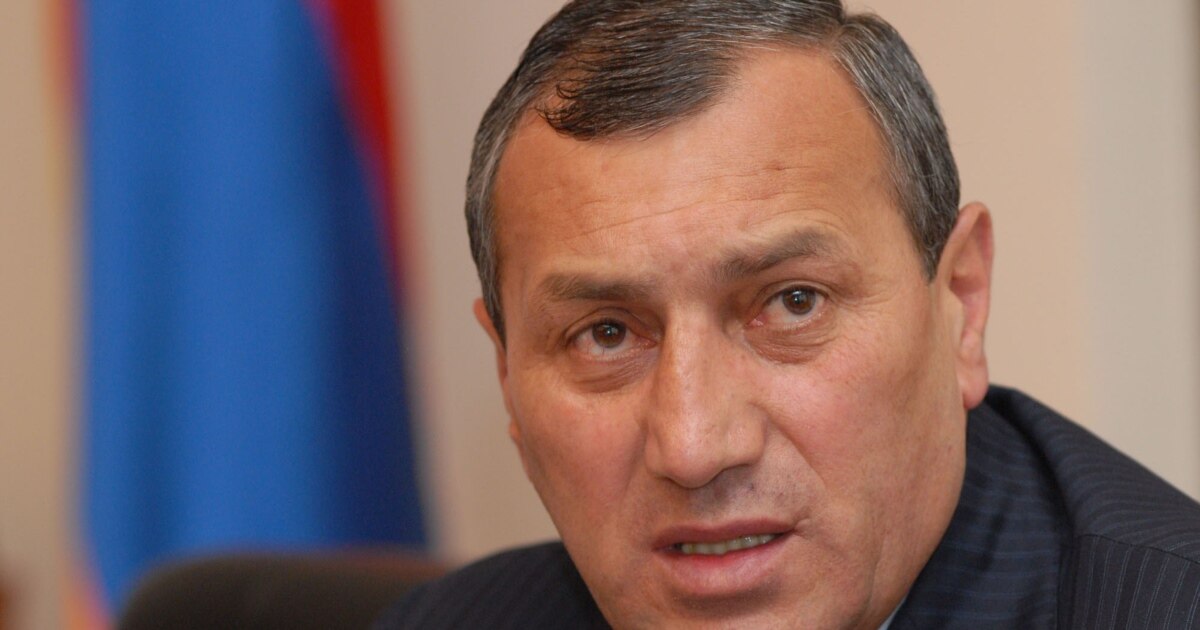
I hope the scum rots behind bars.
Governor Resigns ‘Temporarily’ Over Deadly Shooting
The notoriously violent governor of Armenia’s southeastern Syunik province said on Monday that he is “temporarily” stepping down in connection with a weekend shootout outside his villa that left one of his local rivals dead and two other men injured.
Suren Khachatrian announced his decision following the arrest of his son Tigran and one of his bodyguards on suspicion of involvement in the late-night incident in Goris, a provincial town that has long been his de facto fiefdom.
The authorities in Yerevan, meanwhile, were in no rush to sack or prosecute Khachatrian despite renewed allegations by opposition and civic activists about impunity enjoyed by powerful government loyalists in Armenia.
Law-enforcement authorities gave few details of the shooting, saying only that it followed a bitter dispute involving Avetik Budaghian, a 43-year-old local businessman and his brother Artak, who is the commander of an Armenian army unit stationed in the area. Avetik died on the spot, while Artak and another man, who is apparently linked to the governor, were hospitalized with serious gunshot wounds.
Police units sent from Yerevan reportedly searched the houses of Khachatrian and his relatives shortly after the incidents.
In a statement, Armenia’s Office of the Prosecutor-General said investigators have confiscated “a large quantity of weapons” but did not elaborate. It also said that all individuals responsible for the deadly violence will be brought to justice “regardless of their positions.”
Khachatrian did not report for work and switched off his mobile on Monday. “I regret that I could not prevent the tragic incident that took place near my house,” he said in a statement posted on the website of Syunik’s provincial administration. “An objective inquiry should now answer all questions.”
“I have decided to give up my duties of governor until the end of the inquiry and have already received permission from my superior body,” he added.
The Armenian government’s press office insisted, however, that Khachatrian did not submit resignation letters to Prime Minister Tigran Sarkisian or Local Government Minister Armen Gevorgian. Under Armenian law, the provincial governors are appointed and dismissed by the central government.
Some media reports claimed that Khachatrian sought a meeting with President Serzh Sarkisian but was snubbed by the latter. Sarkisian’s press secretary, Arman Saghatelian, did not confirm or refute those reports.
In Goris, meanwhile, relatives of the Budaghian brothers blamed Khachatrian for the shootings. “This was the result of lawlessness reigning in this town for more than 10 years,” one of them told RFE/RL’s Armenian service (Azatutyun.am). “At the heart of that lawlessness is the current governor of Syunik. I am convinced that he had a hand in this.”
The brothers have reportedly had a tense rapport with Khachatrian and his extended family. Avetik Budaghian, the slain businessman, challenged Goris Mayor Nelson Voskanian, a Khachatrian protégé, in the last local election held in 2010. Budaghian cried foul during that mayoral race.
“Please do not politicize what happened, it was an accidental phenomenon,” Voskanian told RFE/RL’s Armenian service (Azatutyun.am). “I don’t know who is responsible for it. The guilty will be identified.”
The mayor also denied that Khachatrian’s practically unlimited influence on local affairs resulted in an atmosphere of fear. “The atmosphere in Goris is good,” he claimed.
Local residents approached by an RFE/RL correspondent were clearly too scared to comment on the shock killing, however. “People are not just scared, they shudder [with fear,]” said one middle-aged man. “Switch off your camera,” he said when asked to elaborate.
“Please don’t ask me questions,” said another, female resident of the picturesque town.
Khachatrian, who is better known in Armenia with his “Liska” nickname, has held sway in Goris and nearby villages ever since the early 1990s. Independent media outlets have long implicated him and his relatives in violent attacks on local business rivals as well as government critics, including a Syunik newspaper editor whose car was set on fire in 2005.
The controversial governor has always denied involvement in such incidents and denounced opposition politicians and pro-opposition media for branding him a crime figure.
Khachatrian, who is a senior member of the ruling Republican Party of Armenia (HHK), risked dismissal in 2008 as he faced an embarrassing government inquiry into a newspaper report that accused him of beating up a teenage boy. He was eventually cleared of any wrongdoing.
Khachatrian, who was appointed as Syunik governor in 2004 by then President Robert Kocharian, managed to retain his position even after assaulting in a Yerevan hotel lobby in late 2011 a businesswoman who accused him of fraud. Although the incident was captured by a surveillance camera, law-enforcement bodies refused to bring criminal charges against him on the grounds that the woman did not suffer serious physical injuries.
Official results of Armenian elections held over the past decade have shown President Sarkisian and his HHK winning more votes in Syunik than in any other part of the country. Critics say this is the reason why the ruling party has never censured the governor until now.
Neither the HHK nor the presidential administration reacted to Khachatrian’s threats to “smash the head” of Raffi Hovannisian, Sarkisian’s main challenger in the February 2013 presidential election. The Armenian president, who repeatedly pledged to uphold justice during the presidential race, instead gave a major state award, the Order of Combat Cross, to the governor less than a month ago.
HHK representatives were cautious on Monday in reacting to the latest bloody incident linked to Khachatrian. “If he committed a crime, I think there will be an adequate punishment,” said Galust Sahakian, the party’s parliamentary leader. Sahakian stressed at the same time that that he still considers the notorious official’s track record to be “quite serious.”
No such luck for the nation unfortunately when criminals have friends in high places.
.Last edited by londontsi; 06-04-2013, 01:05 AM.Leave a comment:
-
Re: Elections in Armenia
30% assess presidential election in Armenia positively, 62% negatively
30% assess presidential election in Armenia positively, 62% negatively
Monday,May 20
A poll conducted by Gallup International Association showed that only 30%
of respondents assessed positively the February 18 presidential elections
in Armenia, Director of Gallup International Association Armenia Office
Aram Navasardian told reporters today.
"62% assessed the presidential elections negatively, and 7% of respondents
found it difficult to answer", Navasardian said.
The poll was conducted among 1,067 adults on April 12-20.
33.5% said they voted for the incumbent President Serzh Sargsyan in the
presidential elections, 23.8% said they voted for the leader of Heritage
Party Raffi Hovannisian. As for the post-election policy of Raffi
Hovannisian, 49% of respondents assessed it negatively, while 39% -
positively.
47% said the situation in Armenia will not change considerably after the
re-election of Serzh Sargsyan as president, 22% were optimistic, while
another 22% said they expect negative changes.Leave a comment:
-
Re: Elections in Armenia
http://www.arminfo.am/index.cfm?obje...45F6327207157CThe Republicans won over the elections in Armenia at all the levels: on 6 May 2012 they took majority in the parliament, on 18 February they gained the victory at
the presidential election and on 5 May - at the Yerevan Council of Elders election. So the RPA has set absolute hegemony in the political field of Armenia, director of the Caucasus Institute, Aleksandr Iskandaryan, told journalists today.
"There were numerous pre-conditions for the victory of the RPA. First of all, 49% of votes gathered by the RPA candidate, Serzh Sargsyan, at the presidential election on 18 February. It would be simply naive to expect that after that RPA would gain less votes at the Yerevan Council of Elders election. So, nothing extraordinary happened on 5 May. Such distribution of forces was predictable especially after the PAP leader Gagik Tsarukyan's refusal to run for president", - Iskandaryan said
.Leave a comment:





Leave a comment: