

Re: Georgian-South Ossetian conflict
In a matter of ethics, we should recognize Abkhazia's independence. But in a matter of politics and international relationships, we shouldn't. We don't another border closed or another angry enemy that could easily engage itself with other angry enemy with the intention to hurt us.
-
Re: Georgian-South Ossetian conflict
Nagorno Karabakh recognises Abkhazia


By Messenger Staff
Wednesday, March 10
Armenian and Russian media outlets have recently reported that the unrecognised 'Nagorno Karabakh Republic' (NKR) has recognised Abkhazia as an independent state. Representatives of the Georgian Government see this as rather a joke. One unrecognised entity has recognised another, so what? This is meaningless. However the Georgian population and some opposition members have reacted angrily to the NKR's declaration, as it is understood that it would not take such a decision without the consent of Yerevan.
The newspaper Asaval-Dasavali comments that neither Bagapsh nor Kokoity takes any serious decisions without Moscow’s consent. Similarly the Karabakh leadership does not take any decisions without Yerevan’s endorsement. What is particularly annoying to Georgians is that this declaration has come just after the Georgian President has hosted his Armenian counterpart in Batumi and the Larsi checkpoint has been reopened, to the great satisfaction of the Armenian side. The popular view is that Georgia has taken Armenia’s interests into consideration but it seems Armenia does not do the same in return. Opposition members are particularly critical of Saakashvili for putting the country in this position.
The report that Abkhazia has been recognised by Karabakh has not been officially confirmed. The outlets saying this are quoting the so-called Foreign Relations Committee Chairman of the Karabakh Parliament Vargam Atanesian, who has allegedly said that so-called Karabakh President Bako Saakian's presence at the inauguration of so-called Abkhazian President Bagapsh is a confirmation of this recognition and in the near future Stepanakert and Sokhumi will establish diplomatic relations.
Georgian Minister of Reintegration Temur Iakobashvili has called the reports misinformation. Political analyst Mamuka Areshidze also thinks that an oral statement not confirmed by a document has no meaning at all. He also doubts that the Armenian leadership would allow such a thing to happen. If the report is just a vague warning we should analyse who it is targeted at, but if the report is true Tbilisi will need to clear the matter up with Yerevan. Maybe misinformation has been deliberately put out to see what Georgia’s reaction would be, but if the report is true Moscow will be the main beneficiary of the NKR's action, because it will help it further its divide and rule policy, as if it needs any more help.
Some analysts think that Russia actually wanted to keep the recently reopened Larsi checkpoint closed, as this made it a source of potential confrontation between Armenia and Georgia. In the event of such a conflict Russia would have even more opportunities to intervene and chop up the territories of its neighbours. All this might explain Georgia's desire to reopen it, but you can only reopen the checkpoint once. NKR recognising Abkhazia may be nonsense, but there is such a thing as dangerous nonsense.
Leave a comment:
-
Re: Georgian-South Ossetian conflict
Pacific Island Recognizes Georgian Rebel Region
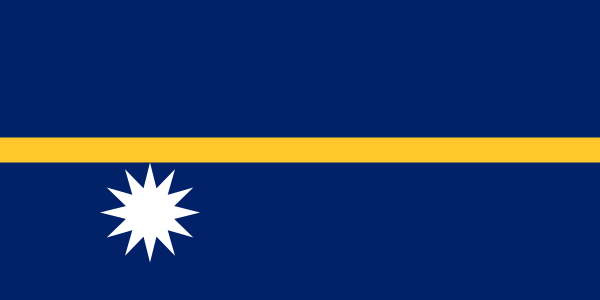
SUKHUMI, Georgia (Reuters) - The tiny Pacific island of Nauru recognized the rebel Black Sea region of Abkhazia on Tuesday, throwing its weight behind a Russian drive to win international recognition for Georgia's breakaway territories.
The island of 14,000 people joined Russia, Nicaragua and Venezuela in recognizing Abkhazia, following a five-day war last year between Russia and Georgia over breakaway South Ossetia.
"We have established relations with the world's biggest nation (Russia), and now with the smallest," Abkhaz Foreign Minister Sergei Shamba told Reuters.
But Georgia said Russia had "bought recognition." "It doesn't change anything in international politics," said Minister for Reintegration Temur Iakobashvili. "If someone is happy that Abkhazia is now recognized by the country no one knew about yesterday, let him be happy."
Russia's Kommersant newspaper cited a source on Monday as saying Nauru had asked Russia for $50 million for projects on the island, which once made its money from exporting phosphates mined from fossilized bird droppings.
Asked if Nauru had been paid to recognize Abkhazia, Shamba replied: "You don't establish diplomatic relations like that ... although of course the entire international practice is sheer bargaining to a certain extent."
LOBBYING LATIN AMERICAN
Shamba said Abkhazia was lobbying Latin American countries and the Middle East, but the process was "hampered by mighty forces," such as the United States and European Union.
Russia's RIA Novosti quoted Nauru Foreign Minister Kieren Keke as saying: "I hope that other countries will follow our example and also recognize the independence of Abkhazia."
Nauru, an island of 21 square km (8 square miles), gained independence in 1968 and joined the United Nations in 1999 as the world's smallest independent republic, according to the CIA World Factbook. It is 14,000 km (8,700 miles) from Abkhazia.
Abkhazia and South Ossetia broke away from Georgian rule in wars in the early 1990s after the collapse of the Soviet Union.
After mounting tensions, Georgia launched an assault on South Ossetia in August 2008, triggering a devastating Russian counter-strike.
Russian forces now control the borders of both regions and patrol Abkhazia's coastline, once the playground of the Moscow elite. Both regions are overwhelmingly dependent on Russia for security and economic support.
Nauru has also recognized Western-backed Kosovo, which declared independence from Serbia in February 2008 over Russian objections. Kosovo has so far been recognized by 63 countries.
Venezuela recognized Georgia's rebel regions in September during a trip by President Hugo Chavez to Moscow when he sealed a deal to buy Russian tanks and hardware worth a reported $500 million.
(Additional reporting by Aydar Buribayev in Moscow; Writing by Matt Robinson; Editing by David Stamp)
Leave a comment:
-
Re: Georgian-South Ossetian conflict
I hope to see Peru, Ecuador, and Belarus join the ranks of those already recognizing Abkhazian and South Ossetian independence.Leave a comment:
-
Re: Georgian-South Ossetian conflict
Peruvian opposition urges recognition of S.Ossetia, Abkhazia

Peru's opposition party has submitted a proposal to the Peruvian Congress to recognize the former Georgian republics of South Ossetia and Abkhazia as independent, the party leader has said.
Ollanta Humala told RIA Novosti on Wednesday that his Peruvian Nationalist Party, the country's second largest political group, submitted the proposal last week. It is currently holding talks with various political forces and parliamentary blocs to win their support.
"Peru is one of the countries that have officially recognized Kosovo as independent, and we believe Abkhazia and South Ossetia also deserve official recognition as two new republics," Humala said.
He said he could see no obstacles to the government's recognition of the republics.
"Now that it has recognized Kosovo [on February 25, 2008], it will not have weighty arguments against the recognition of South Ossetia and Abkhazia," Humala said.
Humala enjoys political popularity in Peru for his nationalist, anti-imperialist and anti-American ideas. He garnered 44.56% of the votes in the presidential polls in 2006.
Abkhazia and South Ossetia have so far been recognized by Russia, Nicaragua and Venezuela. Though the two asked Belarus to recognize their independence last year, Minsk has so far refused to join its neighbor, Russia in recognizing the republics.
Moscow recognized the two republics shortly after a five-day war with Georgia in August 2008 that began when Georgian forces attacked South Ossetia in an attempt to bring it back under central control.
MOSCOW, November 19 (RIA Novosti)
-------------------------------------------------------
Teenage Georgian pawns in South Ossetia may be swapped
Four Georgian teenagers caught at the South Ossetian border with explosives and grenades have made it to the center of a growing international row, and now could be exchanged in return for South Ossetian detainees.
If an agreement is not made, the teenagers could be held for a further two months.
Tbilisi, however, is demanding the immediate release of the youngsters, saying children must not be used as political pawns.
When the teens were detained, they showed the South Ossetian police where they had hidden their bag, in which, next to loaves of bread and sausages, was something more sinister: trotil and ammonal blocks, Bickford fuse and offensive hand grenades with separated detonators.
The boys, aged between 14 and 17, have been held since November 4 by South Ossetia.
Leave a comment:
-
Re: Georgian-South Ossetian conflict
Natelashvili is gay. His party is called 'Labor Party' however they are far from being socialists. Ankara always said that she supports the unity of Georgia. and Adjara's safety is guaranteed by Turkey according to Kars Treaty. If Turkey was really aggressive against Georgia, she would invade Adjara when Georgia attacked to that region before her failed assault to Osetia.
Anyway, it was really funny to see all those Russian-lovers Georgians protesting the Russian strike. In Soviet era, those guys living in Turkey and other countries were hard core Russia supporters; now they are Georgian nationalists.. suckers. What is that guy trying to do by calling Turkey as an enemy.. Russia, enemy. Turkey, enemy like. USA, sold Georgia out. Armenia, never mention. West, not trustable.. Goergia needs good relationshipss. Idiots.Leave a comment:
-
Re: Georgian-South Ossetian conflict
Georgia against Kars Treaty

Georgian Labour party members call Turkey to terminate anti-Georgian activities, Chairman of Georgian Labor Party Shalva Natelashvili stated at the October 6 press conference.
According to him, Turkey pursues anti-Georgian policy, particularly it offers Russia to recognize the independence of Abkhazia and South Ossetia in return for Moscow’s recognition of Northern Cyprus.
“While Georgian President Mikheil Saakashvili is fabling another lie, neighboring Turkey officially joins international anti-Georgian front. It is clear that the predatory instinct rose in Turkish ruling elite. Obviously, Turkey is not sated with Kars Treaty signed by Ataturk and Lenin implying that most part of Georgian historical lands became the territory of Turkey. It resulted in Turkey not supporting Georgia in the UN General Assembly when the issue of Georgian territorial integrity was discussed. In addition, in Turkish textbooks maps Adjara is a part of Turkey and Georgian President is either silent or lays wreath on Ataturk’s grave,” Natelashvili concluded.
Leave a comment:
-
Re: Georgian-South Ossetian conflict

Russia says no deals on north Cyprus recognition
FAMAGUSTA GAZETTE 02.OCT.09
Russia will not enter a deal implying the recognition of occupied northern Cyprus in exchange for Turkey's recognition of Abkhazia says Russian Foreign Minister Sergey Lavrov.
“We are not inclined to enter any deals following ‘scratch my back and I'll scratch yours’ logic. These are two absolutely different stories. These are different situations from the historical, moral and humanitarian points of view. Any bargaining is out of the question here,” Sergey Lavrov said.
“Each situation should be considered in its historical context,” he added.
LinkLeave a comment:
-
Re: Georgian-South Ossetian conflict
Abkhazia hopes for swift recognition from Turkey

Turkish foreign policy’s dilemma on the Georgia-Abkhazia conflict is rising to the surface once more. ‘We certainly hope that Turkey will recognize Abkhazia. There are some positive signals," Abkhazian Foreign Minister Sergei Shamba said following his talks with high-ranked Turkish diplomat Ünal Çeviköz.
The first-ever visit by a high-ranking Turkish diplomat to the self-proclaimed Abkhazia Republic has boosted the breakaway republic's hopes of being recognized by Turkey.
“We certainly hope that Turkey will recognize Abkhazia. There are some positive signals but they have to be materialized. We’re waiting for a more active approach,” Abkhazian Foreign Minister Sergei Shamba told the Hürriyet Daily News & Economic Review in a phone interview.
Turkish Deputy Undersecretary Ambassador Ünal Çeviköz visited Abkhazia on Thursday on the sidelines of Foreign Minister Ahmet Davutoğlu’s official talks with Tbilisi. Georgian officials were informed in advance about Çeviköz meetings in Abkhazia, reaffirming that Turkey’s policy of protecting the territorial integrity and political unity of Georgia has not changed.
Abkhazia announced its independence in 1999. But what changed the landscape was Russia’s recognition of Abkhazia and South Ossetia last year after the war with Georgia. Nicaragua and Venezuela followed Russia, increasing the hopes of this tiny breakaway state.
Turkish foreign policy’s dilemma on the Georgia-Abkhazia conflict rose to the surface once more after a Turkish vessel called Buket was seized in international waters by Georgian coast guards with accusation of smuggling oil to Abkhazia. The captain, Mehmet Öztürk, was sentenced to 24 years in prison, but was released on Monday as a result of Davutoğlu’s talks in Tbilisi.
“The main topic was about the captured ship and our bilateral relations,” Foreign Minister Shamba said in the wake of his talks with Ambassador Çeviköz.
Seeking alliance with Turkey
With hope of a Turkish alliance, Shamba said: “We want Turkey to make its position clear that the capture of a Turkish ship in international waters is not admissible. It is in the interest of regional stability to prevent any escalation from taking place.”
“The talks were constructive,” he said, declining to give further details.
Shamba complained about the lack of direct transportation links with Turkey and urged that Abkhazian diaspora are deeply in need of it. Turkey, however, still supports the economic sanctions imposed against Abkhazia by the Commonwealth of Independent States.
“We’d like to develop economic and humanitarian contact with Turkey. We request opening of communications and passenger transport. It is a big interest because we are neighbors and we have a big Abkhazian diaspora in Turkey,” he said.
Around 500,000 Turkish citizens consider themselves to be of Abkhazian origin. Ambassador Çeviköz’s visit gave hope to those who have been lobbying for recognition of the Abkhazia Republic.
Asked if he was assured that Turkey shifted its policy and might soon recognize Abkhazia, Shamba replied: “It is difficult to say now, but we’ll closely follow the situation and we’d like to maintain contacts with Turkish representatives.”
In response to Shamba’s remarks, Foreign Ministry spokesman Burak Özügergin underscored that “there is no policy change in the Caucasus” in an interview with the Daily News.
Help us to blockade the sea
Apart from the recognition, the Abkhazian foreign minister also expects Turkey to mediate to stop the sea-blockade imposed on them.
Asked what measures they are considering to break the Georgian blockade, he hinted that armed actions are on the agenda, saying: “We are now counter-playing different forms of actions ... The actions will be appropriate if needed. Symmetrical actions with the Georgian side – we will see. We hope that this incident is the last one.”
In the hope to intensify political contacts, Shamba expects to have talks in Ankara as well, saying: “We have constant contacts at different levels. If it is needed we can visit. It is possible in the near future, but it’s not yet fixed on the agenda.”
Without hinting at a visit from Abkhazia to Ankara for talks, Özügergin noted: “It is natural to pay attention to this case due to Turkey’s (geographical and political) position and Abkhazian origin population. Our main aim is to contribute to a permanent peaceful solution for the problem."
Leave a comment:



Leave a comment: