Announcement

Collapse
No announcement yet.

Economics

Collapse
X
 
  • Filter
  • Time
  • Show
Clear All
new posts

  • HyeSocialist
    replied
    Re: Economics

    Originally posted by Haykakan View Post
    Found this interesting article about Ukraine's debt.


    back print

    WORLD

    Ukraine’s Debt to Russia: Detonator for Global Financial Chaos

    Valentin KATASONOV | 11.11.2015 | 08:03


    The $3-billion loan Russia provided to Ukraine in December of 2013 will mature in a month and a half. Kiev has made the decision to overlook what it owes to Russia. Such daring, or perhaps it should be called audacity, can be explained by the fact that the Ukrainian government senses that it has the support of Washington. And the US is even working to get Kiev’s financial chicanery blessed by the IMF.

    According to the National Bank of Ukraine, that country’s international reserves now amount to about $13 billion. Kiev has the ability to pay – just not the desire. But even if Kiev did not have that $13 billion, it could get the $3 billion it needs to pay Moscow, from that very same IMF. As long as Ukraine is not in full-fledged default, the IMF can send Kiev the next scheduled tranche of its bailout loan under the current agreement that was signed in the spring of 2015. The fact that this option is not being discussed shows once again that Washington is not looking for a simple solution. It needs to muddy the waters as much as possible.

    With manic energy, the US is mounting an assault on the International Monetary Fund, demanding an urgent review of the rules of lending, so that the altered rules will allow Kiev to forgo paying its debt to Moscow at the end of the year without painful repercussions. But if Kiev refuses to pay, this will only precipitate a financial crisis. And not just in Ukraine, but all over the world. I’m not kidding.

    If, as the result of backroom manipulations (“rule changes”), the IMF endorses Kiev’s position and rules that Ukraine’s debt to Russia is not an “official,” government-to-government loan, but rather a private one, then this would seem to be in Kiev’s interest. A refusal to repay private (commercial) debt would be considered only a partial default, which would not prevent the IMF from continuing to transfer loan funds to Ukraine. But in that event Russia would have a wide range of retaliatory measures to choose from. I will list only two.

    The first option. Filing a claim with the British court system (either an ordinary court or one specifically for international arbitration). The 2013 loan agreement stipulates that any disputes between the parties are to be reviewed in the courts of the United Kingdom in accordance with British law. Moscow’s lawsuit must challenge Kiev’s actions and demand confirmation that the Russian loan falls under the category of “official” debt. Experts believe that any ruling by the British court (assuming politics do not intervene) would be unequivocal: the debt is official.

    The second option. Agreeing that the loan to Ukraine falls under the category of private (“commercial”) debt. And using the court to demand that Kiev repay 100% of the debt. That would produce an interesting situation. Kiev has happily reported that its debt to its creditors has been successfully restructured. Twenty percent of the debt has been written off, the repayment deadlines have been extended, and the interest rate has been raised. Kiev claimed that the creditors holding 75% of its private debt attended the final negotiations in London where the agreement was reached. Those who hold the remaining 25% of the private debt being restructured did not participate. The Ukrainian government places Russia – to which about 17% of the private debt is owed, according to the Ukrainians’ calculations – within this 25%. The financial markets have seen many recent cases of debt restructuring, but, as a rule, the creditors holding over 90% of the debt have been involved. But there are no guarantees, even with such a high figure.


    It’s likely that in other eras one might have expected some comments or even official statements from the International Monetary Fund over what Kiev has stridently called its debt “restructuring”. In fact this is nothing but blasphemy, of which IMF staffers are well aware, but they are silent. Russia should not sit silently, but act. If in the last ten years creditors holding merely 7-8% of Argentina’s debt (and they were speculators and financial raiders) were able to force a review of the restructuring of Argentina’s enormous debt, then Russia has far more justification to do so with regard to Ukraine’s debt.

    This is, first of all, because in contrast to those financial vultures, Russia is a bona fide creditor. Russia did not buy “junk” on the secondary market. The deal was a placement of 100% Ukrainian debt securities, sold on the Irish Stock Exchange, issued at par, and with a coupon rate that had been reduced by more than 50%.

    Second, even if we assume that Ukraine’s debt to Russia is private, Russia holds about 17% of all of Ukraine’s private debt, as mentioned above. That is a very significant stake.

    Third, it was extremely difficult to force the private creditors, who spent the entire summer of 2015 at the negotiating table, to write off part of Ukraine’s debt (20% of the principal). According to our sources, the negotiations with Kiev were led by some hard-boiled financial vultures (chief among them – Franklin Templeton). They were forced to agree to a meal of cabbage instead of red meat. Therefore, the private creditors can at any time disavow the agreement reached in London to write off part of the debt. And Moscow can provide them with the warrant to do this, with its demand through the English courts for 100% repayment of the Eurobond debt. A game called “Ukraine’s debt to Russia is private” could be a real nail-biter.

    It is said that the IMF sees the trap into which Ukraine could fall if its debt is deemed private. Experts who are carefully following the uproar over Ukraine’s debt tend to think that the IMF is still unlikely to change the status of Kiev’s debt to Moscow. Instead, it will probably be decided that just because an IMF member is declared to be in default on an “official” debt to a particular government, this does not affect the fund’s ability to lend to the country that has been declared to be in such “partial” default.


    If the IMF does come to this decision, it will be extremely difficult to predict the consequences. The mind boggles. Such a decision would cast aside a rule that has been in force throughout the fund’s history – that sovereign debt is a sacred cow. Any attempt to butcher this “cow” would make that state a pariah in the system of international finance. The slaughter of this sacred cow, scheduled for late November, will lead to a total paralysis of the IMF’s work and the disappearance of what are now known as sovereign loans and credits, just as the mammoths and dinosaurs vanished so long ago.

    The radius of the disruption that would occur as a result of Ukraine’s refusal to pay its debt to Russia will spread very far. And Russia will also suffer, but if it plays its hand carefully it will be able to get its money back. But there will be many losers.

    First of all, Ukraine. Ukraine’s refusal to pay its debt, even if it gets the next tranche from the IMF in violation of the current rules, will only prolong the throes of Kiev’s financial death. In my estimation, it will only delay the inevitable by a few months.

    Second, the International Monetary Fund. During its six months of working with Ukraine, it has broken all the rules that had been formulated and fine-tuned over the course of decades. All the transgressions and chicanery that the IMF has allowed itself when dealing with Ukraine are being piled on top of the fund’s own reform crisis, now in its fifth year. The IMF will celebrate its 70th birthday in late December 2015, but it seems to me that the star of the party will not be around too long after the big day.

    Third, the nations of continental Europe. Because Washington is forcing its allies to accept political decisions being made at the IMF in favor of Ukraine and in violation of the current rules, their reputation will be seriously affected. After all, the board of directors will vote on the decision to change the fund’s rules, with the support of America’s European allies. And it seems they have nowhere to turn. Madame Christine Lagarde, the fund’s managing director, claimed at the last IMF-World Bank annual meeting in Lima (Peru) that she is willing to “belly-dance” for Washington, if only the US Congress will vote to ratify the IMF’s decision to review the quotas. Paris deemed that offer inappropriate, reminding Madame Lagarde that she is not only an international official, but also a representative of France.

    Fourth, Great Britain. London is already nervous, because it is in the British court system where the showdown over the ill-fated debt will begin. The loan agreement between Russia and Ukraine stipulates that British law be used to resolve any dispute. Many experts anticipate that Washington will insist that London make the “correct” ruling. London’s reputation as a center for international arbitration could be on the line. If London caves in, new issues of Eurobonds will look to other courts for guidance.

    Fifth, the entire world. International financial transactions, such as issuing sovereign loans and credits, could be paralyzed. We could witness a parade of states defaulting on their sovereign debt. Innocuous “partial” defaults could mushroom into full-fledged ones. The second wave of the global financial crisis would begin. It seems that the US is pursuing the matter in order to use Ukraine’s debt to Russia as a detonator for global financial chaos.
    Ukraine should not pay the debt. All countries that owe Russia cash should not pay. It will help speed up the decay of their Empire.

    Leave a comment:


  • Haykakan
    replied
    Re: Economics

    Found this interesting article about Ukraine's debt.


    back print

    WORLD

    Ukraine’s Debt to Russia: Detonator for Global Financial Chaos

    Valentin KATASONOV | 11.11.2015 | 08:03


    The $3-billion loan Russia provided to Ukraine in December of 2013 will mature in a month and a half. Kiev has made the decision to overlook what it owes to Russia. Such daring, or perhaps it should be called audacity, can be explained by the fact that the Ukrainian government senses that it has the support of Washington. And the US is even working to get Kiev’s financial chicanery blessed by the IMF.

    According to the National Bank of Ukraine, that country’s international reserves now amount to about $13 billion. Kiev has the ability to pay – just not the desire. But even if Kiev did not have that $13 billion, it could get the $3 billion it needs to pay Moscow, from that very same IMF. As long as Ukraine is not in full-fledged default, the IMF can send Kiev the next scheduled tranche of its bailout loan under the current agreement that was signed in the spring of 2015. The fact that this option is not being discussed shows once again that Washington is not looking for a simple solution. It needs to muddy the waters as much as possible.

    With manic energy, the US is mounting an assault on the International Monetary Fund, demanding an urgent review of the rules of lending, so that the altered rules will allow Kiev to forgo paying its debt to Moscow at the end of the year without painful repercussions. But if Kiev refuses to pay, this will only precipitate a financial crisis. And not just in Ukraine, but all over the world. I’m not kidding.

    If, as the result of backroom manipulations (“rule changes”), the IMF endorses Kiev’s position and rules that Ukraine’s debt to Russia is not an “official,” government-to-government loan, but rather a private one, then this would seem to be in Kiev’s interest. A refusal to repay private (commercial) debt would be considered only a partial default, which would not prevent the IMF from continuing to transfer loan funds to Ukraine. But in that event Russia would have a wide range of retaliatory measures to choose from. I will list only two.

    The first option. Filing a claim with the British court system (either an ordinary court or one specifically for international arbitration). The 2013 loan agreement stipulates that any disputes between the parties are to be reviewed in the courts of the United Kingdom in accordance with British law. Moscow’s lawsuit must challenge Kiev’s actions and demand confirmation that the Russian loan falls under the category of “official” debt. Experts believe that any ruling by the British court (assuming politics do not intervene) would be unequivocal: the debt is official.

    The second option. Agreeing that the loan to Ukraine falls under the category of private (“commercial”) debt. And using the court to demand that Kiev repay 100% of the debt. That would produce an interesting situation. Kiev has happily reported that its debt to its creditors has been successfully restructured. Twenty percent of the debt has been written off, the repayment deadlines have been extended, and the interest rate has been raised. Kiev claimed that the creditors holding 75% of its private debt attended the final negotiations in London where the agreement was reached. Those who hold the remaining 25% of the private debt being restructured did not participate. The Ukrainian government places Russia – to which about 17% of the private debt is owed, according to the Ukrainians’ calculations – within this 25%. The financial markets have seen many recent cases of debt restructuring, but, as a rule, the creditors holding over 90% of the debt have been involved. But there are no guarantees, even with such a high figure.


    It’s likely that in other eras one might have expected some comments or even official statements from the International Monetary Fund over what Kiev has stridently called its debt “restructuring”. In fact this is nothing but blasphemy, of which IMF staffers are well aware, but they are silent. Russia should not sit silently, but act. If in the last ten years creditors holding merely 7-8% of Argentina’s debt (and they were speculators and financial raiders) were able to force a review of the restructuring of Argentina’s enormous debt, then Russia has far more justification to do so with regard to Ukraine’s debt.

    This is, first of all, because in contrast to those financial vultures, Russia is a bona fide creditor. Russia did not buy “junk” on the secondary market. The deal was a placement of 100% Ukrainian debt securities, sold on the Irish Stock Exchange, issued at par, and with a coupon rate that had been reduced by more than 50%.

    Second, even if we assume that Ukraine’s debt to Russia is private, Russia holds about 17% of all of Ukraine’s private debt, as mentioned above. That is a very significant stake.

    Third, it was extremely difficult to force the private creditors, who spent the entire summer of 2015 at the negotiating table, to write off part of Ukraine’s debt (20% of the principal). According to our sources, the negotiations with Kiev were led by some hard-boiled financial vultures (chief among them – Franklin Templeton). They were forced to agree to a meal of cabbage instead of red meat. Therefore, the private creditors can at any time disavow the agreement reached in London to write off part of the debt. And Moscow can provide them with the warrant to do this, with its demand through the English courts for 100% repayment of the Eurobond debt. A game called “Ukraine’s debt to Russia is private” could be a real nail-biter.

    It is said that the IMF sees the trap into which Ukraine could fall if its debt is deemed private. Experts who are carefully following the uproar over Ukraine’s debt tend to think that the IMF is still unlikely to change the status of Kiev’s debt to Moscow. Instead, it will probably be decided that just because an IMF member is declared to be in default on an “official” debt to a particular government, this does not affect the fund’s ability to lend to the country that has been declared to be in such “partial” default.


    If the IMF does come to this decision, it will be extremely difficult to predict the consequences. The mind boggles. Such a decision would cast aside a rule that has been in force throughout the fund’s history – that sovereign debt is a sacred cow. Any attempt to butcher this “cow” would make that state a pariah in the system of international finance. The slaughter of this sacred cow, scheduled for late November, will lead to a total paralysis of the IMF’s work and the disappearance of what are now known as sovereign loans and credits, just as the mammoths and dinosaurs vanished so long ago.

    The radius of the disruption that would occur as a result of Ukraine’s refusal to pay its debt to Russia will spread very far. And Russia will also suffer, but if it plays its hand carefully it will be able to get its money back. But there will be many losers.

    First of all, Ukraine. Ukraine’s refusal to pay its debt, even if it gets the next tranche from the IMF in violation of the current rules, will only prolong the throes of Kiev’s financial death. In my estimation, it will only delay the inevitable by a few months.

    Second, the International Monetary Fund. During its six months of working with Ukraine, it has broken all the rules that had been formulated and fine-tuned over the course of decades. All the transgressions and chicanery that the IMF has allowed itself when dealing with Ukraine are being piled on top of the fund’s own reform crisis, now in its fifth year. The IMF will celebrate its 70th birthday in late December 2015, but it seems to me that the star of the party will not be around too long after the big day.

    Third, the nations of continental Europe. Because Washington is forcing its allies to accept political decisions being made at the IMF in favor of Ukraine and in violation of the current rules, their reputation will be seriously affected. After all, the board of directors will vote on the decision to change the fund’s rules, with the support of America’s European allies. And it seems they have nowhere to turn. Madame Christine Lagarde, the fund’s managing director, claimed at the last IMF-World Bank annual meeting in Lima (Peru) that she is willing to “belly-dance” for Washington, if only the US Congress will vote to ratify the IMF’s decision to review the quotas. Paris deemed that offer inappropriate, reminding Madame Lagarde that she is not only an international official, but also a representative of France.

    Fourth, Great Britain. London is already nervous, because it is in the British court system where the showdown over the ill-fated debt will begin. The loan agreement between Russia and Ukraine stipulates that British law be used to resolve any dispute. Many experts anticipate that Washington will insist that London make the “correct” ruling. London’s reputation as a center for international arbitration could be on the line. If London caves in, new issues of Eurobonds will look to other courts for guidance.

    Fifth, the entire world. International financial transactions, such as issuing sovereign loans and credits, could be paralyzed. We could witness a parade of states defaulting on their sovereign debt. Innocuous “partial” defaults could mushroom into full-fledged ones. The second wave of the global financial crisis would begin. It seems that the US is pursuing the matter in order to use Ukraine’s debt to Russia as a detonator for global financial chaos.

    Leave a comment:


  • Haykakan
    replied
    Re: Economics

    This is worth a read

    Leave a comment:


  • Haykakan
    replied
    Re: Economics

    Congressman screams at Yellen: 'You did nothing!'


    CNBC CNBC
    CNBC


    Everett Rosenfeld

    4 hrs ago


    For the first time in series' history, all six Sharks appear together in the Tank to discuss their favorite memories over the first 100 episodes. The Sharks reveal why they participate year after year on the show, and celebrate with a cake-cutting and champagne toast.

    10 secrets you'd never guess about 'Shark Tank'


    No. 1 Best State To Make A Living: Texas

    The 10 Best And Worst States To Make A Living In 2015


    Rep. Sean Duffy, R-Wis., lashed out at Federal Reserve Chair Janet Yellen on Wednesday, accusing her and the Fed of willfully hiding documents that have been subpoenaed for an ongoing congressional leak probe.


    Popular Searches


    Receptos Inc


    RCPT


    230.08


    +22.90

    +11.05%


    Bank of America Corporation


    BAC


    17.68


    +0.55

    +3.21%


    Netflix Inc


    NFLX


    98.13


    -2.24

    -2.23%


    Amazon.com Inc


    AMZN


    461.19


    -4.38

    -0.94%


    "You did absolutely nothing—zero. ... You did nothing to perpetuate an investigation that would lead us to the truth," Duffy charged. "Madam Chair, it appears that you are the one who is jeopardizing—or the Fed is the one who is jeopardizing—this investigation. Am I wrong?"

    Yellen, who maintains that the Fed cannot release requested documents without jeopardizing the Justice Department's criminal investigation, replied by saying, "We want to see this investigation succeed." She said she plans to turn over all the requested documents once the investigations by the DOJ and the Fed's inspector general are completed.


    © Provided by CNBC
    Yellen, speaking slowly, told Duffy that the Fed had a clear procedure to follow.

    He responded: "If anyone is trying to sweep this under the rug, it's the Fed. It is Congress who is trying to bring light to this." The congressman emphasized that the Fed has no legal authority to withhold the relevant documents.

    At issue is the disclosure of confidential information about a 2012 meeting of Fed policymakers allegedly to a firm that sells analysis and reporting to investors.


    The fiery exchange occurred while Yellen presented a monetary policy report to the House Financial Services Committee.

    Leave a comment:


  • Eddo211
    replied
    Re: Economics

    Aristocrats whipping the slaves...........hell even the Egyptian workers didn't work at night.

    Leave a comment:


  • Haykakan
    replied
    Re: Economics

    Here is a great example of how out of touch and indifferent our leaders are regarding the American people. Here is a presidential candidate (the younger Bush brother) telling the people who work more hours then anyone that they need to work longer hours to improve our economy. It is amazing how idiots like this become so powerful.


    Former Florida Gov. Jeb Bush said in an interview Wednesday that “people need to work longer hours” to help grow the economy.

    According to ABC News, Bush was asked a question about tax reform during an interview live streamed on Periscope, and said he believes the U.S. can achieve 4 percent growth.

    “Which means we have to be a lot more productive, workforce participation has to rise from its all-time modern lows,” Bush continued. “It means that people need to work longer hours.”

    The Democratic National Committee said Bush’s remarks were “easily one of the most out-of-touch comments we’ve heard so far this cycle,” according to ABC.


    According to a transcript sent by his campaign, Bush clarified his comments Wednesday night after a town hall event in New Hampshire.

    Asked whether he was saying “somebody working two jobs needs to be working even more time,” Bush replied, “Absolutely not. Their incomes need to grow.”

    He went on to say that “the simple fact is people are really struggling. So giving people a chance to work longer hours has got to be part of the answer. If not, you are going to see people lose hope. And that’s where we are today.”

    Leave a comment:


  • Haykakan
    replied
    Re: Economics

    THE STRUGGLE FOR A MULTIPOLAR WORLD IS GETTING INTENSE

    08.07.2015 Author: Valery Kulikov

    Column: Politics
    Region: Russia in the World

    On July 8-10 the capital of Bashkiria Ufa will be housing two summits
    at the same time - BRICS and the Shanghai Cooperation Organisation.

    Since the SCO summit will be held back to back with the BRICS summit,
    it will only increase the individual importance of each of them since
    the leaders of these two largest associations will be able to hold
    a joint meeting.

    The Shanghai Cooperation Organisation- is a regional international
    organization that was founded in 2001 by China, Russia, Kazakhstan,
    Tajikistan, Kyrgyzstan and Uzbekistan. Its initial objective was
    the coordination of mutual efforts to combat terrorism, separatism
    and extremism in Central Asia, but later on SCO started addressing
    economic matters, providing a platform to promote cooperation in
    such sectors as energy, transport, agriculture, telecommunications,
    science and technology, humanitarian efforts and many others. As the
    authority of SCO grows, many countries have expressed their desire to
    join the organization, in particular, applications for full membership
    were filled by Pakistan, Iran and India, while Armenia, Azerbaijan,
    Bangladesh and Syria seek observer status.

    BRICS is built by five very influential countries: Brazil, Russia,
    India, China and South Africa. One can even say - five civilizations,
    some major ones in the world. It is characterized by a common approach
    to international security issues, common views of the financial and
    economic architecture of the modern world. BRICS states are the states
    with rapidly growing economies, which, according to some analysts,
    will overtake the "Big Seven" by 2050. It is a truly enormous power
    that houses more than 43% of the world's population, more than 20%
    of world's GDP. Therefore, we are talking about a truly significant
    part of the world.

    According to the official BRICS site, Russia's President Vladimir
    Putin hopes to reach an agreement on the launch of the Development
    Bank along with reaching the final decision on the establishment of
    a pool of foreign currency reserves in Ufa. The initial idea on the
    creation of such a pool was announced a year ago in the Brazilian
    city of Fortaleza. The purpose of such a tool is to reduce the impact
    of currency fluctuations on BRICS countries. Previously this task
    was fullfilled by the IMF, however, due to the fact that the already
    limited resources of the IMF are spent on strengthening euro and other
    national currencies of the developed countries, the establishment of
    a currencies pool for BRICS seems like a timely decision. The initial
    size of the pool will be 100 billion dollars. It has already been
    announced that China will make the largest contribution by giving 41
    billion dollars.

    It is expected that every member of BRICS will allocate a total of
    10 billion dollars for the creation of the BRICS development bank
    - so at some point its capital must reach 100 billion dollars. The
    headquarters of the Bank will be located in Shanghai, while a renowned
    India's financier occupying the position of the first chairman. Thus,
    this bank is being created to finance infrastructure projects in BRICS
    countries along with other developing countries. But BRICS states are
    not the only ones that are capable to participate in the founding
    of the bank and the reserve fund, other emerging economies such as
    Mexico, Indonesia and Argentina will be able to take part in it too.

    These new financial entities are but the first step in overcoming
    the Western domination in the banking sector that should allow the
    creation of an alternative for the dollar economic model.

    The defining feature of BRICS is that each member country is
    representing a number of its regional partners, while it remains
    a regional leader. BRICS summit in Durban (South Africa) became a
    platform for a broad cooperation of all the countries to the south
    of the Sahara desert. The next summit in Fortaleza (Brazil) was
    a platform for the broad cooperation of Latin America countries. A
    similar platform will be provided in Ufa, since a number of CIS states
    has already expressed their willingness to participate in the summit.

    The West fears that BRICS is getting stronger, even despite the fact
    is going through tough times due the impact sanctions had on Russian
    economy. For the West the most dangerous thing about BRICS is that
    it is capable of torpedoing the Bretton Woods system, and above all
    the International Monetary Fund, World Bank, World Trade Organization.

    This system has not been built overnight and the United States still
    has the final say in it.

    The increasing importance of the yuan as a reserve currency causes some
    serious discontent among American ruling elites. The sitting United
    States Secretary of the Treasury Jack Lew has already stated that
    new players are challenging American leadership in the international
    financial world. He urged the US Congress to reform the IMF for
    it to be able to withstand the Chinese threat. While witnessing as
    Washington's most loyal allies are packing up and leave to stop being
    exploited, knowing that they were the basis of America's dominance,
    Lew added that Washington's international influence is seriously
    threatened.

    Indeed, the world has changed, the share in the GDP rates are
    completely different and the only thing that is allegedly keeping
    dollar afloat is "the power of American weapons". It can not and
    will not be the basis of the US dominance anymore. For far too long
    America has been living in debt that it is unable to pay, stealing
    the wealth of the world in exchange for green papers with images of
    the dead American presidents.

    That is why BRICS is nothing more than a collective leap towards a
    multipolar world that keeps Washington irritated. The White House
    considers BRICS a major threat to the hegemony of the United States.

    In response Washington is using economic and propaganda means,
    that have already been unleashed against Russia, along with Brazil,
    India and China. Leon Panetta, a former director of the Central
    Intelligence Agency, at a PBS show has openly stated the need to
    resist the consolidation of BRICS countries that are transforming
    themselves in a single geo-political mechanism. After noting that
    Americans live in a world where there's new powers such as China,
    Brazil and India, not to mention, of course, of Russia, challenge
    American hegemony, Leon Panetta urged Washington to ensure that BRICS
    "would not undermine the stability of the world."

    Sean Goforth, a professor at Coastal Carolina University has even
    coined a new term - VIRUS (by using the initial letters: Venezuela,
    Iran, Russia): "Venezuela, Iran and Russia - is a virus that threatens
    the United States and Western order."

    As Washington witnesses the growing deterioration of the unipolar world
    order, it is actively trying to mobilize its allies to maintain the
    fragmentation of the world in order to prevent the formation of new
    centers of power, including BRICS. Each member of this unit is being
    treated individually. With India, the US is trying to draw it into
    its military-political orbit, with China the White House is building
    tensions in Southeast Asia, South Africa is being pushed aside, Brazil
    is being surronded with pro-American regimes of Colombia, Paraguay,
    and Uruguay. With Russia Washington has probably used every single
    trick it has in its book, from instignating Ukrainian nationalism to
    force a civil war in the Ukraine and fueling fascism in the Baltic,
    to attempts to drive a wedge between Russia and Kazakhstan and the
    usage of the North Caucasian bandit underground to its best interests.

    However, history puts everything in its place. Today people of the
    world understand that they should pay no heed to the provocations that
    are being organized by the White House, instead they would be better
    off pursuing the ideology of a multipolar world, embodied in BRICS.

    Valery Kulikov, political analyst, exclusively for the online magazine
    "New Eastern Outlook".

    First
    appeared:http://journal-neo.org/2015/07/08/th...tting-intense/

    Leave a comment:


  • Haykakan
    replied
    Re: Economics

    'MERKEL HAS LOST' - HOW THE GREECE REFERENDUM VOTE SPLIT EUROPE

    Greece's rejection of a cash-for-austerity package in its referendum
    on Sunday has opened old rifts between European rivals

    Angela Merkel and Francois Hollande met for dinner but their positions
    on the Greek crisis are far apart Photo: Etienne Laurent/EPA

    By Gordon Rayner, Chief Reporter

    8:10PM BST 06 Jul 2015

    "Merkel has lost. Germany has lost." Not the reaction from a rabidly
    left-wing Greek tabloid to the country's referendum vote, but from
    Benoit Hamon, the former French education minister and ally of
    Francois Hollande.

    For Mr Hamon, the resounding "no" vote was "an opportunity for
    Francois Hollande to resume leadership" in Europe. Old divisions run
    deep across the continent, and the Greek crisis brought them right
    back to the surface as Europe's financial superpowers squabbled like
    children at playtime.

    Watching gleefully from the wings was the Russian President Vladimir
    Putin, who took the opportunity to stir the pot by ringing the
    Greek Prime Minister Alexis Tsipras and offering to strengthen
    "Russian-Greek co-operation".

    With Greece's membership of the euro now hanging by a thread, it
    became increasingly clear as the day wore on that Greece's present
    will decide the whole continent's future.

    Major banks now rate a Greek exit from the euro as a probability. The
    man installed as Greece's new finance minister believes a Grexit would
    lead to the "break-up" of the Eurozone. Elsewhere there was talk of
    humanitarian aid, rather than cash, for the Greek people. Doom-laden
    language was easy to come by. Answers were not.

    Even before the no voters had slept off the hangover from their street
    celebrations of the night before, the day began with a surprise
    announcement by Yanis Varoufakis, the shaven-headed Greek finance
    minister. He told his Twitter followers at 6.31 that he had resigned,
    saying simply:

    â~@¢ Greek economic crisis: live

    Greece's rejection of further austerity measures by an unexpectedly
    high 61 per cent had vindicated his hard line with European creditors,
    but Mr Tsipras saw him, ultimately, as an obstacle in the road to
    a new deal with Eurozone countries over Greece's 330 billion euro
    debt mountain.

    Mr Varoufakis said in a typically bullish blog that: "I shall wear
    the creditors' loathing with pride."

    In the rest of Europe, the referendum result had gone down like a
    rotten oyster, but Greece had won praise from such dubious admirers
    as the former Cuban president Fidel Castro, who said Greece "has won
    admiration across Latin America" and Bolivia's president Evo Morales,
    who called the referendum a defeat against "European imperialism".

    Predictions of a collapse in share prices on European stock exchanges
    did not materialise; the FTSE opened 1.07 per cent down, but major
    banks rated the chances of a Grexit at 70 per cent, and Stephanie
    Flanders, the former BBC economics editor who now works for JP Morgan,
    said: "A messy Greek exit is now more likely than not."

    The Greek people had spoken, now it was time to hear from for the most
    powerful woman in the world (and the least popular woman in Greece).

    Angela Merkel, a woman constantly trying to reconcile her own passion
    for European union with German taxpayers' exasperation at propping
    up Greece's corrupt economy, stood firm. She said she would wait to
    see what proposals the Greek government came up with, but saw no
    reason to enter negotiations on a new bailout programme as things
    stood. She said as much in a lunchtime phone call to Mr Tsipras, who
    said he would be presenting a Greek proposal for a deal at Tuesday's
    crucial Eurozone summit.

    The Greek Prime Minister Alexis Tsipras will meet Mrs Merkel and
    other Eurozone leaders on Tuesday (Getty)

    Germany's economics minister Sigmar Gabriel was rather less measured.

    He made it clear that unless Mr Tsipras compromised, Greece would
    only be offered food and medicine.

    "For the Greek population, life will get even more difficult in the
    coming days and weeks," he said. "The definitive insolvency of the
    country now is an imminent threat. We must now cover their needs very
    quickly, the people there need help and we should not refuse it just
    because we're unhappy with the result of the referendum." This meant
    "humanitarian aid", not more cash, raising the image of food parcels
    being handed out on the streets of Athens.

    "We can not endanger the stability of the monetary union by Greece
    enforcing their own national interests unconditionally against 18 other
    [countries]," he went on. Debt relief would not be offered.

    It was a flat contradiction of Alexis Tsipras's position after the
    referendum. He had said: "This is not a mandate of rupture with Europe,
    but a mandate that bolsters our negotiating strength to achieve a
    viable deal.

    Exit Yanis Varoufakis (Getty)

    "This time, the debt will be on the negotiating table. It is now up
    to European prime ministers, meeting tomorrow, to propose any new
    bailout deal including on debt."

    Meanwhile the European Commission president Valdis Dombrovskis
    dismissed the referendum as illegal and warned the Greeks that "there
    is no easy way out of this crisis". He refused to say whether he
    expected Greece to stay in the euro.

    The European Central Bank had even harsher words for Greece. Ewald
    Nowotny, a member of the ECB's governing council, said Greece's
    suggestion of a deal within two days was "illusory" and that the no
    vote had "not made it easier for the ECB to act".

    And the Council of Europe - which is independent of the European Union
    - warned that the referendum did not meet international standards as
    it was called with one week's notice and the lengthy question on the
    proposed bailout was unclear.

    France, it seemed, was Greece's last ally. Mr Hamon's claims that
    "Merkel has lost" reflected a desire in the country to capitalise on
    Greece's woes by tilting the balance of power between the two main
    architects of the European Union towards Paris.

    The French Minister of the Economy, Emmanuel Macron, rather crassly
    delved into Germany's troubled past by urging Europe to avoid another
    "Versailles moment" with Greece, referring to the humiliating post-war
    conditions imposed on a defeated Germany in 1919 that later allowed
    the Nazis to flourish.

    With such dark rhetoric circulating, the intervention of Vladimir
    Putin was the last thing Angela Merkel would have been hoping for.

    The Russian President would be all too happy to drive a wedge between
    European countries, and in a phone call with Mr Tsipras he "expressed
    support for the Greek people in overcoming the difficulties facing
    the country", and discussed the "further development of Russian-Greek
    cooperation".

    It was Mr Tsipras who had initiated the call to Putin, to crank up the
    pressure ahead of crucial Eurozone meetings, but it nevertheless led
    to talk among some analysts of Greece joining the Eurasian Union, the
    Moscow-led trade bloc that includes Belarus, Kazakhstan, and Armenia.

    David Cameron, viewing events from outside the Eurozone, was distinctly
    non-committal. He spoke on the phone to Mrs Merkel and met George
    Osborne and the Bank of England Governor Mark Carney to discuss the
    crisis, but his spokesman said: "He thinks that clearly Greece and
    the Eurozone need to sit down and talk through the implications of
    the result. They need to find a sustainable solution. It is a matter
    for Greece and Eurozone partners."

    By mid-afternoon Greece had a new finance minister, but it was not
    immediately obvious whether he would be any more amenable than his
    predecessor.

    Euclid Tsakalotos, a 55-year-old Marxist who was educated at Oxford,
    was never a fan of joining the euro, and has predicted that a Grexit
    from the single currency would lead to the break-up of the Eurozone.

    George Osborne's take on the day's developments as he addressed
    Parliament at 4pm was that "the prospects of a happy resolution of this
    crisis are sadly diminishing". He urged British holidaymakers going
    to Greece to take plenty of cash and their own supplies of medicines.

    The ECB announced that it had extended emergency liquidity assistance
    to keep Greece's financial institutions ticking over, but Greece
    faces at least one more agonising day in limbo, and its banks will
    remain shut until Wednesday.

    Angela Merkel and Francois Hollande sat down to dinner at the
    Elysee Palace in Paris, having issued a brief statement in which Mrs
    Merkel stressed the importance of Greece taking "responsibility" for
    reforming its economy and Mr Hollande told Europe to show "solidarity"
    with Greece.

    Their brief statement distilled the divisions between the two countries
    in how to handle the Greek problem, and set the tone for a crucial
    series of talks on Tuesday.

    They will begin with a Eurogroup meeting of finance ministers, and
    culminate tonight with a summit of the 19 leaders of the Eurozone
    countries.

    If those talks fail, default on an ECB debt repayment due on July 20
    could finally end Greece's membership of the euro, and put the whole
    future of the single currency in doubt.

    Leave a comment:


  • Haykakan
    replied
    Re: Economics

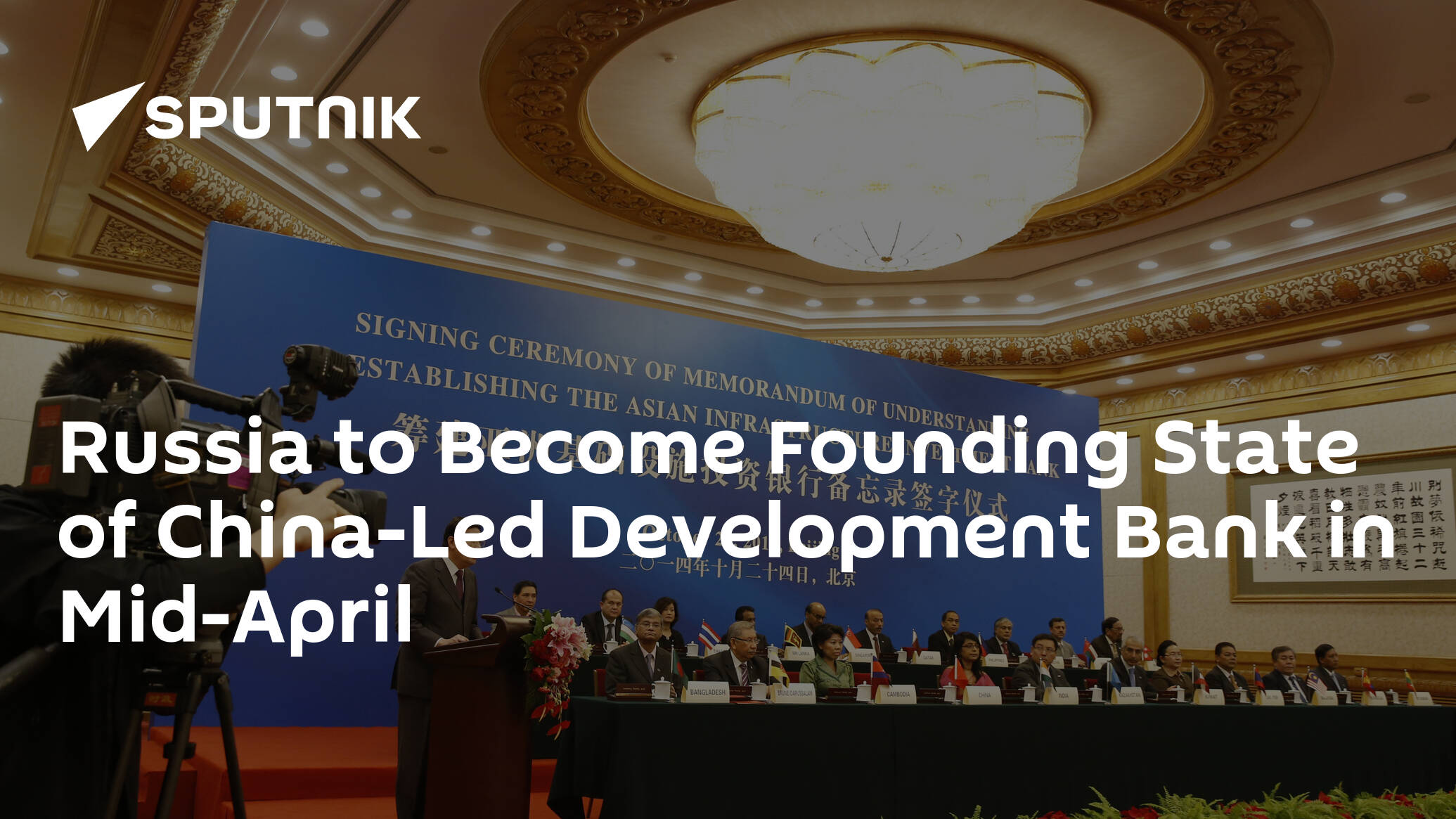
    RUSSIA TO BECOME FOUNDING STATE OF CHINA-LED DEVELOPMENT BANK IN MID-APRIL

    (c) AFP 2015/ Takaki Yajima /POOL
    BUSINESS
    15:03 31.03.2015(updated 16:07 31.03.2015) Get short URL
    597100
    China's State Council said in a statement that Russia would become a
    founding member of the Asian Infrastructure Investment Bank (AIIB) led
    by China on April 14 if all existing members approved this decision.

    (c) AP PHOTO/ MICHEL EULER
    Moscow's AIIB Membership to Bring More Foreign Investments in Russia
    BEIJING (Sputnik) -- Finland is also set to become the founding member
    country of the Asian Infrastructure Investment Bank in the middle of
    April, Chinese State Council said Tuesday.

    The AIIB is an international financial institution hosted by China
    to invest in infrastructure projects in the Asia-Pacific region. A
    bill establishing the bank with a registered capital of up to $100
    billion was signed by 21 countries in October 2014.

    "Russia and Finland will become founding members on April 14 and
    April 12, respectively, should all existing members approve," the
    Council said in a statement published on its website.

    (c) SPUTNIK/ SERGEY GUNEEV Boosting Bilateral Ties: Russia Vows to
    Join Chinese-led Development Bank Both Moscow and Helsinki applied
    to join the AIIB on March 30, a day before the deadline.

    The bank has 45 member states, with March 31 being the deadline for
    applications to become a founding member.

    The creation of the AIIB has attracted numerous countries across the
    world, including the United Kingdom, Australia, India and Saudi Arabia.

    The Chinese-led project has raised concerns in the United States
    that it would create competition for Western financial institutions,
    with Washington reportedly exerting diplomatic pressure to stop its
    allies from joining the bank.

    Read more:
    China's State Council said in a statement that Russia would become a founding member of the Asian Infrastructure Investment Bank (AIIB) led by China on April 14 if all existing members approved this decision.

    Leave a comment:


  • Haykakan
    replied
    Re: Economics

    Sure this is a sales pitch but it makes a lot of sense and is worth checking out.
    Enjoy the videos and music you love, upload original content, and share it all with friends, family, and the world on YouTube.

    Leave a comment:

Working...
X