
Re: America's Financial Crisis
This is what has been metaphorically called "Bretton-Woods II". LOLz.
-
Re: America's Financial Crisis
The international summit held in Washington DC over the weekend was perhaps the year's biggest news development, yet it received very little coverage by the main-stream news media in the US. The representatives of the world's twenty largest economies converged onto Washington DC to discuss the serious financial crisis plaguing the world; Russian president addressed the Council on Foreign Relations... Yet there has been scant news coverage of this important event. I wonder why...
Armenian
**********************************
World leaders pledge action to reform financial system

G20 agree action plan to revive global economy: http://www.youtube.com/watch?v=Rj4XSa_tvV8
Expectations low for G20 summit: http://www.youtube.com/watch?v=txGPLxR9ACA
What can we expect from G20 summit?: http://www.youtube.com/watch?v=PPE_PDG3wl4
World leaders pledged at a summit in Washington to restore global economic growth and start work on reforming financial regulation. Leaders of the G20 nations, which account for 90% of the world's economy, agreed at Saturday's summit to reform the World Bank and International Monetary Fund to improve their effectiveness in helping emerging economies through the credit crunch. Although leaders hailed progress at the talks, concrete agreements will have to wait until a follow-up summit, scheduled for April 2009, likely to be held in London. A joint summit communique said: "We are determined to enhance our cooperation and work together to restore global growth and achieve needed reforms in the world's financial systems." "We must lay the foundation for reform to help to ensure that a global crisis, such as this one, does not happen again. After the talks, World Bank President Robert Zoellick said: "What matters now are the follow-up actions." French President Nicolas Sarkozy stressed that the vast and complex issues discussed at the summit "cannot be resolved in three weeks," but welcomed the U.S. approach to the crisis, saying: "The U.S. administration has accepted to move on subjects where historically all U.S. administrations refused to move." "Never before have Anglo-Saxons agreed to subject rating agencies to oversight and regulation," he said. Acknowledging failings in global financial regulation, the G20 statement said: "Policy-makers, regulators and supervisors, in some advanced countries, did not adequately appreciate and address the risks building up in financial markets, keep pace with financial innovation, or take into account the systemic ramifications of domestic regulatory actions." President George W. Bush, who leaves office in January, said the participants had agreed to modernize financial regulation, making markets more "transparent and accountable." The outgoing leader hailed the summit as "very successful." President-elect Barack Obama's transition team released a statement saying the future leader was ready to work with other G20 countries to tackle the credit crisis when he takes office. He called the summit "an important opportunity to seek a coordinated response to the global financial crisis."
Source: http://en.rian.ru/world/20081116/118338623.html
Medvedev proposes reform of global finance system

Medvedev goes to Washington: http://www.youtube.com/watch?v=ewm-MsLmB84
Medvedev warns against unilateralism: http://www.youtube.com/watch?v=ltGC_YbK8ek
Russian President Dmitry Medvedev called on Saturday for the reorganization of the global financial system, including the establishment of an international regulatory commission, a presidential aide said. "To make the process of reform as effective as possible, the president suggested the creation of an international commission of independent, influential experts - financial gurus," Arkady Dvorkovich told journalists at the G20 summit in Washington. He said the first part of the summit had been completed, with 14 people, including Medvedev, having had their say. "The key aspects he [Medvedev] drew attention to were that as regards the reasons for the financial crisis, no analogies with the past would work. This is not the Great Depression ... it's a global crisis of the 21st century," Dvorkovich said. The presidential aide said Medvedev emphasized that the present structure of the global financial security is inadequate, and that new financial institutions are needed to meet present demands. "The system of the international financial architecture will have to be rebuilt to make it open, fair, efficient and legitimate," Dvorkovich said. Medvedev also told the meeting that Russia supported the declaration due to be adopted at the end of the summit. "We back the declaration - it shows most of the problems. It takes into account all that worries us now," Medvedev told G20 leaders. Dvorkovich also told journalists that the leaders had not reached an agreement on transforming the G20 into a wider forum. "There are as yet no plans to transform the forum of finance ministers and central bank heads into a regular forum of leaders of the G20 countries," he said. The aide said this meant that the G20 should be where questions of reforming the global financial structures are decided, while the Group of Eight leading industrial countries should remain the forum for issues of world security. Dvorkovich also said the Russian president had called on G20 summit participants to help the world's poorest countries overcome the financial crisis. "It is important to work together to provide all the countries most affected by the crisis, the poorest countries, with resources through the IMF and other international and regional organizations," the aide said, adding that all the summit participants were united on the issue. Dvorkovich said the next G20 summit would be held not later than April 30, 2009. "After the first half of the summit, there is consent that global problems demand global solutions. The participants expressed the readiness to hold the next summit not later than April 30 next year," he said. The G20 comprises 19 of the world's largest economies plus the European Union.
Source: http://en.rian.ru/russia/20081115/118335777.html
Russia's Medvedev speaks on foreign policy in Washington
Russia will respond to the U.S. missile defense plans for Europe if the U.S. steps are unacceptable for Moscow, President Dmitry Medvedev said Sunday. "We would act only in response and only if the [U.S. missile defense] program continues in a variant unacceptable for us," Medvedev said after the G20 economic summit, while speaking to the Council on Foreign Relations in Washington. Washington recently said it had provided new proposals to ease Russia's concerns over the planned deployment of 10 U.S. interceptor missiles in Poland and a tracking radar in the Czech Republic, which the George Bush administration has said are needed to counter possible attacks from "rogue" states such as Iran. Russia, which says the missile defense system is a threat to its national security, has indicated it will not address the U.S. proposals until after president-elect Barack Obama is inaugurated as U.S. president in January. Medvedev announced last week the possible deployment of Iskander-M short-range missile systems in the country's Kaliningrad exclave, sandwiched between Poland and Lithuania on the Baltic Sea. However, the Russian leader said in an interview with France's Figaro newspaper published on Thursday that, "We could reconsider this response if the new U.S. administration is ready to once again review and analyze all the consequences of its decisions to deploy the missiles and radar facilities." Medvedev also told the council that Russia hopes relations with the U.S. will improve under Obama. Medvedev proposed on Sunday creating a forum uniting European countries, international organizations and NATO to discuss possible threats to security. Speaking about Russia's tense relations with Georgia, Medvedev told the council that his country is ready to deal with Georgia but not with the Mikheil Saakashvili regime. "We are ready to build relations with Georgia but not with the current regime," the Russian leader said. In early August, Russia fought a brief war with Georgia over South Ossetia after Georgian forces attacked the republic in an attempt to bring it back under central control. On August 26, Russia recognized South Ossetia and Abkhazia, the other Georgian breakaway republic, as independent states. Abkhazia and South Ossetia broke away from Georgia following the collapse of the Soviet Union in the early 1990s amid armed conflicts that claimed thousands of lives.
Source: http://en.rian.ru/world/20081116/118337082.html
Russian national debt lowest of all G20 countries

Russian President Dmitry Medvedev can look around the summit table on Saturday knowing his government has less debt than any other G20 country, according to the Guardian newspaper. The British paper put Russia's debt at $76 billion - less than 1% of the United States' $8.4 trillion. As a percentage of gross domestic product, Moscow's situation is not quite as rosy, but President George Bush would probably take a national debt running at 6% rather than 60% of GDP. But by that measure, Japan may be in even worse shape - its $7.45 trillion public debt is more than 1 1/2 times the country's GDP. But Japan has spent so much of the last decade or so in economic difficulties that maybe the country has grown used to it. Things could hardly be more different in Britain, where a decade of almost uninterrupted growth has come to a grinding halt. But the $1.2 trillion debt is still less than half of GDP. The other three European members of the G8 are in even worse shape. They all owe more than half their GDP. Italy, with the lowest GDP of the three, has the highest debt according to the Guardian, at $2.19 trillion. Next is Germany with $2.07 trillion, followed by France at $1.63 trillion. Of the so-called BRIC countries, China's $580 billion debt is hardly daunting at less than a fifth of GDP, while Brazil's $590 billion is still less than half its GDP. India, on the other hand, is up there with the United States with a public debt of $637 billion totaling more than 60% of its 2007 GDP. Down the bottom of the Guardian chart with Russia are Saudi Arabia, owing $91 billion, and South Africa, with a debt of $88 billion.
Source: http://en.rian.ru/business/20081115/118335408.htmlLeave a comment:
-
Re: America's Financial Crisis
With the defeat of nationalism in Europe on the horizon and the ominous rise of Bolshevik power in the works, the Bretton Woods conference towards the end of the Second World War was, in a sense, the 'genesis' of the global financial system we have lived under for the past sixty somewhat years. It was during this conference that the World Bank and its affiliate the International Monetary Fund, who are essentially Uncle Sam's very own money lending shops (think blackmail and bribery), were created. Now that this attempt at turning the entire world into one vast natural resource for the US has begun to fail, a new approach, a reevaluation of the system, is currently in process...
Armenian
*******************************
How Bretton Woods reshaped the world
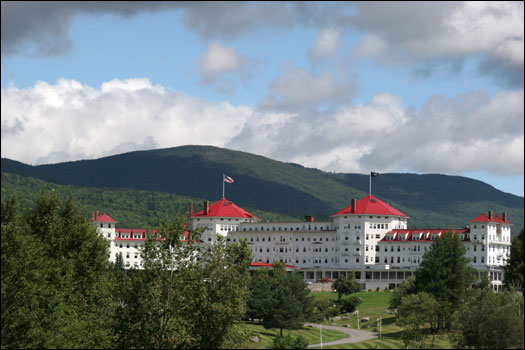
In the summer of 1944, delegates from 44 countries met in the midst of World War II to reshape the world's international financial system. The location of the meeting - in the plush Mount Washington Hotel in rural Bretton Woods, New Hampshire - was designed to ensure that the delegates would have no distractions, and no pressure from lobbyists or Congressmen, as they worked on their plans for post-war reconstruction. The meeting was born out of the determination by US President Franklin D Roosevelt and UK Prime Minister Winston Churchill to ensure post-war prosperity through economic co-operation, avoiding the economic conflicts between countries in the 1930s that they believed contributed to the drift to war.
We have had to perform at one and the same time the tasks appropriate to the economist, to the financier, to the politician, to the journalist, to the propagandist, to the lawyer, to the statesman-even, I think, to the prophet and to the soothsayer - John Maynard Keynes
The principal negotiators at the meeting were the US, represented by the US Treasury's Harry Dexter White, and the UK's John Maynard Keynes, who was serving as UK Treasury adviser despite declining health. And chairing the proceedings was Henry Morgenthau, the US Treasury Secretary, from the only country that was likely to emerge from the war with a strengthened economy. President Roosevelt told the conference: "The economic health of every country is a proper matter of concern to all its neighbours, near and distant."
Fixed exchange rates
The meeting was part of the process led by the US to create a new international world order based on the rule of law, which also led to the creation of the United Nations and the strengthening of other international organisations. The delegates focused on two key issues: how to establish a stable system of exchange rates, and how to pay for rebuilding the war-damaged economies of Europe. And they established two international organisations to deal with these problems. The International Monetary Fund was set up to enforce a set of fixed exchange rates that were linked to the dollar. Countries in balance of payments difficulties could receive short-term help from the IMF to avoid devaluation, and it could sanction changes in exchange rates when necessary. The World Bank (officially the International Bank for Reconstruction and Development) was set up to make long-term loans "facilitating the investment of capital for productive purposes, including the restoration of economies destroyed or disrupted by war [and] the reconversion of productive facilities to peacetime needs".
Post-war prosperity
A third organisation, the International Trade Organisation, designed to encourage free trade, was still-born when the US refused to ratify its charter in 1947 - although tariff reductions were pursued through the Gatt treaty later. However, more ambitious proposals from the UK's John Maynard Keynes to set up a world central bank which could issue its own currency (which he called bancor) were rejected by the US. Keynes hoped a new bank could help reflate the world economy by expanding the money supply. He also wanted the cost of adjustment shared between countries with trade surpluses and deficits, so that countries with big surpluses would have to revalue their currencies, as well as deficit countries being forced to devalue. Instead, the Bretton Woods system gave the US currency - which was linked to gold - the dominant position in the world economy and allowed the US to run a trade deficit without having to devalue. And the US, which contributed the most money to both institutions, also gained the most voting rights, giving it a veto over major policy decisions.
Marshall Plan
The establishment of a rules-based system of international finance helped restore confidence in the world economy and led to an extraordinary boom in the post-war years. The US also helped the European recovery by contributing additional funds through the Marshall Plan when the World Bank's efforts proved inadequate. World trade among developed countries grew rapidly in the 1950s and 1960s, boosting world output and raising the standard of living, especially in Europe and Japan. The US, still by far the richest country in the world, was happy to provide export markets for its allies, and sent dollars abroad through military and civilian aid which helped lubricate the wheels of commerce. Meanwhile, the focus of the World Bank gradually shifted to helping developing countries with the establishment of its special low-interest loan arm, IDA.
Breakdown of Bretton Woods
However, by the 1970s, the US currency was under pressure from a combination of factors, including the cost of the Vietnam war and the growing trade deficit. In 1971, the US under President Nixon unilaterally went off the gold standard and devalued the dollar, a move ratified by the Smithsonian Agreement later that year. This led to the abandonment of fixed exchange rates and the introduction of floating rates, where the value of all the main currencies was determined by market trading. Attempts to forge a new Bretton Woods agreement on currencies in the 1970s failed, although the IMF still retained its role of helping countries cope with major currency crises - including Britain in 1976. The breakdown of Bretton Woods had two consequences. On the one hand, it led European countries to begin seriously considering closer monetary co-operation, which ultimately led to the creation of the euro in 1999. And it led to the creation of the G7, the informal group of the world's leading economies, which helped to coordinate currency adjustment in the Plaza and Louvre Accords in the 1980s.
Financial globalisation
On the other hand, the end of the Bretton Woods system unleashed two decades of financial globalisation, encouraged by the deregulation not just of currency markets, but also of rules about banking and investment. This led to increased flows of private money to rich and poor countries alike, which helped boost growth but also created greater instability. The rapid reversal of such private sector flows when currencies were threatened with devaluation was the central cause of the Asian financial crisis in 1997-98, which spread to Russia and eventually Argentina. The resources of the IMF proved inadequate to compensate for the run on their currencies, and the adjustment proved painful, with sharp falls in GDP. Since then, many Asian countries, including China, have accumulated large currency reserves to insulate themselves against future crises, avoiding the need to call on the IMF.
New global rules
The latest world financial crisis, which has hit the richest countries hardest, has renewed calls for a new global framework of financial regulation. But the task this time will be far more complex, with the proliferation of financial instruments and the fact that there is no longer one country that dominates the world economy in the way the US did after World War II. And the political impetus for co-operation is less compelling today than it was in 1944, after a decade of war and depression. Any new agreement would have to recognise the power of the rising economies, such as China and India, and reshape the institutions created more than half a century ago. Such changes are not likely to be either quick or easy.
Source: http://news.bbc.co.uk/2/hi/business/7725157.stmLeave a comment:
-
Re: America's Financial Crisis
I think when the xmas numbers come out in Jan '09, we will have open discussion of a depression. That will be on big hangover even before the new Emperor is crowned.Leave a comment:
-
Re: America's Financial Crisis
Would you look at that? Starbucks' profits fall by 97%! This is serious stuff folks. This is a company that expanded relentlessly during the Greenspan-Bush artificial boom. And now during the bust, it hits the wall. I wonder if they will survive the depression.
Leave a comment:
-
Re: America's Financial Crisis
To guarantee they would stay alive, the Federal Reserve stepped in and took over Freddie Mac and Fannie Mae. On September 7th 2008 they were put into "conservatorship": known as nationalisation to the rest of the world, but Americans have difficulty with the idea of any government run industry that required taxpayer increases.
What the government was really doing was handing out an unlimited line of credit. Done by the Federal Reserve and not US Treasury, it was able to bypass Congressional approval. The Treasury Department then auctioned off Treasury bills to raise money for the Federal Reserve's own use, but nonetheless the taxpayer would be funding the rescue. The bankers had bled tens of billions from the system by hedging and derivative gambling, and triggered the portfolio inter-bank lending freeze, which then seized up and crashed.
The takeover was presented as a government funded bailout of an arbitrary $700 billion, which does nothing to solve the problem. No economists were asked to present their views to Congress, and the loan only perpetuates the myth that the banking system is not really dead.
In reality, the damage will not be $700 billion but closer to $5 trillion, the value of Freddie Mac and Fannie Mae's mortgages. It was nothing less than a bailout of the quadrillion dollar derivatives industry which otherwise faced payouts of over a trillion dollars on CDS mortgage-backed securities they had sold. It was necessary, said Treasury Secretary Henry Paulson, to save the country from a "housing correction". But, he added, the $700 billion taxpayer funded takeover would not prevent other banks from collapsing, in turn causing a stock market crash.
In other words Paulson was blackmailing Congress in order to lead a coup by the banking elite under the false guise of necessary legislation to stop the dyke from flooding. It merely shifted wealth from one class to another, as it had done almost a century prior. No sooner were the words were out of Paulson's mouth before other financial institutions began imploding, and with them the disintegration of the global financial system - much modelled after the lauded system of American banking.
In September the Federal Reserve, its line of credit assured, then bought the world largest insurance company, AIG, for $85 billion for an 80% stake. AIG was the largest seller of CDS, but now that it was in the position of having to pay out, from collateral it did not have, it was teetering on the edge of bankruptcy.
In October the entire country of Iceland went bankrupt, having bought American worthless sub-prime mortgages as investments. European banks began exploding, all wanting to cash in concurrently on their inflated US stocks to pay off the low interest rate debts before rates climbed higher. The year before the signs had been evident, when the largest US mortgage lender Countrywide fell. Soon after, the largest lender in the UK, Northern Rock, went under - London long having copied Wall Street creative financing. Japan and Korea's auto manufacturing nosedived by 37%, global economies contracting. Pakistan is on the edge of collapse too, with real reserves at $3 billion - enough to only buy a month's supply of food and oil and attempting to stall payments to Saudi Arabia for the 100,000 barrels of oil per day it provides to the country. Under President Musharraf, who left office in the nick of time, Pakistan's currency lost 25% of its value, its inflation running at 25%.
Meanwhile energy costs had soared, with oil reaching a peak of almost $150 per barrel in the summer. The costs were immediately passed on to the already spent homeowner, in rising heating and fuel, transport and manufacturing costs. Yet 30% of the cost of a barrel of oil was based upon Wall Street speculators, climbing to 60% as a speculative fear factor during the summer months. As soon as the financial crisis hit, suddenly oil prices slid down, slicing oil costs to $61 from a high of $147 in June and proving that the 60% speculation factor was far more accurate. This sudden decline also revealed OPEC's lack of control over spiralling prices during the past few years, almost squarely laid on the shoulders of Saudi Arabia alone. When OPEC, in September, sought to maintain higher prices by cutting production, it was Saudi Arabia who voted against such a move at the expense of its own revenue.
Europe then decided that no more would it be ruined by the excess of America. 'Olde Europe' may have had enough of being dictated to by the US, who refused to compromise on loans lent to their own broken nations after WWII. On October the 13th, the once divided EU nations unilaterally agreed to an emergency rescue plan totaling $2.3 trillion. It was more than three times greater than the US package for a catastrophe America alone had created.
By mid October, the Dow, NASDAQ and S&P 500 had erased all the gains they made over the previous decade. Greenspan's pyramid scheme of easy money from nothing resulted in a massive overextension of credit, inflated housing prices, and incredible stock valuations, achieved because investors would never withdraw their money all at once. But now it was crashing at break-neck speed and no solution in sight. President Bush said that people ought not to worry at all because "America is the most attractive destination for investors around the globe."
Those who will hurt the most are the very men and women who grew the country after WWII, and saved their pensions for retirement due now. They had built the country during the war production years, making its weapons and arms for global conflict. During the Cold War the USSR was the ever-present enemy and thus the military industrial complex continued to grow. Only when there is a war does America profit.
Russia will not tolerate a new cold war build-up of ballistic missiles. And the Middle East has seen its historical ally turn into its worst nightmare, be it militarily or economically. No longer will these nations continue to support the dollar as the world's currency. The world's economy is no longer America's to control and the US is now indebted to the rest of the world. No more will the US be able to demand its largest Middle Eastern oil supplier open up its banking books so as to be transparent and free from corruption and terrorist connections lest there be consequences - the biggest act of criminal corruption in history has just been perpetrated by the United States.
It was the best con game in town: get paid well for selling vast amounts of risk, fail, and then have governments fix the problem at the expense of the taxpayers who never saw a penny of shared wealth to begin with.
There is no easy solution to this crisis, its effects multiplying like an infectious disease.
Ironically, least affected by the crisis are Islamic banks.
They have largely been immune to the collapse because Ilamic banking prohibits the acquisition of wealth via gambling (or alcohol, tobacco, pornography, or stocks in armaments companies), and forbids the buying and selling of a debt as well as usury. Additionally, Shari'ah banking laws forbid investing in any company with debts that exceed thirty percent.
"Islamic banking institutions have not failed per se as they deal in tangible assets and assume the risk" said Dr. Mohammed Ramady, Professor of Economics at King Fahd University of Petroleum & Minerals. "Although the Islamic banking sector is also part of the global economy, the impact of direct exposure to sub-prime asset investments has been low" he continued. "The liquidity slowdown has especially affected Dubai, with its heavy international borrowing. The most negative effect has been a loss of confidence in the regional stock markets." Instead, said Dr. Ramady, oil surplus Arab nations are "reconsidering overseas investments in financial assets" and speeding up their own domestic projects.
Eight years ago, in May 2000, Saudi Islamic banker His Highness Dr. Nayef bin Fawaaz ibn Sha'alan publicly gave a series of economic lectures in Gulf states. At the time his research showed that Arab investments in the US, to the tune of $1.5 trillion, were effectively being held hostage and he recommended they be pulled out and reinvested in the tangibles of the Arab and Islamic markets. "Not in stocks however because the stock market could be manipulated remotely, as we have seen in the last couple of years in the Arab market where trillions of dollars evaporated" he said.
He warned then that it was a certainty that the US economic system was on the verge of collapse because of its cumulative debts, ever-increasing deficit and the interest on that debt. "When the debts and deficits come due, they just issue new Treasury bonds to cover the old bonds due, with their interest and the new deficit too." The cycle cannot be stopped or the debt cancelled because the US would no longer be able to borrow. The consequence of relieving this cycle would be a total collapse of their economic system as opposed to the partial, albeit massive, crash of 2008.
"Islamic banking", said Dr. Al-Sha'alan, "always protects the individuals' wealth while putting a cap on selfishness and greed. It has the best of capitalism - filtering out its negatives - and the best of socialism - filtering out its negatives too." Both systems inevitably had to fail. Additionally, Europe and Japan did not need to be held accountable and indebted to America anymore for protection against the Soviets.
"The essential difference between the Islamic economic system and the capitalist system", he continued "is that in Islam wealth belongs to God - the individual being only its manager. It is a means, not a goal. In capitalism, it is the reverse: money belongs to the individual, and is a goal in and of itself. In America especially, money is worshipped like God."
In sum, the crash of the entire global economic system is a result of America's fiscal arrogance based upon one set of rules for itself and another for the rest of the world. Its increased creative financing deluded its people into a false sense of security, and now looks like the failure of capitalism altogether.
The whole exercise in democracy by force against Arab Muslim nations has almost bankrupted the US. The Cold War is over and the US has nothing to offer: no exports, no production, few natural resources, and no service sector economy.
The very markets that resisted US economic policies the most, having curbed foreign direct investments into America, are those who will fare best and come out ahead.
But not before having paid a very high price.
Leave a comment:
-
Re: America's Financial Crisis
Death of the American Empire
America is self-destructing & bringing the rest of the world down with it
by Tanya Cariina Hsu
I believe that banking institutions are more dangerous to our liberties than standing armies. (Thomas Jefferson, US President; 1743 - 1826)
America is dying. It is self-destructing and bringing the rest of the world down with it.
Often referred to as a sub-prime mortgage collapse, this obfuscates the real reason. By associating tangible useless failed mortgages, at least something 'real' can be blamed for the carnage. The problem is, this is myth. The magnitude of this fiscal collapse happened because it was all based on hot air.
The banking industry renamed insurance betting guarantees as 'credit default swaps' and risky gambling wagers were called 'derivatives'. Financial managers and banking executives were selling the ultimate con to the entire world, akin to the snake-oil salesmen from the 18th century but this time in suits and ties. And by October 2009 it was a quadrillion-dollar (that's $1,000 trillion) industry that few could understand.
Propped up by false hope, America is now falling like a house of cards.
It all began in the early part of the 20th century. In 1907 J.P. Morgan, a private New York banker, published a rumour that a competing unnamed large bank was about to fail. It was a false charge but customers nonetheless raced to their banks to withdraw their money, in case it was their bank. As they pulled out their funds the banks lost their cash deposits and were forced to call in their loans. People now therefore had to pay back their mortgages to fill the banks with income, going bankrupt in the process. The 1907 panic resulted in a crash that prompted the creation of the Federal Reserve, a private banking cartel with the veneer of an independent government organisation. Effectively, it was a coup by elite bankers in order to control the industry.
When signed into law in 1913, the Federal Reserve would loan and supply the nation's money, but with interest. The more money it was able to print, the more 'income' for itself it generated. By its very nature the Federal Reserve would forever keep producing debt to stay alive. It was able to print America's monetary supply at will, regulating its value. To control valuation however, inflation had to be kept in check.
The Federal Reserve then doubled America's money supply within five years, and in 1920 it called in a mass percentage of loans. Over five thousand banks collapsed overnight. One year later the Federal Reserve again increased the money supply by 62%, but in 1929 it again called the loans back in, en masse. This time, the crash of 1929 caused over sixteen thousand banks to fail and an 89% plunge on the stock market. The private and well-protected banks within the Federal Reserve system were able to snap up the failed banks at pennies on the dollar.
The nation fell into the Great Depression and in April 1933 President Roosevelt issued an executive order that confiscated all gold bullion from the public. Those who refused to turn in their gold would be imprisoned for ten years, and by the end of the year the gold standard was abolished. What had been redeemable for gold became paper 'legal tender', and gold could no longer be exchanged for cash as it had once been.
Later, in 1971, President Nixon removed the dollar from the gold standard altogether, therefore no longer trading at the internationally fixed price of $35. The US dollar was now worth whatever the US decided it was worth because it was 'as good as gold'. It had no standard of measure, and became the universal currency. Treasury bills (short-term notes) and bonds (long-term notes) replaced gold as value, promissory notes of the US government and paid for by the taxpayer. Additionally, because gold was exempt from currency reporting requirements it could not be traced, unlike the fiduciary (i.e. that based upon trust) monetary systems of the West. That was not in America's best interest.
After the Great Depression private banks remained afraid to make home loans, so Roosevelt created Fannie Mae. A state supported mortgage bank, it provided federal funding to finance home mortgages for affordable housing. In 1968 President Johnson privatised Fannie Mae, and in 1970, Freddie Mac was created to compete with Fannie Mae. Both of them bought mortgages from banks and other lenders, and sold them onto new investors.
The post World War II boom had created an America flush with cash and assets. As a military industrial complex, war exponentially profited the US and, unlike any empire in history, it shot to superpower status. But it failed to remember that, historically, whenever empires rose they fell in direct proportion.
Americans could afford all the modern conveniences, exporting its manufactured goods all over the world. After the Vietnam War, the US went into an economic decline. But people were loath to give up their elevated standard of living despite the loss of jobs, and production was increasingly sent overseas. A sense of delusion and entitlement kept Americans on the treadmill of consumer consumption.
In 1987 the US stock market plunged by 22% in one day because of high-risk futures trading, called derivatives, and in 1989 the Savings & Loan crisis resulted in President George H.W. Bush using $142 billion in taxpayer funds to rescue half of the S&L's. To do so, Freddie Mac was given the task of giving sub-prime (below prime-rate) mortgages to low-income families. In 2000, the "irrational exuberance" of the dot-com bubble burst, and 50% of high-tech firms went bankrupt wiping $5 trillion from their over-inflated market values.
After this crisis, Federal Reserve Chairman Alan Greenspan kept interest rates so low they were less than the rate of inflation. Anyone saving his or her income actually lost money, and the savings rate soon fell into negative territory.
During the 1990s, advertisers went into overdrive, marketing an ever more luxurious lifestyle, all made available with cheap easy credit. Second mortgages became commonplace, and home equity loans were used to pay credit card bills. The more Americans bought, the more they fell into debt. But as long as they had a house their false sense of security remained: their home was their equity, it would always go up in value, and they could always remortgage at lower rates if needed. The financial industry also believed that housing prices would forever climb, but should they ever fall the central bank would cut interest rates so that prices would jump back up. It was, everyone believed, a win-win situation.
Greenspan's rock-bottom interest rates let anyone afford a home. Minimum wage service workers with aspirations to buy a half million-dollar house were able to secure 100% loans, the mortgage lenders fully aware that they would not be able to keep up the payments.
So many people received these sub-prime loans that the investment houses and lenders came up with a new scheme: bundle these virtually worthless home loans and sell them as solid US investments to unsuspecting countries who would not know the difference. American lives of excess and consumer spending never suffered, and were being propped up by foreign nations none the wiser.
It has always been the case that a bank would lend out more than it actually had, because interest payments generated its income. The more the bank loaned, the more interest it collected even with no money in the vault. It was a lucrative industry of giving away money it never had in the first place. Mortgage banks and investment houses even borrowed money on international money markets to fund these 100% plus sub-prime mortgages, and began lending more than ten times their underlying assets.
After 9/11, George Bush told the nation to spend, and during a time of war, that's what the nation did. It borrowed at unprecedented levels so as to not only pay for its war on terror in the Middle East (calculated to cost $4 trillion) but also pay for tax cuts at the very time it should have increased taxes. Bush removed the reserve requirements in Fannie Mae and Freddie Mac, from 10% to 2.5%. They were free to not only lend even more at bargain basement interest rates, they only needed a fraction of reserves. Soon banks lent thirty times asset value. It was, as one economist put it, an 'orgy of excess'.
It was flagrant overspending during a time of war. At no time in history has a nation gone into conflict without sacrifice, cutbacks, tax increases, and economic conservation.
And there was a growing chance that, just like in 1929, investors would rush to claim their money all at once.
[Continued...]Leave a comment:
-
Re: America's Financial Crisis
That's exactly what got America into this mess. The socialistic policies of big government bureaucracies and regulations and greedy politicians and Wall Street corporate interests colluding together eventually creates this mess.Originally posted by Mos View Post
America is passed the point of no return. Unfortunately, there is no easy fall for empires as the bigger they are, the more noise they make.
Woe is us, because the world economy is dependent very much on America.Leave a comment:




Leave a comment: