
Re: America's Financial Crisis
good point. I guess some things never change, just their surface representations. I guess the modern bureaucracy serves to enshroud this reality.
-
Re: America's Financial Crisis
I'm not sure if I understand your question. The "triarchial" system you mentioned still exists, and in some respects its more powerful than even.Originally posted by jgk3 View Post
Warrior Nobility/Aristocracy = Political/financial elite
Clergy = Democracy/Christianity/Islam/Judaism/Communism/Globalism...
Peasantry = Tax payers/low wage labor
In final analysis, it doesn't matter what you or I think about this. As long as man walks the earth you will have the elite (warrior class) ruling over the masses (tax payers/peasantry) using various spiritual/sociological tools (religion/democracy/globalism) as a means of effective control.Leave a comment:
-
Re: America's Financial Crisis
There's No Pain-Free Cure for Recession
Belt-tightening is required by all, including government.
By PETER SCHIFF
As recession fears cause the nation to embrace greater state control of the economy and unimaginable federal deficits, one searches in vain for debate worthy of the moment. Where there should be an historic clash of ideas, there is only blind resignation and an amorphous queasiness that we are simply sweeping the slouching beast under the rug.
With faith in the free markets now taking a back seat to fear and expediency, nearly the entire political spectrum agrees that the federal government must spend whatever amount is necessary to stabilize the housing market, bail out financial firms, liquefy the credit markets, create jobs and make the recession as shallow and brief as possible. The few who maintain free-market views have been largely marginalized.
Taking the theories of economist John Maynard Keynes as gospel, our most highly respected contemporary economists imagine a complex world in which economics at the personal, corporate and municipal levels are governed by laws far different from those in effect at the national level.
Individuals, companies or cities with heavy debt and shrinking revenues instinctively know that they must reduce spending, tighten their belts, pay down debt and live within their means. But it is axiomatic in Keynesianism that national governments can create and sustain economic activity by injecting printed money into the financial system. In their view, absent the stimuli of the New Deal and World War II, the Depression would never have ended.
On a gut level, we have a hard time with this concept. There is a vague sense of smoke and mirrors, of something being magically created out of nothing. But economics, we are told, is complicated.
It would be irresponsible in the extreme for an individual to forestall a personal recession by taking out newer, bigger loans when the old loans can't be repaid. However, this is precisely what we are planning on a national level.
I believe these ideas hold sway largely because they promise happy, pain-free solutions. They are the economic equivalent of miracle weight-loss programs that require no dieting or exercise. The theories permit economists to claim mystic wisdom, governments to pretend that they have the power to dispel hardship with the whir of a printing press, and voters to believe that they can have recovery without sacrifice.
As a follower of the Austrian School of economics I believe that market forces apply equally to people and nations. The problems we face collectively are no different from those we face individually. Belt tightening is required by all, including government.
Governments cannot create but merely redirect. When the government spends, the money has to come from somewhere. If the government doesn't have a surplus, then it must come from taxes. If taxes don't go up, then it must come from increased borrowing. If lenders won't lend, then it must come from the printing press, which is where all these bailouts are headed. But each additional dollar printed diminishes the value those already in circulation. Something cannot be effortlessly created from nothing.
Similarly, any jobs or other economic activity created by public-sector expansion merely comes at the expense of jobs lost in the private sector. And if the government chooses to save inefficient jobs in select private industries, more efficient jobs will be lost in others. As more factors of production come under government control, the more inefficient our entire economy becomes. Inefficiency lowers productivity, stifles competitiveness and lowers living standards.
If we look at government market interventions through this pragmatic lens, what can we expect from the coming avalanche of federal activism?
By borrowing more than it can ever pay back, the government will guarantee higher inflation for years to come, thereby diminishing the value of all that Americans have saved and acquired. For now the inflationary tide is being held back by the countervailing pressures of bursting asset bubbles in real estate and stocks, forced liquidations in commodities, and troubled retailers slashing prices to unload excess inventory. But when the dust settles, trillions of new dollars will remain, chasing a diminished supply of goods. We will be left with 1970s-style stagflation, only with a much sharper contraction and significantly higher inflation.
The good news is that economics is not all that complicated. The bad news is that our economy is broken and there is nothing the government can do to fix it. However, the free market does have a cure: it's called a recession, and it's not fun, easy or quick. But if we put our faith in the power of government to make the pain go away, we will live with the consequences for generations.
Mr. Schiff is president of Euro Pacific Capital and author of "The Little Book of Bull Moves in Bear Markets" (Wiley, 2008).
Leave a comment:
-
Re: America's Financial Crisis
What are your thoughts on absolutism Armenian? Do you consider the triarchal system of warrior nobility, clergy and peasantry as obsolete, inefficient, unfair?Leave a comment:
-
Re: America's Financial Crisis
The problem with creating a "new system" is the same problem with the other/older systems - mankind. However lofty the new system may look on the drawing table once its put into circulation amongst man it becomes warped and corrupted. The perfect example of what I'm saying is Communism and organized religion. In my humble opinion, the most efficient/effective political system is either a Constitutional Monarchy or National Socialism or some fusion of these both systems. The Church/Temple/Mosque also needs to play a significant role in any given nation-state. Nevertheless, there will never be true peace as long as man walks the earth.
The problem with creating a "new system" is the same problem with the other/older systems - mankind. However lofty the new system may look on the drawing table once its put into circulation amongst man it becomes warped and corrupted. The perfect example of what I'm saying is Communism and organized religion. In my humble opinion, the most efficient/effective political system is either a Constitutional Monarchy or National Socialism or some fusion of these both systems. The Church/Temple/Mosque also needs to play a significant role in any given nation-state. Nevertheless, there will never be true peace as long as man walks the earth. The following comments of mine were inspired by the political unrest in Armenia early this year:
Democracy or Constitutional Monarchy?
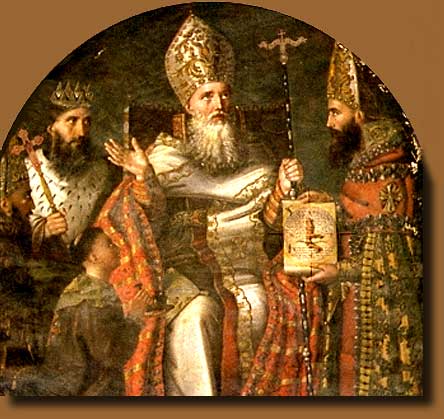
Recent events in Yerevan have actually proven that Armenia is more "democratic" and expresses more "political freedoms" than any western nation today. Can anyone here envision an equivalent of a treasonous criminal like Armenia's Levon Ter-Petrosian in American politics bringing millions of people into Washington DC and holding unsanctioned demonstrations against the state with a political platform that would be considered suicidal for the US, and then inciting violence when security forces attempt to disperse them?
Can anyone here imagine, let's say, Chinese or Russian owned news outlets taking over a large portion of America's news media and disseminating anti-state and/or pro-East propaganda? Can anyone here imagine foreign funded NOGs stirring public discontent in the US? Can anyone here imagine any of the above scenarios occurring in the US? No. No one can realistically imagine such scenarios because we all know that responsible authorities within this nation would 'never' allow such a situation to get to that dangerous level. Such types of foreign inspired agendas in the US would be eliminated even before they are implemented. No nation-state should be forced to excepting foreign organizations that get involved in domestic affairs regardless of their stated intentions. Yet to be considered "democratic" and qualify for funding (official bribes) this is exactly what the West expects from nations that they have vested interests in. Today there is a vast multibillion dollar network of western funded organizations that constantly seek to stir public unrest in strategically important nations that are not allied with the West. This is why politicians in developing nations like Russia, Serbia, Armenia and China simply have to disregard the sentiments of the people and the complaints of the foreign interests and do what they have to do to protect their respective states.
Recent events in Yerevan have also proven that Armenians in general cannot be entrusted with political decision making. As we recently witnessed, the practice of democracy in a nation like Armenia can prove to be fatal. This brings up the almost sacred concept of "free and fair elections":
The 'idea' that the masses should vote politicians into power, hence intimately partake in political decision making, is a 20th century western phenomenon. However, even in the West, this practice does not exist in reality. It's an illusion. But we must realize here that the illusion of the people partaking in the political system can only exist in wealthy, powerful and stable nations. In the US, for example, we essentially have 'two' government sanctioned political parties. Let me remind the reader that this is only 'one' more than a government sanctioned dictatorship. Politically, the Democrats and the Republicans in America are two factions of a single party. The two factions in question differ only in minor details, namely in the realms of domestic/social issues. Nonetheless, if anyone comes along that can seriously challenge the political/financial status quo, the establishment, in the US, they would be effectively eliminated in one way or another. It's no secret that America's most serious political policies are made independent of the people by the US State Department, various special interests (Zionists, oil lobby, defense industry, mega-corporations, etc) and of course, the intelligence services.
Yet, every four years the people are allowed to 'think' that they are participating in the nation's political process. Obama's recent election win in America is a clear example of how the public is constantly fooled into thinking that they live in a true democracy. Barak Obama was chosen by this nation's elite to takeover the reigns from the failed Neocons and continue the agenda of the American empire under new management. President elect Obama is the new face on the old agenda.
As I said above, one of the fundamental differences between the West and the rest of the world is - standard of living/its bountiful wealth. Due to the West's centuries long political exploits - colonization, slavery, foreign wars, plunder, exploitation, etc., the West is immensely wealthy today. The entire world today is trying desperately to literally live up the "Western Standards." And let's realize that it's much easier to control well-fed, complacent idiots than it is to control hungry, desperate and angry idiots. As a result of its wealth, western political/financial elite can provide the essentials for their masses and allow them to think that they are participating in the political system. And that is why unlike in the rest of the world, the West can afford to put on a 'political show' every few years for the people.
Democracy, as preached by the West, does not work for developing or vulnerable nations because it envisions giving the ignorant masses of any given nation the right to make important political decisions. As a matter of fact, such a concept is dangerous. We painfully observed this in Armenia recently. Politically speaking, the general population in any given nation is worthless. Thus, how can we trust them to make the right political decisions, especially in nations that have serious geopolitical and socioeconomic problems? The point is, from the great Hellenistic thinkers to the founding fathers of the US, voting politicians into power was never meant to be for the masses. As I said above, the notion that the people must elect high ranking politicians into power is essentially a twentieth century western phenomenon, and this phenomenon is used by the well established elite in the West as a tool of intervention.
What's interesting here is that we require a license and/or some training to do just about anything of importance in civilized nations. Why is it that the most important of all obligations a nation's citizen has, namely electing its leadership, is meant to be entrusted upon the whims and wishes of the masses? What in the life of the average citizen, regardless of age, would qualify him or her to make crucial political decisions? In my opinion, the democratic system is inherently a flawed system and for certain nation's its practice can be suicidal.
Although I have great admiration and respect for National Socialism in general, I personally would rather see a 'constitutional monarchy' be implemented in Armenia. Most of the greatest nations on earth are, or have been until recently, constitutional monarchies. Some examples are: Japan, Sweden, Holland, Belgium, Britain, Spain, Andorra, Denmark, Norway, Liechtenstein, Luxembourg, Thailand, Monaco, Morocco and Jordan.
There are several surviving remnants of Armenia's ancient nobility living in Europe and Russia. However, I don't think picking an individual from one of these families would be the wisest route to go. I personally would like to see Armenia's national constitution give our Christian Patriarch, the Katoghikos, a duel role: Արքա համենայն հայոց և հոգեվոր հայրապետ - king of all Armenians and spiritual patriarch. In such a scenario, Etchimadzin would be transformed into Armenia's royal throne, as it was in ancient times when the city was known as Vagharshapat. The Cilician Patriarch can then act as the Katoghikos of all Armenians. It is note worthy here to point out that Saint Gregory's line is actually preserved within the Cilician Patriarchate and not in Etchmiadzin.
Throughout history we have had great patriarchs. At various times in our history our nation's patriarchs have more-or-less acted as kings. Why not just officially bestow upon them the title of monarch and give them some political powers? Some of our current patriarchs and senior bishops (with the exception of Turkey's Mutafian of course) would make excellent monarchs. As a matter of fact, in demeanor and character, Katoghikos Garegin II is more of a king than a spiritual leader anyway. The patriarchal throne of the Cilician See is no less capable when it comes to organizational and administrative abilities and resources. There are many political advantages to a constitutional monarchy, fundamental ones being continuity and stability of the political system and national unity.
How would the king be appointed? I do not envision a hereditary kingdom. Such a system would have inherent weaknesses and can potentially cause problems. In my opinion, the king should be appointed for life just like the Katoghikos is appointed for life by the nation's senior bishops who are in essence the nation's elders. The appointing of the king by representatives of the ruling establishment takes the crucially important task of electing a nation's leader away from the sentiments of the masses. And this method is superior to the hereditary method in that every time a king needs to be appointed the nation's elders debate and vote for the most capable man, or woman, available for the throne.
What about the people? Will they have a voice in government? As in all constitutional monarchies, the people do have an important role to play, they can elect their local leaders and thereby indirectly participate in the election of the nation's prime minister.
Within this system a nation will enjoy political consistency that comes with a life term monarch and the fresh dynamism of a prime minister that is elected every several years. In addition to all this, a Christian monarch representing the nation will be able to enhance the people's national and cultural identity and positively impact various domestic/societal issues most free societies suffer from.
If we cannot have a constitutional monarchy, then Armenia simply needs to be a one party dictatorship for the foreseeable future or adopt a form of National Socialism. And if that cannot happen either, then let's simple give the house keys to Moscow. Simply put, we Armenians cannot risk playing with the notion of democracy, especially in a dangerous and volatile environment like the Caucasus. Such an experiment could prove fatal for the Armenian Republic.
ArmenianLast edited by Armenian; 12-28-2008, 02:48 PM.Leave a comment:
-
Leave a comment:
-
Re: America's Financial Crisis
not as an insult to muhaha, i think armenian shouldnt waste his time addressing him.
muhaha said he doesnt read anything about economics yet offers an opinion about the economy without any foundation. you coud be right in your opinion, but its dangerous and useless because its derived from a lack of methodology and diligence - its pure ignorance, which is the problem we have with democracy.
Democracies are fated to collapse because they empower the masses - deomocracies are only as good as the total sum of quality of the masses. If the masses become asses (like americans), then its just a matter of time before the system falls apart. The failure of every world system that has existed has been not being able to in continually, consistently and permamently selecting high quality management leadership. Every nation possesses this resource of devout intellectuals that wish for the best welfare of their nation, but it's a tragedy that these resources become cyclically marginalized throughout history at the caprice of obdurate, stubborn, selfish, greedy leaders.
every system has its trade offs. are some better than others - perhaps marginally. it might come down to quesiton of preference.
lets come up with a new system.Last edited by SoyElTurco; 12-28-2008, 01:16 PM.Leave a comment:
-
Re: America's Financial Crisis
Yes but how do you propose the government should provide for "health care"? That is socialism, plain and simple. The government is broke. There's no two ways about it. Obama cannot do anything except put this country in more debt, which he will do. He will also expand American's imperialism abroad per his corporate and Zionist masters, and he will expand the power of the executive domestically. It's a false hope.Originally posted by Muhaha View Post
Agreed. The more the government interferes and tries to prop up the economy the more its interference and intervention in the marketplace will hamper recovery and create more unintended consequences. Unfortunately, the government has not learned this from the era of the Great Depression and the same mistakes will recur under the Obama administration. All empires end in debt and military and political exhaustion.Originally posted by Muhaha View PostLeave a comment:
-
Re: America's Financial Crisis
The following comment of your was by far the most idiotic reply you have made here. Just look at your rhetoric here.Originally posted by Muhaha View Post
..."I hope the Sargsyan Administration can do something to secure it's ties and support of the West, especially with a new Administration coming in, the West is an open book,"...
Because of Obama the West is an open book? Sargsyan should do something to secure its ties with the West? Like what resign and put in power a western sponsored whores like Levon Petrosian? What the hell are you talking about
And Armenia's secret to breaking its dependence on Russia is an Armenian Bill Gates?
A tiny, landlocked, impoverished, resourceless and blockaded nation surrounded by enemies is able to survive on its own?
Americans are more educated than Russians?
Russians live in a prison?
The West supports Azerbaijan because Armenia has not been able to explain its position better
The US doesn't care about the Caucasus?
Moscow would have settle on being an economic partner with a country that has no economy to speak of?
You're one funny guy
Originally posted by Muhaha View PostLeave a comment:

Leave a comment: